In modern analytical laboratories, precision is not optional—it is the foundation of credible science, regulatory compliance, and product quality. From pharmaceutical development and clinical research to food safety, environmental monitoring, and metabolomics, laboratories rely on mass spectrometry to identify, quantify, and characterize complex chemical compounds with exceptional sensitivity. However, even the most advanced instruments cannot deliver trustworthy results without proper calibration, validation, and quality control. This is where analytical standards play a decisive role.
Mass spectrometry standards provide the reference framework that ensures instruments produce accurate, reproducible, and defensible data. For laboratories striving to maintain consistency across workflows, understanding how standards function and how to implement them effectively is essential. Companies such as IROA Technologies contribute to this ecosystem by delivering innovative solutions that help laboratories improve confidence in complex analytical measurements.
What Is Mass Spectrometry and Why Accuracy Matters
Mass spectrometry (MS) is an analytical technique that measures the mass-to-charge ratio of ions to identify chemical compounds and determine their concentrations. Samples are ionized, separated based on mass, and detected with extraordinary sensitivity. This makes MS indispensable for applications requiring trace-level detection or structural characterization.
The accuracy of MS data directly influences scientific conclusions, regulatory decisions, and product safety. A small calibration error can result in incorrect compound identification, inaccurate quantification, or misleading trends in long-term studies. As datasets grow larger and more complex, maintaining data integrity becomes even more critical.
Standards provide the necessary benchmark for verifying instrument performance, ensuring consistency over time, and enabling meaningful comparisons between laboratories and studies.
Defining Analytical Standards in Mass Spectrometry
Analytical standards are materials with known chemical identity, purity, and concentration. They serve as reference points for calibration, method development, and quality control. In mass spectrometry workflows, standards help verify:
-
Mass accuracy and resolution
-
Instrument sensitivity and linearity
-
Retention time consistency in chromatography-coupled systems
-
Ionization efficiency and response stability
By regularly analyzing standards alongside unknown samples, laboratories can detect instrument drift, contamination, or methodological inconsistencies before they compromise data quality.
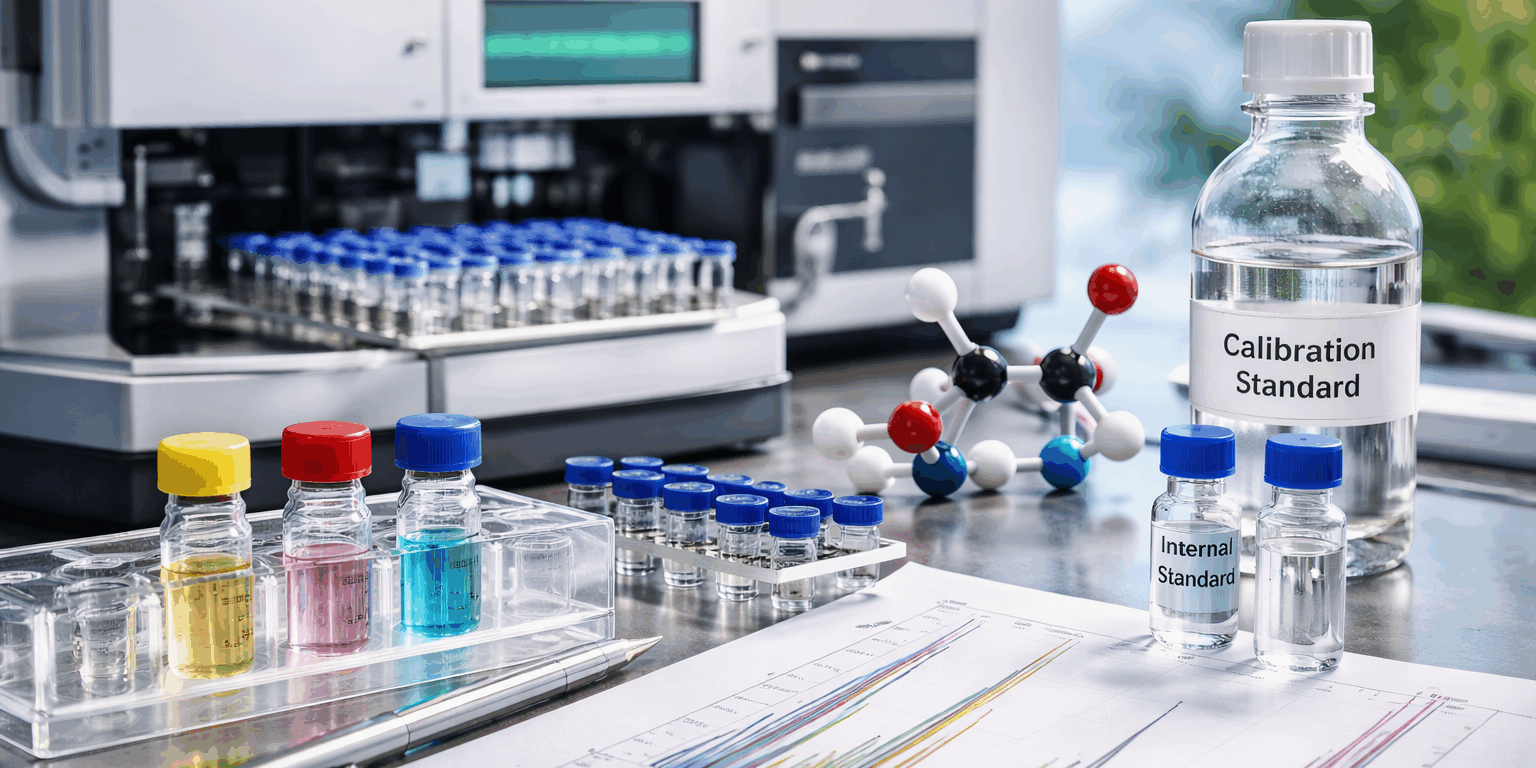
The term mass spectrometry standards refers to a broad category that includes calibration compounds, internal standards, isotopically labeled references, and system suitability materials. Each type supports different aspects of analytical performance and reliability.
Why Standards Are Essential for Reliable Results
1. Instrument Calibration and Performance Monitoring
Mass spectrometers require routine calibration to maintain mass accuracy and sensitivity. Standards provide known reference peaks that allow technicians to adjust instrument parameters and confirm that performance meets specifications. Continuous monitoring helps identify gradual performance degradation before it impacts critical analyses.
2. Method Validation and Regulatory Compliance
Regulated industries must demonstrate that analytical methods are accurate, precise, specific, and robust. Standards enable laboratories to establish calibration curves, determine detection limits, and verify method reproducibility. This documentation supports compliance with quality frameworks such as GMP, GLP, and ISO guidelines.
3. Data Reproducibility and Comparability
Scientific credibility depends on reproducible results. When laboratories use consistent reference materials, data can be compared across time, locations, and research teams. This consistency is particularly important for longitudinal studies, multi-site collaborations, and product lifecycle monitoring.
4. Quantitative Accuracy
Accurate quantification requires a stable relationship between signal intensity and analyte concentration. Internal and external standards correct for variability in sample preparation, ionization efficiency, and instrument response. Without reliable standards, quantitative results may be misleading or inconsistent.
Types of Mass Spectrometry Standards
Understanding the different categories of standards helps laboratories select the right tools for their workflows.
Calibration Standards
These compounds are used to calibrate mass accuracy and resolution. They generate known mass peaks across a defined range, ensuring that measured values align with true molecular weights.
Internal Standards
Internal standards are added directly to samples in known concentrations. They compensate for variability during sample preparation, injection, and ionization. Isotopically labeled compounds are commonly used because they behave similarly to target analytes while remaining distinguishable in the mass spectrum.
External Standards
External standards are analyzed separately to generate calibration curves and verify system performance. They are often used for quantitative analysis and method validation.
System Suitability Standards
These materials verify that the entire analytical system—instrument, chromatography, software, and operator workflow—is functioning properly before routine analysis begins.
Collectively, these reference materials ensure that mass spectrometry standards support consistent and trustworthy data generation.
Common Challenges Without Proper Standards
Laboratories that underestimate the importance of standards face several risks:
-
Instrument drift leading to inaccurate mass measurements
-
Poor reproducibility between runs or operators
-
Unreliable quantitative results
-
Increased rework and investigation costs
-
Regulatory non-compliance or audit findings
These challenges not only impact data quality but also consume valuable time and resources. Implementing a robust standards strategy minimizes these risks and strengthens laboratory confidence.
The Role of IROA Technologies in Analytical Confidence
IROA Technologies is recognized for delivering advanced tools that enhance analytical reliability and reproducibility in complex workflows, particularly in mass spectrometry and metabolomics applications. By supporting consistent calibration and quality control practices, IROA Technologies helps laboratories achieve higher confidence in their analytical results.
Their solutions are designed to improve data transparency, simplify interpretation, and reduce uncertainty associated with complex biological and chemical matrices. This commitment to innovation aligns with the evolving needs of laboratories operating in high-throughput and data-intensive environments.
Best Practices for Managing Standards in the Laboratory
To maximize the value of standards, laboratories should adopt structured best practices:
-
Standard Selection: Choose standards that closely match analyte behavior and mass range.
-
Proper Storage: Follow manufacturer recommendations for temperature, light protection, and stability.
-
Documentation: Record preparation dates, lot numbers, and expiration details.
-
Routine Verification: Analyze standards regularly to monitor system performance.
-
Training: Ensure analysts understand correct handling and preparation procedures.
-
Data Review: Trend standard performance to detect subtle changes over time.
These practices help maintain data integrity while reducing the likelihood of unexpected failures or inconsistencies.
Digital Integration and Traceability
Modern laboratories increasingly rely on digital laboratory information management systems (LIMS) and automated data processing platforms. Integrating standards data into these systems enhances traceability and audit readiness. Automated alerts can flag deviations from acceptable performance limits, allowing corrective action before data quality is compromised.
Traceability also supports long-term data retention and regulatory documentation, which are essential in highly regulated industries and collaborative research environments.
For authoritative guidance on certified reference materials and measurement traceability, laboratories can consult the National Institute of Standards and Technology reference materials program.
Future Trends in Mass Spectrometry Standardization
 As analytical technologies evolve, standards will continue to play a critical role in enabling innovation. Emerging trends include:
-
Automated calibration workflows integrated with instrument software
-
Expanded libraries of isotopically labeled reference compounds
-
Improved stability and shelf life of standards
-
Global harmonization of analytical benchmarks
-
Artificial intelligence for predictive performance monitoring
These advancements will further reduce variability, improve efficiency, and strengthen confidence in analytical data across industries.
Why Investing in Standards Delivers Long-Term Value
High-quality standards may represent an upfront investment, but the long-term benefits outweigh the cost. Reliable data reduces reanalysis, shortens development timelines, improves regulatory outcomes, and protects brand reputation. For organizations operating in competitive and regulated markets, analytical confidence is a strategic advantage.
By implementing robust quality systems supported by dependable reference materials, laboratories ensure that their analytical outputs remain accurate, defensible, and future-ready. The consistent application of mass spectrometry standards empowers teams to generate meaningful insights while maintaining scientific integrity.
Frequently Asked Questions (FAQs)
1. What are mass spectrometry standards used for?
They are used to calibrate instruments, validate methods, monitor performance, and ensure accurate identification and quantification of compounds.
2. How often should standards be analyzed?
Standards should be analyzed routinely—often daily or per batch—to verify system performance and detect instrument drift.
3. What is the difference between internal and external standards?
Internal standards are added directly to samples to correct for variability, while external standards are analyzed separately to create calibration curves.
4. Why are isotopically labeled standards preferred?
They closely mimic the behavior of target analytes while remaining distinguishable in the mass spectrum, improving quantitative accuracy.
5. How does IROA Technologies support analytical reliability?
IROA Technologies provides innovative solutions that enhance reproducibility, data transparency, and confidence in complex analytical workflows.
6. What risks arise from poor standard management?
Improper standards management can lead to inaccurate results, regulatory non-compliance, increased rework, and compromised data integrity.
Conclusion
Reliable analytical results depend on more than advanced instrumentation—they require a disciplined approach to calibration, validation, and quality assurance. Standards provide the foundation that ensures accuracy, reproducibility, and traceability in mass spectrometry workflows.
With support from innovative organizations such as IROA Technologies, laboratories can strengthen their analytical confidence and meet the growing demands of modern research and regulated environments. As technologies continue to evolve, the strategic use of standards will remain central to maintaining trustworthy and impactful scientific data.