blog

Browse all articles in the "blog" category.

Showing 1–12 of 131 articles

Metabolomics Sample Preparation: A Complete Guide to Reliable LC-MS Workflows

Metabolomics Sample Preparation: A Complete Guide to Reliable LC-MS Workflows

What metabolomics sample preparation must accomplish Metabolomics sample preparation is the set of steps that converts a biological specimen into an extract suitable for reliable measurement.

It is not simply a cleaning step before LC-MS. Collection conditions, storage temperature, extraction chemistry, and the timing of standard addition can all change which metabolites remain measurable.

A well-designed workflow protects the biological signal while controlling technical variation introduced by the analyst and the instrument. The ideal procedure depends on the study question.

Polar metabolites, lipids, volatile compounds, and unstable intermediates behave differently. A protocol optimized for amino acids in plasma may not recover hydrophobic lipids from tissue with comparable efficiency.

For that reason, the right starting point is a defined analyte scope, matrix, analytical platform, and acceptable performance criteria not a universal...

Semi-Targeted Metabolomics: Bridging Targeted Quantitation and Untargeted Discovery

Semi-Targeted Metabolomics: Bridging Targeted Quantitation and Untargeted Discovery

Metabolomics workflows are often described as either targeted or untargeted, but many practical studies fall between those extremes. Semi-targeted metabolomics combines broad profiling with stronger identification and quantitative control for a defined set of metabolites that can be recognized by standards or prior knowledge.

The TruQuant Workflow Kit follows this logic by using a complex isotope-labelled internal standard and a long-term reference to support identification, suppression correction, normalization, and quantitation across a broad set of detectable metabolites.

Targeted Metabolomics Targeted metabolomics focuses on a predefined group of compounds. Methods are optimized around known analytes, often using authentic standards, selected transitions, calibration curves, and compound-specific validation.

The advantage is strong quantitative specificity. The tradeoff is limited breadth. Targeted analysis is appropriate when the biological question is already well defined and validated measurements...

Batch Effects in Metabolomics: Sources, Detection and Normalization Strategies

Batch Effects in Metabolomics: Sources, Detection and Normalization Strategies

Batch effects in metabolomics are systematic differences introduced by the analytical process rather than the biology under study. They can arise between days, plates, extraction groups, columns, operators, instruments, or acquisition sequences.

If batch structure overlaps with the biological groups being compared, the effect can become difficult to separate from the scientific signal.

IROA's TruQuant Workflow Kit is designed to reduce this risk by combining long-term QC, isotope-labelled internal standards, ion suppression correction, and Dual MSTUS normalization.

Common Sources Of Batch Effects Batch variation can begin before the sample reaches the instrument. Differences in extraction timing, solvent preparation, evaporation, reconstitution, storage, or handling can alter recovery.

During LC-MS acquisition, source condition, column aging, calibration, contamination, and instrument drift can introduce additional changes. Because multiple sources can occur at the same time,...

Reference Standards in Metabolomics: Supporting Long-Term LC-MS Quality Control

Reference Standards in Metabolomics: Supporting Long-Term LC-MS Quality Control

[caption id="attachment_3997" align="aligncenter" width="1024"] Reference Standards in Metabolomics for LC-MS Quality Control[/caption] Metabolomics reference standards provide a stable point of comparison in an analytical environment where many variables can change.

LC-MS performance may shift because of column condition, source contamination, calibration, mobile-phase preparation, instrument maintenance, or day-to-day operating conditions. A long-term reference helps researchers determine whether those changes are affecting the data.

In the TruQuant Workflow Kit, IROA uses a Long-Term Reference Standard (LTRS) together with an isotope-labelled internal standard to support both system-level quality control and sample-level correction.

Why A Long-Term Reference Is Different From An Internal Standard A long-term reference standard is analyzed as a consistent QC material across a sequence or across multiple batches.

Its purpose is to reveal changes in the analytical system. An internal standard,...

Understanding Peptide Standards and Their Importance in Analytical Applications

Understanding Peptide Standards and Their Importance in Analytical Applications

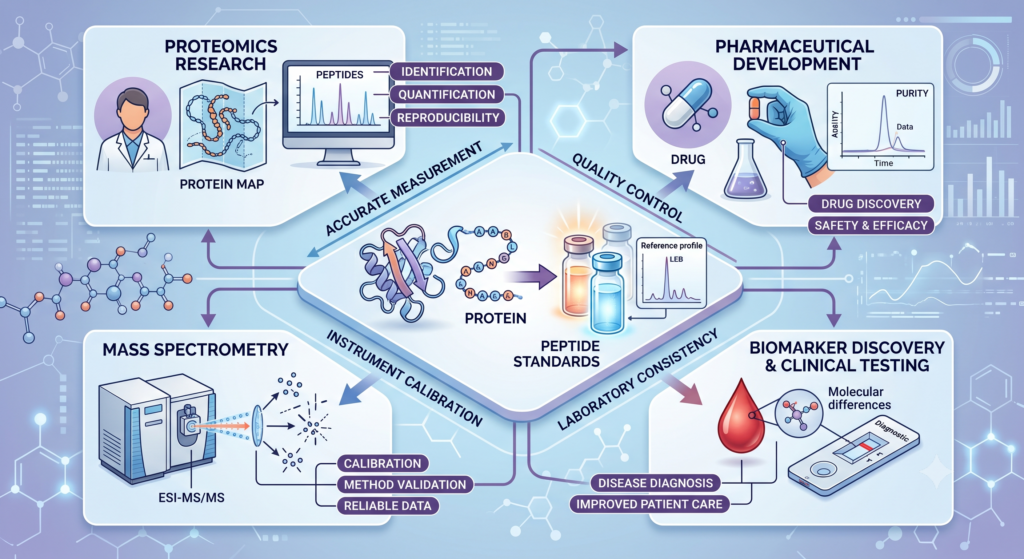
Accurate measurement and reproducibility are essential in scientific research and pharmaceutical development. Whether researchers are studying proteins, biomarkers, or drug compounds, the quality of analytical results depends heavily on the reference materials used during testing.

Among these, Peptide Standards play a vital role in ensuring consistency and precision across a wide range of analytical applications.

From mass spectrometry to proteomics and drug development, these standards have become indispensable tools for scientists seeking reliable and reproducible data.

What Are Peptide Standards? Peptides are short chains of amino acids that serve important functions in biological systems. In analytical laboratories, peptide standards are highly characterized reference materials with known sequences and concentrations.

They are used to calibrate instruments, validate methods, and ensure accurate identification and quantification of peptides in samples. Because analytical workflows...

What Are Phytochemical Standards

A Complete Guide to Phytochemical Standards in Scientific and Pharmaceutical Applications

Natural compounds derived from plants have played a significant role in medicine, nutrition, and biotechnology for centuries. As research into botanical compounds continues to expand, ensuring the accuracy, purity, and consistency of these substances has become increasingly important.

This is where Phytochemical Standards serve as essential tools for scientific and pharmaceutical research. From drug development and quality control to metabolomics and analytical chemistry, standardized plant compounds provide researchers with reliable references that support reproducible and high-quality results.

Understanding their role can help laboratories and pharmaceutical organizations improve the reliability of their studies and product development processes. What Are Phytochemical Standards?

Phytochemical standards are highly purified compounds extracted from plants or synthesized to serve as reference materials in analytical and pharmaceutical applications.

These compounds are used to identify, quantify, and validate...

Understanding Cannabis Analysis and Its Role in Scientific Innovation

Understanding Cannabis Analysis and Its Role in Scientific Innovation

The cannabis industry has undergone remarkable growth over the past decade, fueled by increasing legalization, expanding medical research, and rising consumer demand.

As cannabis products become more widely available for medicinal, scientific, and commercial applications, the need for accurate testing and data-driven research has never been greater.

This is where Cannabis Analysis plays a critical role. From identifying chemical compounds to ensuring product consistency and safety, analytical technologies are helping researchers unlock a deeper understanding of cannabis and its potential benefits.

Today, advanced scientific tools enable laboratories to examine cannabinoids, terpenes, metabolites, and other compounds with unprecedented precision, supporting innovation across healthcare, agriculture, and biotechnology.

What Is Cannabis Analysis? Cannabis analysis refers to the scientific examination of cannabis plants, extracts, and related products to identify and quantify their chemical composition.

Why Metabolite Analyzers Are Essential for Scientific Research

The Rise of Standardized Cannabis in Scientific and Clinical Studies

Cannabis research has experienced significant growth over the past decade as scientists, healthcare professionals, and policymakers seek to better understand the plant's therapeutic potential.

However, one of the major challenges in cannabis research has been the lack of consistency across products and study materials.

Variations in cannabinoid content, cultivation methods, and processing techniques can make it difficult to compare research findings or replicate study results.

This challenge has led to the growing adoption of Standardized Cannabis, a critical development that is helping improve research quality, clinical reliability, and scientific understanding.

By ensuring consistency in composition and quality, standardized cannabis products are becoming essential tools for both laboratory investigations and clinical studies.

Understanding Cannabis Standardization Cannabis contains hundreds of bioactive compounds, including cannabinoids, terpenes, flavonoids, and other phytochemicals. The concentration of...

Advances in Bile Acids Research Emerging Trends & Discoveries

Advances in Bile Acids Research: Emerging Trends and Scientific Discoveries

Bile acids have long been recognized for their essential role in digestion and nutrient absorption. However, scientific understanding of these molecules has expanded significantly over the past decade.

Researchers now view bile acids as powerful signaling molecules that influence metabolism, immune function, gut microbiota, and disease progression. As analytical technologies continue to evolve, new discoveries are reshaping our understanding of how bile acids contribute to human health and disease.

This article explores recent advancements in Bile Acids Research, emerging trends in the field, and the technologies driving these scientific breakthroughs.

Understanding Bile Acids Beyond Digestion Bile acids are synthesized in the liver from cholesterol and released into the digestive tract to aid in the breakdown and absorption of dietary fats.

Traditionally, their primary function was considered digestive. Today, researchers know...

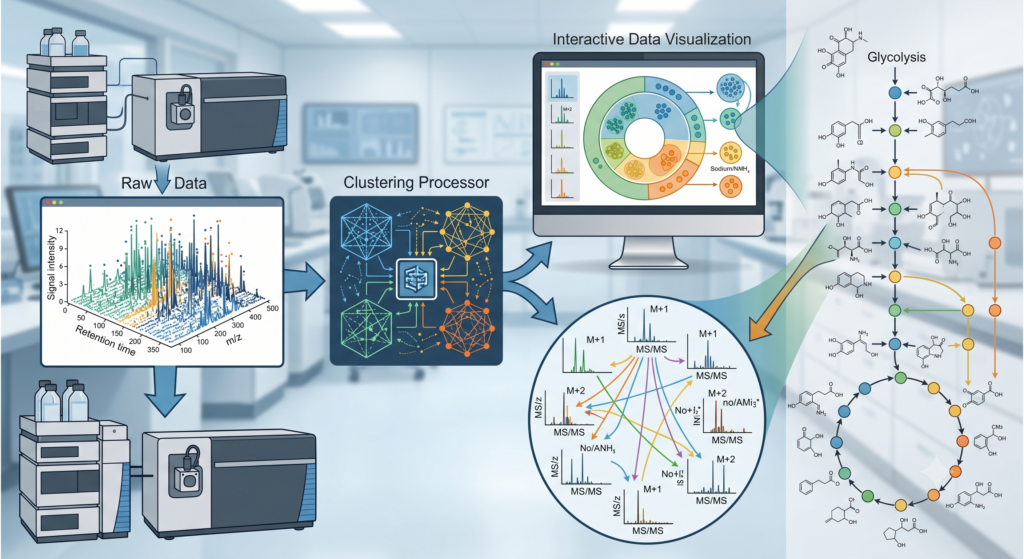
cluster finder

Cluster Finder in Metabolomics: Improving Accuracy and Workflow Efficiency

Metabolomics research generates vast amounts of complex data, offering scientists valuable insights into biological processes, disease mechanisms, and metabolic pathways.

However, transforming raw analytical data into meaningful biological information remains one of the greatest challenges in the field. As metabolomics studies continue to expand in scale and complexity, researchers increasingly rely on advanced computational tools to streamline data analysis and improve confidence in their findings.

One such solution is Cluster Finder, a powerful approach designed to simplify metabolomics data processing, enhance metabolite identification, and improve overall workflow efficiency.

By helping researchers organize and interpret complex datasets more effectively, Cluster Finder technology is becoming an essential component of modern metabolomics research.

Understanding the Challenge of Metabolomics Data Analysis Modern metabolomics platforms such as liquid chromatography-mass spectrometry (LC-MS), gas chromatography-mass spectrometry (GC-MS),...

Why Metabolite Analyzers Are Essential for Scientific Research

How Clinical Metabolomics Is Advancing Early Disease Detection

Early disease detection remains one of the most important goals in modern healthcare. Identifying diseases before symptoms become severe can improve treatment outcomes, reduce healthcare costs, and enhance patients' quality of life.

While traditional diagnostic methods have made significant progress, researchers continue to seek more accurate ways to detect diseases at their earliest stages.

One emerging field that is transforming this effort is Clinical Metabolomics. By analyzing small molecules known as metabolites within biological samples, metabolomics provides a detailed snapshot of a person's physiological state.

This powerful approach is helping scientists and healthcare professionals uncover disease-related changes long before clinical symptoms become apparent. Understanding Metabolomics in Healthcare Metabolites are the end products of various biological processes occurring within cells, tissues, and organs.

These molecules reflect the body's current health status...

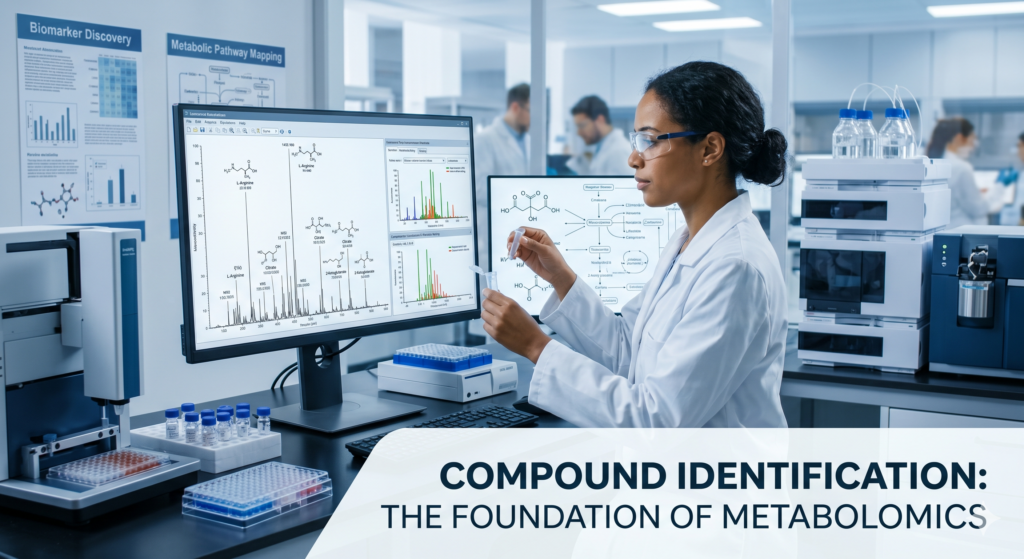
Understanding Compound Identification in Metabolomics

Why Compound Identification Matters in Metabolomics Research

Metabolomics has emerged as one of the most powerful fields in modern life sciences, enabling researchers to study the small molecules, or metabolites, that drive biological processes.

By analyzing these metabolites, scientists can gain valuable insights into health, disease progression, drug responses, and environmental influences. However, the value of metabolomics data depends heavily on one critical step: Compound Identification Without accurately identifying the compounds present in a biological sample, researchers cannot confidently interpret their findings or translate data into meaningful discoveries.

Whether the goal is biomarker discovery, precision medicine, agricultural research, or pharmaceutical development, reliable identification of metabolites forms the foundation of successful metabolomics studies.

Understanding Compound Identification in Metabolomics In metabolomics, thousands of metabolites can be detected within a single sample using advanced analytical techniques such as mass spectrometry...