
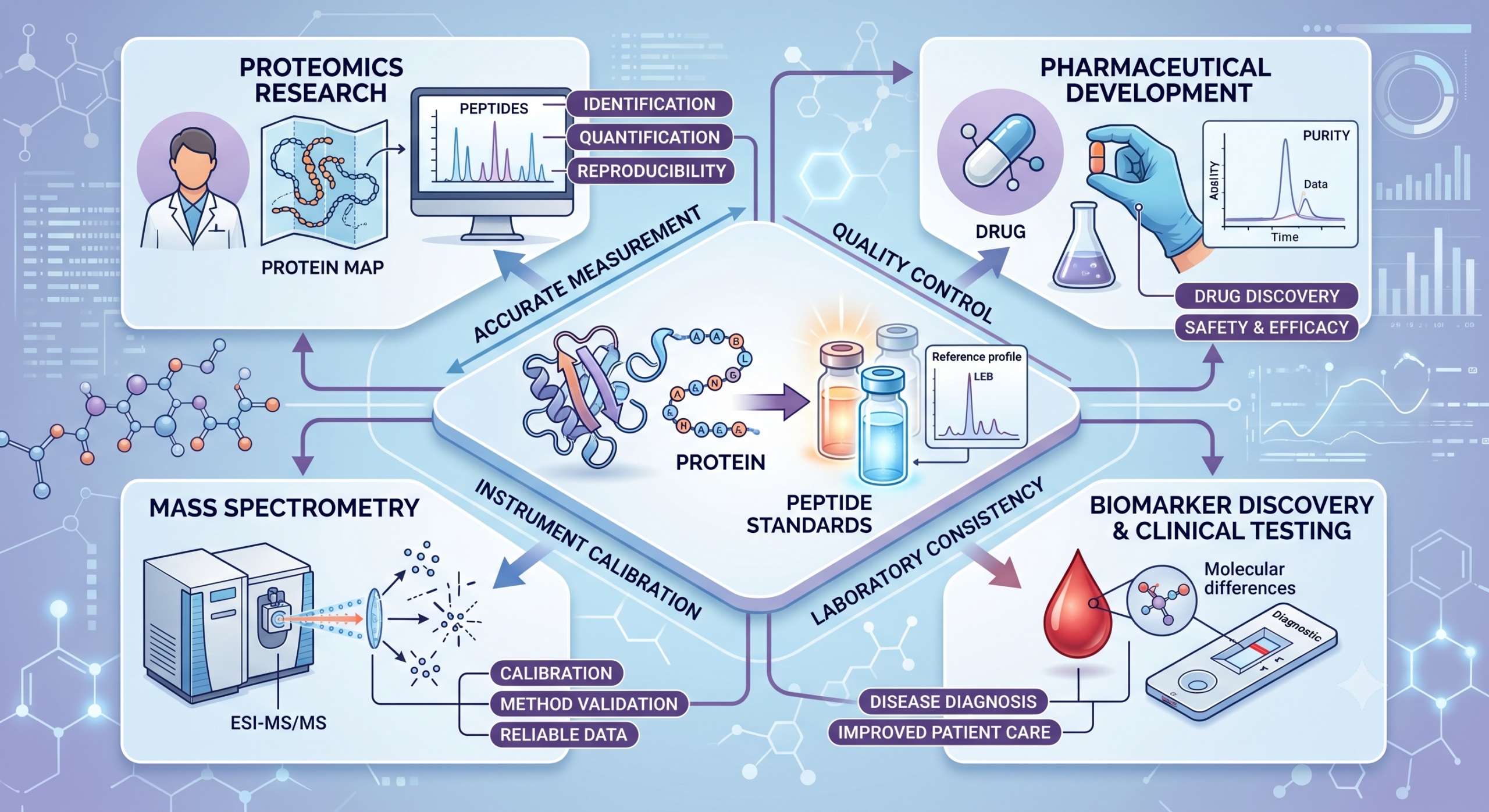
Accurate measurement and reproducibility are essential in scientific research and pharmaceutical development. Whether researchers are studying proteins, biomarkers, or drug compounds, the quality of analytical results depends heavily on the reference materials used during testing. Among these, Peptide Standards play a vital role in ensuring consistency and precision across a wide range of analytical applications.
From mass spectrometry to proteomics and drug development, these standards have become indispensable tools for scientists seeking reliable and reproducible data.
What Are Peptide Standards?
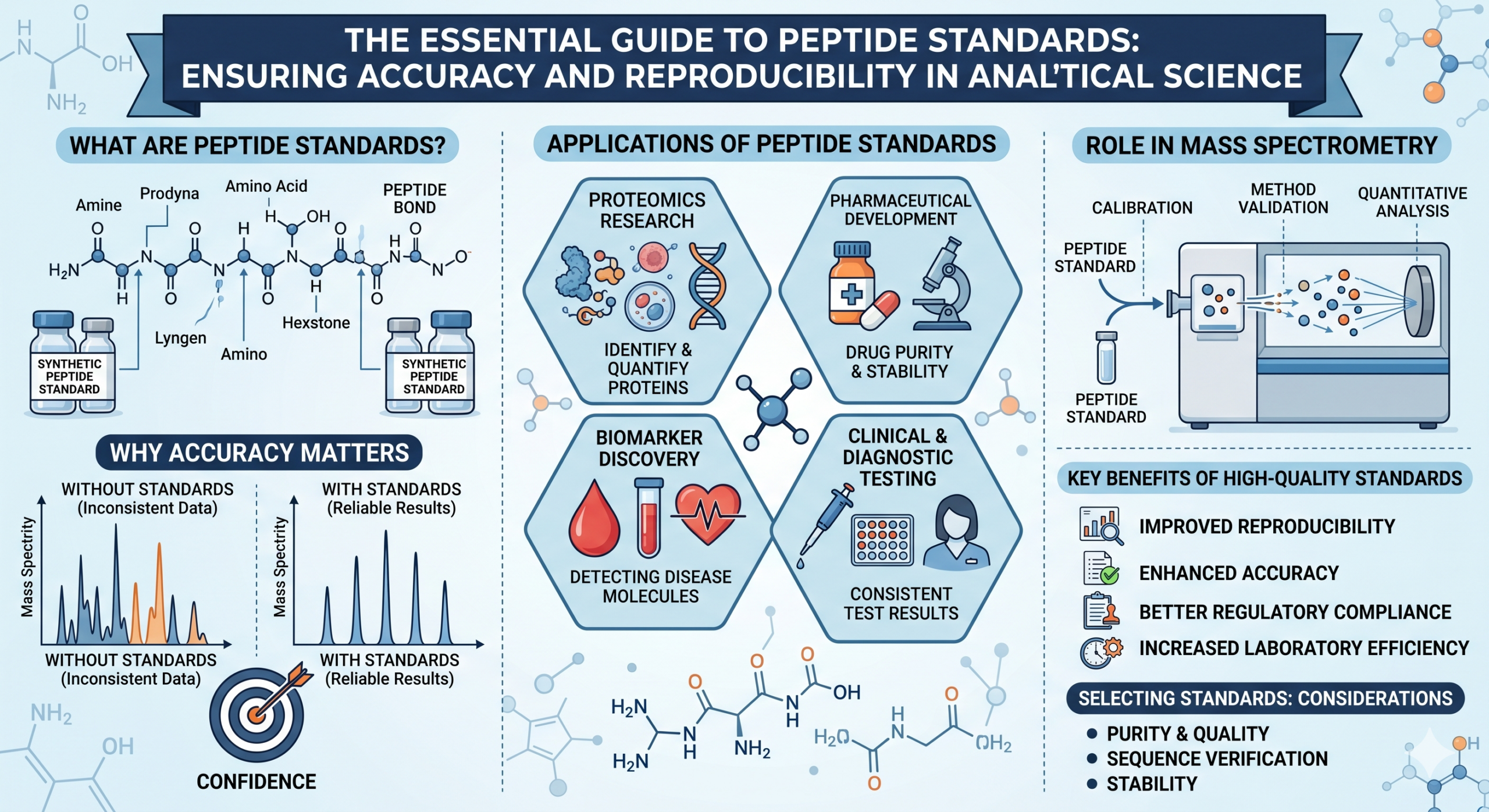
Peptides are short chains of amino acids that serve important functions in biological systems. In analytical laboratories, peptide standards are highly characterized reference materials with known sequences and concentrations. They are used to calibrate instruments, validate methods, and ensure accurate identification and quantification of peptides in samples.
Because analytical workflows require a high degree of precision, these standards provide researchers with confidence that their measurements are both reliable and repeatable.
Why Accuracy Matters in Analytical Science
Analytical techniques are used to detect and measure compounds at extremely low concentrations. Even small variations in sample preparation or instrument performance can lead to inaccurate results. Reliable standards help minimize these errors by providing a consistent reference point.
Scientists rely on standard materials to:
- Validate analytical methods.
- Ensure instrument calibration.
- Improve measurement accuracy.
- Compare results across experiments.
- Maintain reproducibility between laboratories.
Without proper standards, it becomes difficult to verify data quality and maintain confidence in research findings.
Applications of Peptide Standards
Proteomics Research
Proteomics focuses on understanding the structure and function of proteins within biological systems. Researchers frequently use Peptide Standards to identify proteins, quantify expression levels, and validate experimental workflows.
These standards are particularly valuable in mass spectrometry-based proteomics, where accurate peptide identification is critical for generating meaningful biological insights.
Pharmaceutical Development
Drug discovery and development require highly accurate analytical methods. Peptide standards assist researchers in evaluating drug purity, stability, and bioavailability. They also support quality control processes throughout manufacturing and regulatory compliance.
By providing dependable reference materials, scientists can ensure that therapeutic products meet stringent safety and efficacy requirements.
Biomarker Discovery
Biomarkers are essential for disease diagnosis and personalized medicine. Researchers investigating biomarkers depend on standardized analytical methods to detect subtle molecular differences.
Reference peptides help improve the reliability of biomarker studies by reducing variability and enhancing measurement precision.
Clinical and Diagnostic Testing
Modern diagnostic laboratories use advanced analytical technologies to detect disease-associated molecules. Standardized reference materials help ensure consistency in test results and contribute to improved patient care.
Accurate calibration allows laboratories to maintain high-quality testing standards and deliver dependable diagnostic outcomes.
Role in Mass Spectrometry
Mass spectrometry is one of the most widely used analytical techniques in life sciences. It enables researchers to identify and quantify molecules with exceptional sensitivity.
Peptide reference materials are used in mass spectrometry for:
- Instrument calibration.
- Method validation.
- Quantitative analysis.
- Monitoring analytical performance.
- Evaluating sample preparation procedures.
These applications help researchers generate trustworthy and reproducible datasets.
Benefits of Using High-Quality Standards
Implementing quality standards in analytical workflows offers several advantages:
Improved Reproducibility
Scientific research depends on the ability to reproduce results. Reliable reference materials reduce variability and support consistent findings.
Enhanced Accuracy
Standardized measurements improve confidence in analytical data and reduce the likelihood of errors.
Better Regulatory Compliance
Industries such as pharmaceuticals and biotechnology must comply with strict quality requirements. Proper standards support method validation and documentation processes.
Increased Laboratory Efficiency
Accurate calibration reduces the need for repeated analyses, saving time and resources while improving productivity.
Factors to Consider When Selecting Standards
Choosing the right reference material is critical for achieving accurate results. Researchers should evaluate several factors, including:
- Purity and quality.
- Sequence verification.
- Stability and storage conditions.
- Compatibility with analytical instruments.
- Intended application requirements.
Using certified and well-characterized materials helps maximize the reliability of analytical workflows.
Future Trends in Analytical Applications
Advances in proteomics, precision medicine, and biomarker research continue to increase the demand for highly accurate analytical tools. Emerging technologies are driving the development of more sophisticated standards designed for complex biological studies.
As mass spectrometry and quantitative proteomics evolve, researchers will require even greater levels of precision and reproducibility. High-quality Peptide Standards will remain fundamental to supporting scientific innovation and improving confidence in analytical results.
Conclusion
Reliable analytical measurements are essential for advancing scientific research, pharmaceutical development, and clinical diagnostics. By providing accurate reference materials, peptide standards help researchers achieve consistent, reproducible, and trustworthy data across various applications. As analytical technologies continue to evolve, the importance of standardized approaches will only increase. Organizations such as IROA Technologies contribute to the advancement of precision science by supporting researchers with innovative solutions that enhance analytical performance.
Learn More
For additional information about peptide analysis and proteomics research, visit the Human Proteome Organization (HUPO):
Frequently Asked Questions
What are peptide standards used for?
They are used for instrument calibration, method validation, quantitative analysis, and ensuring accuracy in proteomics and mass spectrometry applications.
Why are peptide standards important in analytical applications?
They improve reproducibility, enhance measurement precision, and provide reliable reference materials for scientific studies.
Which industries commonly use peptide standards?
Pharmaceutical, biotechnology, clinical diagnostics, and life science research industries extensively use peptide standards.
How do peptide standards support mass spectrometry?
They help calibrate instruments, validate analytical methods, and ensure accurate identification and quantification of peptides.
What should researchers consider when selecting peptide standards?
Researchers should evaluate purity, stability, sequence accuracy, storage conditions, and compatibility with their analytical methods.