
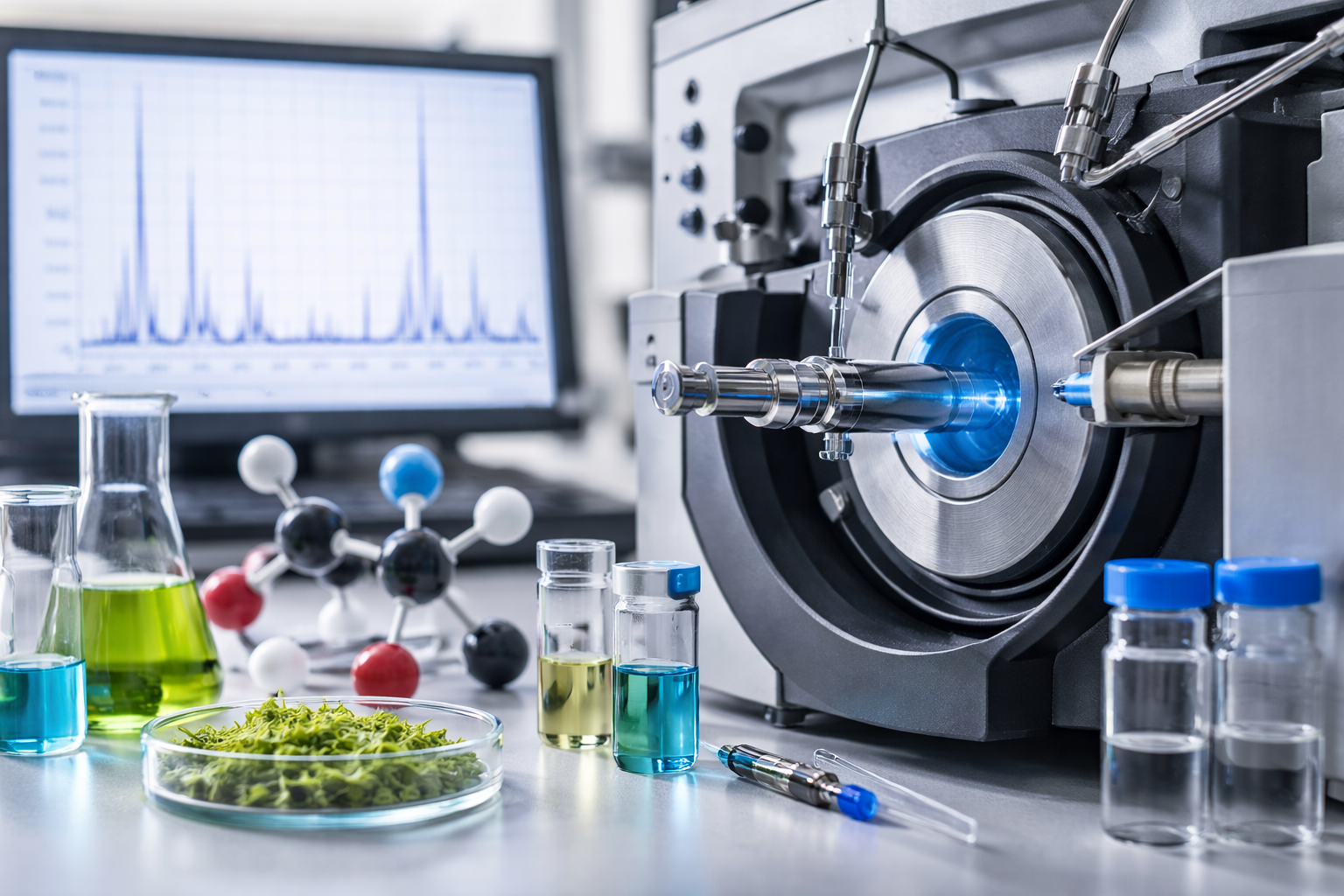
Scientific research today relies heavily on precise analytical techniques to understand complex biological systems, chemical compositions, and environmental samples. Among the most powerful tools available to researchers is mass spectrometry — a technology that enables scientists to identify and quantify molecules with exceptional accuracy.
Understanding the basics of mass spectrometry is essential for researchers, laboratory professionals, and students working across fields such as pharmaceuticals, metabolomics, environmental science, and clinical diagnostics. By mastering these fundamentals, scientists can generate reliable data, improve reproducibility, and accelerate discovery.
Organizations like IROA Technologies support advanced analytical workflows by providing solutions that enhance accuracy, data reliability, and scientific confidence in mass spectrometry–based research.
What is Mass Spectrometry?
Mass spectrometry (MS) is an analytical technique used to identify molecules by measuring their mass-to-charge ratio (m/z). It enables scientists to determine molecular weight, structure, and chemical composition with remarkable precision.
The process involves:
- Ionizing chemical compounds
- Separating ions based on mass-to-charge ratio
- Detecting and measuring ion abundance
- Generating a mass spectrum for analysis
The resulting spectrum acts like a molecular fingerprint, helping researchers identify unknown compounds and quantify known substances.
Understanding the basics of mass spectrometry ensures accurate interpretation of these spectra and reliable scientific conclusions.
Core Components of a Mass Spectrometer
To understand the basics of mass spectrometry, it is important to know its key components:
Ion Source
The ion source converts molecules into charged ions. Common ionization methods include:
- Electrospray Ionization (ESI)
- Matrix-Assisted Laser Desorption/Ionization (MALDI)
- Electron Ionization (EI)
Each method is suited for different sample types and research applications.
Mass Analyzer
The mass analyzer separates ions based on their mass-to-charge ratio. Popular analyzers include:
- Quadrupole
- Time-of-Flight (TOF)
- Orbitrap
- Ion trap
Detector
The detector records ion signals and converts them into data that can be visualized as a mass spectrum.
By mastering the basics of mass spectrometry, researchers can select the right configuration for their analytical needs.
How Mass Spectrometry Works
Understanding the fundamentals helps demystify the process:
- Sample introduction into the instrument
- Ionization of molecules
- Separation of ions in the mass analyzer
- Detection and signal processing
- Data analysis and compound identification
These steps allow scientists to detect trace compounds, analyze complex mixtures, and study molecular structures.

Why the Basics of Mass Spectrometry Matter in Scientific Research
1. Accurate Compound Identification
Mass spectrometry provides precise molecular identification, enabling scientists to analyze unknown compounds in complex samples.
Applications include:
- Drug discovery
- Food safety testing
- Environmental monitoring
- Forensic investigations
Understanding the basics of mass spectrometry ensures accurate identification and reduces analytical errors.
2. Quantitative Analysis with High Sensitivity
Mass spectrometry can detect compounds at extremely low concentrations, making it ideal for trace analysis.
Researchers rely on MS to:
- Measure metabolites in biological samples
- Detect contaminants in food and water
- Monitor drug levels in clinical studies
Accurate quantification depends on a strong grasp of MS fundamentals.
3. Advancing Metabolomics and Systems Biology
Mass spectrometry is a cornerstone of metabolomics, helping scientists analyze metabolic pathways and biological responses.
By understanding the basics of mass spectrometry, researchers can:
- Identify biomarkers of disease
- Study cellular metabolism
- Understand biochemical pathways
Solutions from IROA Technologies support metabolomics workflows by improving data normalization and analytical reproducibility.
4. Supporting Pharmaceutical and Clinical Research
Mass spectrometry plays a critical role in drug development and clinical diagnostics.
Key uses include:
- Drug metabolism studies
- Pharmacokinetic analysis
- Toxicology testing
- Clinical biomarker discovery
Researchers who understand the basics of mass spectrometry can ensure data accuracy and regulatory compliance.
5. Environmental and Food Safety Applications
Mass spectrometry is widely used to detect pollutants, pesticides, and contaminants.
Applications include:
- Monitoring air and water quality
- Detecting pesticide residues
- Ensuring food safety compliance
Global scientific bodies such as the National Institute of Standards and Technology provide reference materials and analytical guidance that support mass spectrometry accuracy and standardization.
6. Enhancing Reproducibility and Data Reliability
Scientific reproducibility is a growing concern across research disciplines. Reliable results depend on consistent analytical practices.
Understanding the basics of mass spectrometry helps researchers:
- Optimize instrument settings
- Minimize variability
- Improve method validation
- Ensure reproducible outcomes
This strengthens scientific credibility and supports peer-reviewed research.
Challenges Without Understanding MS Fundamentals
Without knowledge of the basics of mass spectrometry, researchers may face:
- Misinterpretation of spectra
- Poor quantification accuracy
- Instrument inefficiencies
- Reproducibility issues
- Invalid research conclusions
Proper training and understanding help avoid these pitfalls.
The Future of Mass Spectrometry in Research
Mass spectrometry continues to evolve with advances such as:
- High-resolution instruments
- AI-assisted data analysis
- Real-time metabolomics
- Clinical diagnostic applications
- Personalized medicine research
As technologies advance, understanding the basics of mass spectrometry will remain essential for leveraging these innovations.
Conclusion
Mass spectrometry is one of the most powerful analytical tools available to modern science. From metabolomics and pharmaceutical research to environmental monitoring and food safety, its applications are vast and transformative.
Understanding the basics of mass spectrometry allows researchers to accurately identify compounds, quantify molecules, and ensure data reliability. This foundational knowledge enhances reproducibility, strengthens scientific conclusions, and accelerates discovery.
With advanced analytical solutions from IROA Technologies, laboratories can improve accuracy, streamline workflows, and achieve greater confidence in mass spectrometry–based research.
As scientific challenges grow more complex, mastering the fundamentals of mass spectrometry will remain crucial to unlocking new insights and innovations.
FAQs
1. What are the basics of mass spectrometry?
The basics of mass spectrometry include ionizing molecules, separating ions by mass-to-charge ratio, detecting them, and interpreting the resulting mass spectrum.
2. Why is mass spectrometry important in scientific research?
It enables precise compound identification, trace detection, quantitative analysis, and biomarker discovery.
3. What industries use mass spectrometry?
Pharmaceuticals, clinical diagnostics, environmental science, food safety, metabolomics, and forensic science all rely on mass spectrometry.
4. How sensitive is mass spectrometry?
Mass spectrometry can detect compounds at extremely low concentrations, often in parts per billion (ppb) or lower.
5. What is the difference between LC-MS and GC-MS?
LC-MS is used for non-volatile biological compounds, while GC-MS is suited for volatile and semi-volatile substances.
6. How does mass spectrometry support metabolomics research?
It helps identify and quantify metabolites, enabling researchers to study metabolic pathways and discover disease biomarkers.