
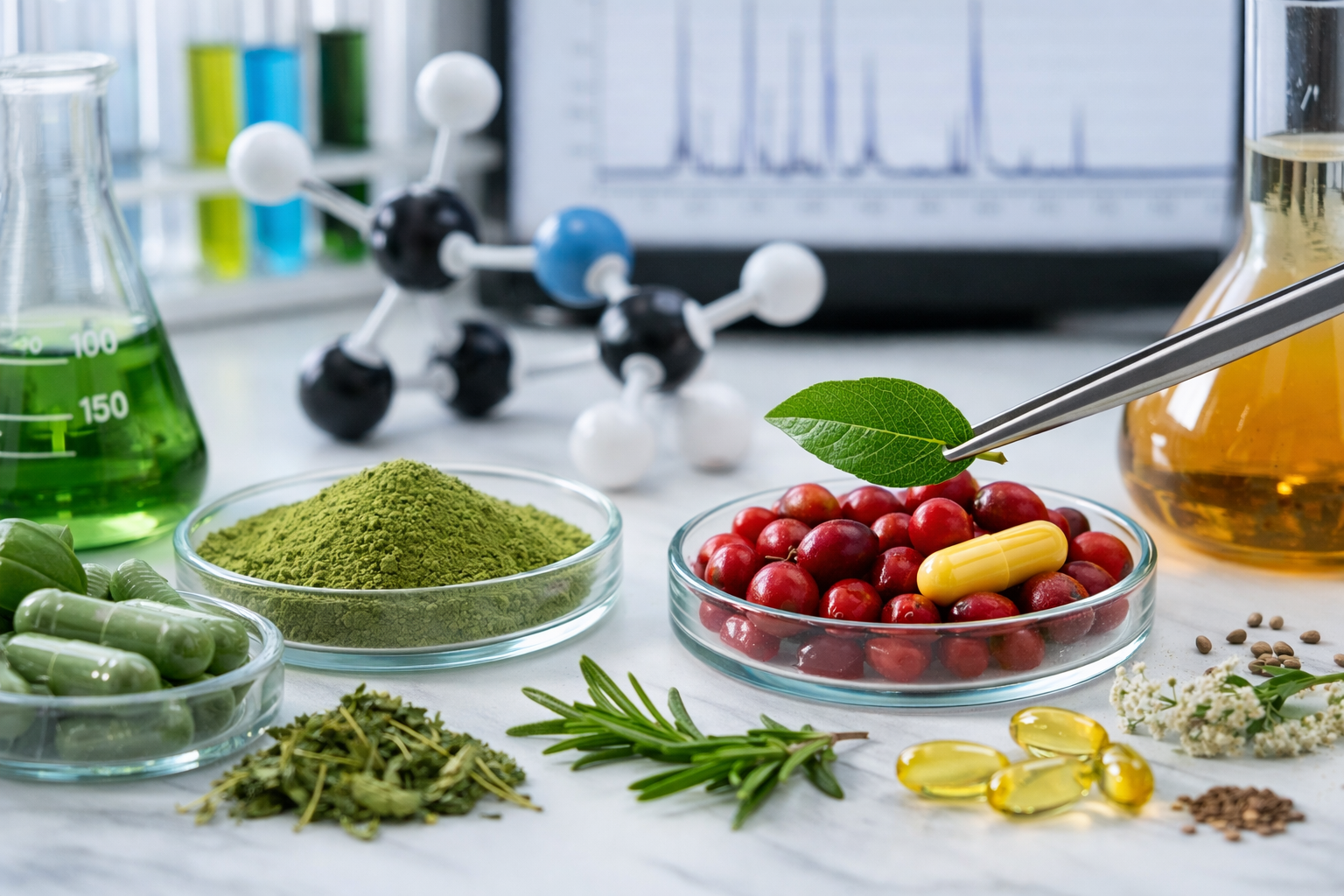
The global nutraceutical market is expanding rapidly as consumers increasingly turn to plant-based supplements, herbal extracts, and functional foods to support their health. From immunity boosters to antioxidant-rich formulations, nutraceutical products promise natural wellness benefits. However, delivering safe, effective, and consistent products requires rigorous quality control — especially when working with complex botanical ingredients.
This is where phytochemical standards play a vital role. They provide the scientific benchmarks needed to verify purity, potency, and authenticity in plant-derived products. For nutraceutical manufacturers and analytical laboratories, integrating reliable reference standards into testing protocols is essential for ensuring product integrity and regulatory compliance.
Companies such as IROA Technologies help support the nutraceutical industry by enabling accurate analysis and quality validation, ensuring that plant-based products meet the highest scientific and safety standards.
Understanding Phytichemicals in Nutraceutical Products
Phytochemicals are naturally occurring bioactive compounds found in plants. These compounds are responsible for many of the therapeutic properties associated with herbal supplements and functional foods.
Some common phytochemicals include:
- Polyphenols
- Flavonoids
- Alkaloids
- Terpenoids
- Saponins
- Glycosides
These compounds offer benefits such as antioxidant protection, anti-inflammatory effects, immune system support, and improved metabolic health.
However, phytochemical composition can vary significantly depending on:
- Soil and climate conditions
- Harvest timing
- Plant species and origin
- Processing techniques
- Storage methods
Such variability makes standardization challenging and highlights the need for reliable quality verification methods.
What Are Phytichemical Standards?
Phytochemical standards are purified reference compounds used in laboratory testing to identify, measure, and validate the active components present in botanical extracts and nutraceutical products.
They serve as reference benchmarks to:
- Confirm compound identity
- Measure concentration and potency
- Ensure batch consistency
- Detect adulteration or contamination
- Validate analytical methods
Without phytochemical standards, laboratories cannot ensure accurate testing results, leading to potential inconsistencies and safety concerns.
Why Quality Control Is Essential in Nutraceutical Manufacturing
Unlike synthetic pharmaceuticals, nutraceutical products often contain complex botanical ingredients with natural variability. Maintaining strict quality control ensures products remain safe, effective, and trustworthy.
Poor quality control may lead to:
- Incorrect potency levels
- Undeclared or substituted ingredients
- Presence of harmful contaminants
- Reduced product effectiveness
- Regulatory violations
By incorporating phytochemical standards into quality control procedures, manufacturers can confidently verify product integrity at every stage.
How Phytichemical Standards Enhance Quality Control
1. Accurate Identification of Active Compounds
Botanical extracts can contain hundreds of chemical constituents. Ensuring the correct active compounds are present is critical.
Using phytochemical standards allows laboratories to:
- Match chromatographic retention times
- Confirm molecular structures
- Verify compound authenticity
This ensures that nutraceutical products contain the correct ingredients as stated on the label.
2.Ensuring Batch-to-Batch Consistency
Consistency is key to consumer trust and product effectiveness. Variations in active compound levels can alter therapeutic benefits.
By comparing production batches against phytochemical standards, manufacturers can:
- Maintain consistent potency
- Standardize extract formulations
- Reduce variability in finished products
This ensures reliable performance for consumers.
3.Detection of Adulteration and Contaminants
Adulteration remains a major concern in the herbal supplement industry. Lower-cost substitutes or synthetic additives may be introduced intentionally or accidentally.
Phytochemical standards help detect:
- Ingredient substitution
- Synthetic chemical additions
- Heavy metals
- Pesticide residues
- Toxic contaminants
This protects consumers and safeguards brand credibility.
4.
Supporting Regulatory Compliance
Regulatory bodies require proof that nutraceutical products are safe, accurately labeled, and consistently manufactured. Validated testing methods using phytochemical standards support compliance with global quality frameworks.
Manufacturers must align with:
- Good Manufacturing Practices (GMP)
- Food safety and labeling regulations
- Export quality requirements
- International safety standards
Organizations often refer to the World Health Organization guidelines on herbal medicines to ensure safety, quality, and consistency in botanical products.
5.Enhancing Analytical Accuracy in Laboratory Testing
Modern analytical techniques rely on precise calibration for accurate measurement.
Phytochemical standards improve:
- Calibration accuracy
- Quantitative measurement precision
- Method validation
- Reproducibility of results
This ensures reliable laboratory data for quality control and research applications.
6.Strengthening Consumer Trust and Brand Reputation
Today’s consumers are more informed and demand transparency about product safety and authenticity.
Using phytochemical standards demonstrates commitment to:
- Scientific validation
- Product safety
- Purity and authenticity
- Ethical manufacturing
Brands that prioritize quality assurance build long-term consumer loyalty and industry credibility.
Applications Across Nutraceutical Production
Phytochemical standards are used throughout the nutraceutical manufacturing process:
Raw Material Verification
Ensuring botanical ingredients are authentic before processing.
In-Process Monitoring
Maintaining consistency during extraction and formulation.
Finished Product Testing
Confirming potency, purity, and compliance with label claims.
Research & Development
Supporting formulation improvements and product innovation.
With advanced analytical solutions provided by companies like IROA Technologies, manufacturers can implement robust testing systems that ensure precision and quality control.

Risks of Manufacturing Without Phytochemical Standards
Failure to use validated reference standards can lead to serious consequences:
- Inconsistent product potency
- Regulatory non-compliance
- Product recalls
- Legal liabilities
- Loss of consumer trust
These risks emphasize why phytochemical standards are indispensable for quality assurance.
Future Trends in Nutraceutical Quality Assurance
The nutraceutical industry is evolving rapidly, with increasing expectations for safety, traceability, and scientific validation.
Emerging trends include:
- Standardized botanical extracts
- Advanced analytical technologies
- Increased regulatory oversight
- Global harmonization of quality standards
- Ingredient traceability and authenticity testing
As these trends shape the industry, the importance of phytochemical standards will continue to grow.
Conclusion
Maintaining quality and consistency in nutraceutical products is both a scientific challenge and a regulatory necessity. Natural variability in botanical ingredients makes rigorous testing essential for ensuring product safety, effectiveness, and authenticity.
Phytochemical standards provide the scientific foundation needed to verify identity, ensure potency, detect contamination, and maintain batch consistency. By incorporating phytochemical standards into quality control systems, nutraceutical manufacturers can meet regulatory requirements, protect consumer health, and strengthen brand credibility.
Supported by analytical expertise and solutions from IROA Technologies, the nutraceutical industry can achieve greater precision, reliability, and trust in plant-based health products.
As consumer demand for natural wellness solutions continues to grow, phytochemical standards will remain central to delivering safe and scientifically validated nutraceutical products.
FAQs
1. What are phytochemical standards?
Phytochemical standards are purified reference compounds used to identify, measure, and validate plant-based ingredients in laboratory testing.
2. Why are phytochemical standards important for nutraceutical products?
They ensure accurate ingredient identification, consistent potency, contamination detection, and regulatory compliance.
3. How do phytochemical standards improve product consistency?
Manufacturers compare production batches against reference standards to maintain uniform strength and composition.
4. What analytical techniques use phytochemical standards?
Methods such as HPLC, GC-MS, and spectroscopy rely on phytochemical standards for accurate calibration and quantification.
5. Do phytochemical standards help detect adulteration?
Yes. They help identify substituted ingredients, synthetic additives, and contaminants.
6. Are phytochemical standards necessary for regulatory approval?
While requirements vary, validated testing using certified reference standards is widely expected for compliance and product safety.