
In the ever-evolving world of chemistry and analytical science, certain concepts quietly power major breakthroughs. One such fascinating concept is that of isobaric compounds. While the term may sound complex, the science behind it is both intriguing and essential for advancements in research fields such as metabolomics, pharmaceuticals, and environmental analysis. At IROA Technologies, innovation thrives on understanding these scientific principles and applying them to solve real-world challenges.
Understanding the Basics
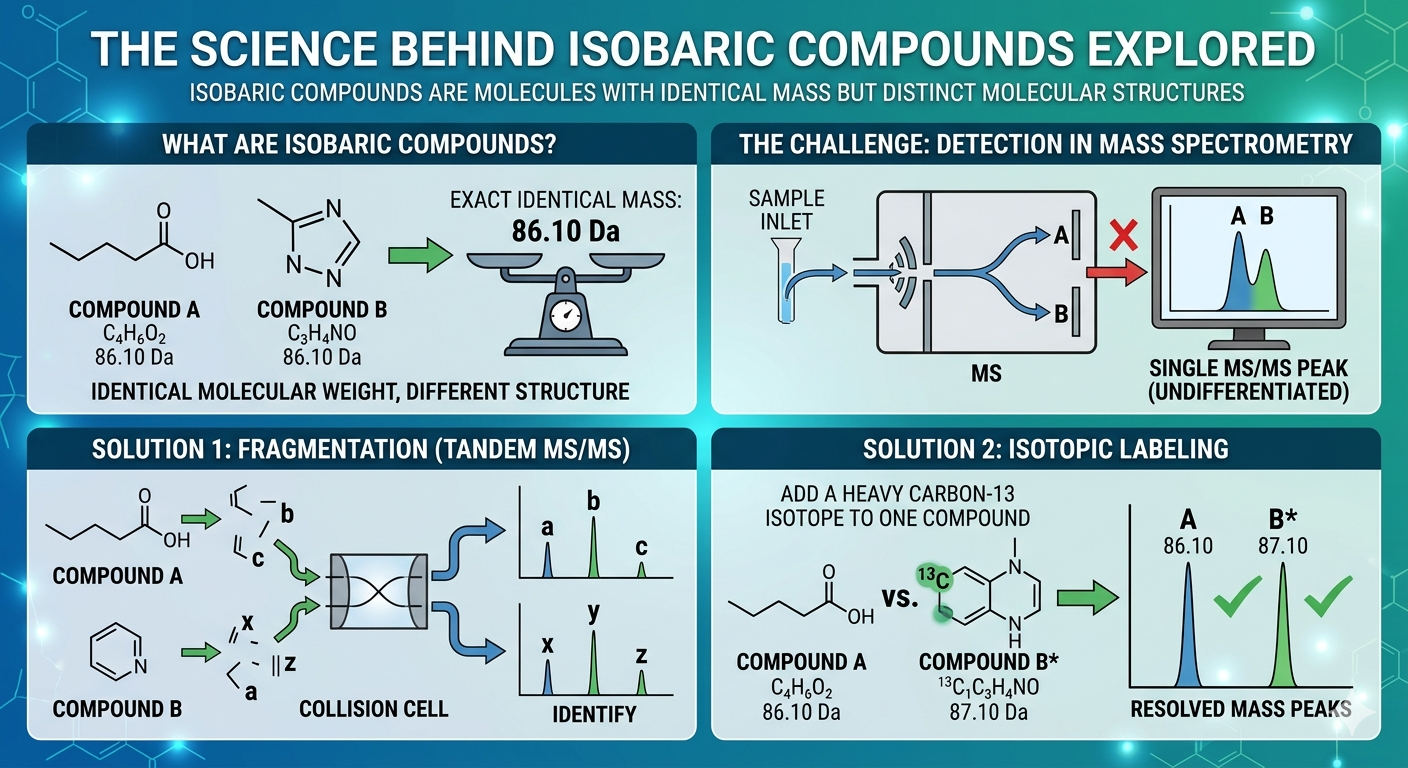
To begin with, isobaric compounds are molecules that share the same mass but differ in their chemical structure or composition. In simpler terms, they weigh the same but are not identical. This unique property often creates challenges in analytical chemistry because distinguishing between such compounds requires sophisticated techniques and precise instrumentation.
Why does this matter? Because in many scientific studies—especially those involving biological samples—accurate identification of molecules is critical. Misidentifying compounds can lead to incorrect conclusions, affecting research outcomes and practical applications.
The Science Behind the Similarity
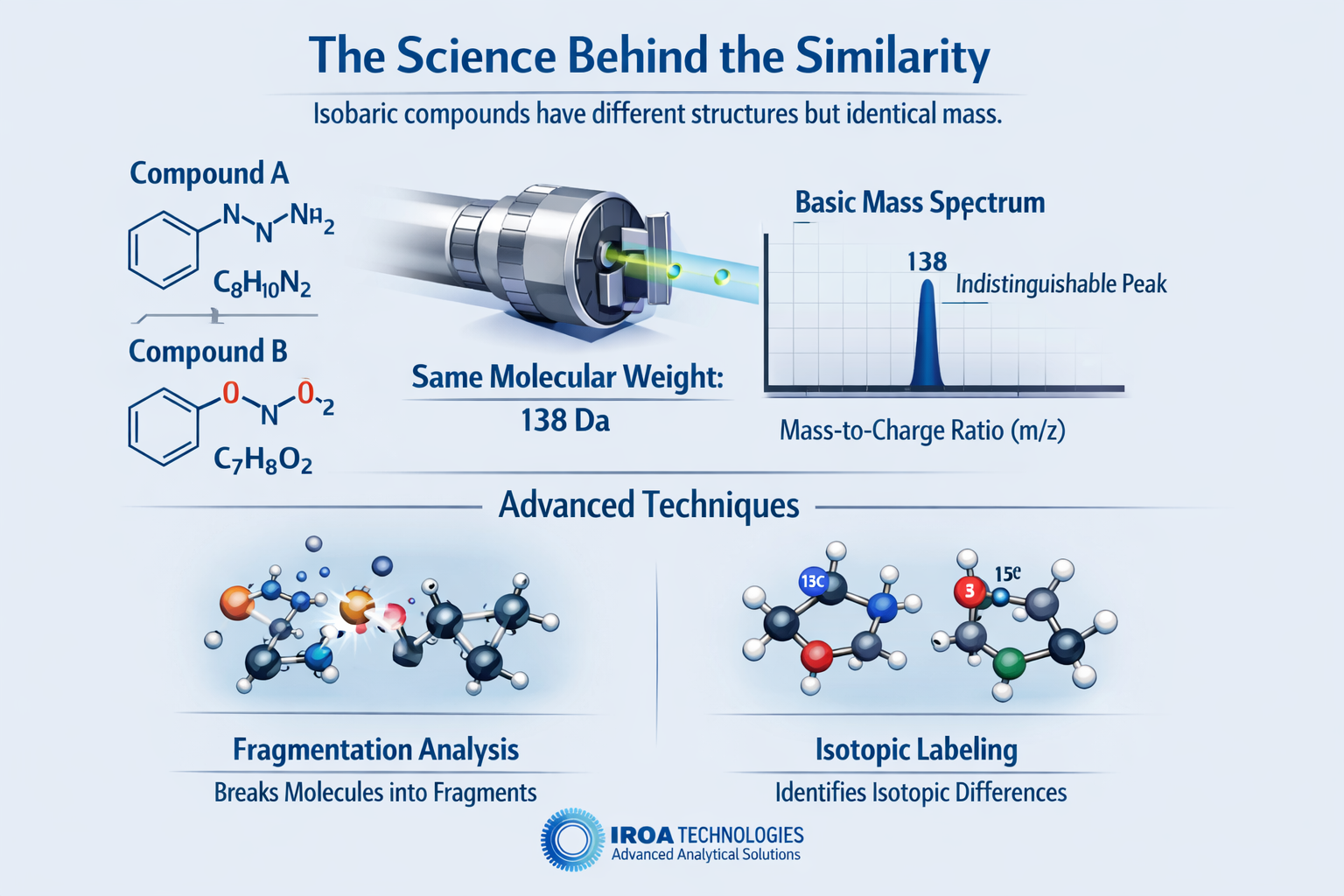
The similarity in mass among isobaric compounds arises from the arrangement of atoms. For example, two compounds may contain different elements or structures but still result in the same molecular weight. This phenomenon is particularly important in mass spectrometry, a widely used analytical technique.
Mass spectrometry works by measuring the mass-to-charge ratio of ions. However, when two compounds have identical masses, they appear indistinguishable in basic mass analysis. This is where advanced methods come into play, helping scientists differentiate between them through fragmentation patterns or isotopic labeling.
At IROA Technologies, advanced analytical tools are designed to address exactly these kinds of challenges, enabling researchers to achieve more accurate and reliable data.
Why Are Isobaric Compounds Important?
The importance of isobaric compounds becomes especially clear in fields like metabolomics—the study of small molecules within cells, tissues, or organisms. In such studies, thousands of compounds may be present, many of which share similar or identical masses.
Here’s why understanding them is crucial:
- Accurate Data Interpretation: Differentiating compounds ensures reliable experimental results.
- Drug Development: Precise identification helps in understanding drug interactions and metabolic pathways.
- Environmental Monitoring: Detecting pollutants and chemical residues depends on distinguishing similar compounds.
- Food Safety: Identifying contaminants requires high analytical accuracy.
Without the ability to separate and analyze isobaric compounds effectively, many scientific advancements would be significantly hindered.
Techniques Used to Distinguish Them
Over time, scientists have developed several techniques to overcome the challenges posed by isobaric compounds. Some of the most widely used methods include:
1. Tandem Mass Spectrometry (MS/MS)
This technique involves multiple rounds of mass analysis. By breaking molecules into smaller fragments, scientists can study their structure and identify differences between compounds that initially appear identical.
2. Chromatography Coupled with Mass Spectrometry
Chromatography separates compounds before they enter the mass spectrometer. This additional step helps distinguish molecules based on their chemical properties rather than just their mass.
3. Isotopic Labeling
This advanced approach involves tagging compounds with stable isotopes, making it easier to track and differentiate them during analysis. This is one of the innovative solutions supported by IROA Technologies, enhancing clarity in complex datasets.
Real-World Applications
The study of isobaric compounds is not limited to laboratories—it has practical implications across multiple industries.
Healthcare and Medicine
In clinical research, identifying subtle differences between molecules can lead to early disease detection and improved treatment strategies. Biomarker discovery, for instance, relies heavily on distinguishing similar compounds accurately.
Agriculture
Analyzing soil composition, pesticides, and plant metabolites requires precise measurement techniques. Understanding isobaric compounds ensures better crop management and safer agricultural practices.
Environmental Science
Monitoring air and water quality involves detecting pollutants that may have identical masses but different chemical behaviors. Accurate analysis is essential for environmental protection.
Biotechnology
In biotechnology, the development of new products and therapies often depends on detailed molecular analysis. The ability to differentiate compounds plays a key role in innovation.
Challenges and Future Directions
Despite advancements, analyzing isobaric compounds remains a complex task. High-end instruments, skilled professionals, and sophisticated software are required to achieve accurate results. Additionally, as datasets grow larger, the need for automation and artificial intelligence in analysis becomes more prominent.
Looking ahead, the integration of machine learning with analytical chemistry is expected to revolutionize how scientists approach these challenges. Companies like IROA Technologies are at the forefront of this transformation, continuously improving tools and methodologies to simplify complex analyses.
For readers interested in exploring more about analytical chemistry techniques, you can visit this helpful resource:
Mass Spectrometry Principles and Applications
Conclusion
The science behind isobaric compounds is a perfect example of how seemingly small details can have a massive impact on scientific progress. From healthcare to environmental protection, the ability to accurately identify and analyze compounds shapes the future of innovation.
By combining advanced technology with deep scientific understanding, organizations like IROA Technologies are enabling researchers to overcome analytical challenges and unlock new possibilities. For curious minds, this field offers a fascinating glimpse into the precision and complexity of modern science.
Frequently Asked Questions (FAQs)
1. What are isobaric compounds?
Isobaric compounds are molecules that have the same molecular mass but different structures or chemical compositions.
2. Why are isobaric compounds difficult to analyze?
They are difficult to analyze because standard mass spectrometry cannot easily distinguish between compounds with identical masses.
3. How are isobaric compounds identified?
They are identified using advanced techniques like tandem mass spectrometry, chromatography, and isotopic labeling.
4. Where are isobaric compounds commonly used?
They are widely studied in fields such as metabolomics, pharmaceuticals, environmental science, and biotechnology.
5. How does IROA Technologies help in analyzing such compounds?
IROA Technologies provides advanced analytical solutions and tools that improve the accuracy and reliability of compound identification in complex datasets.