
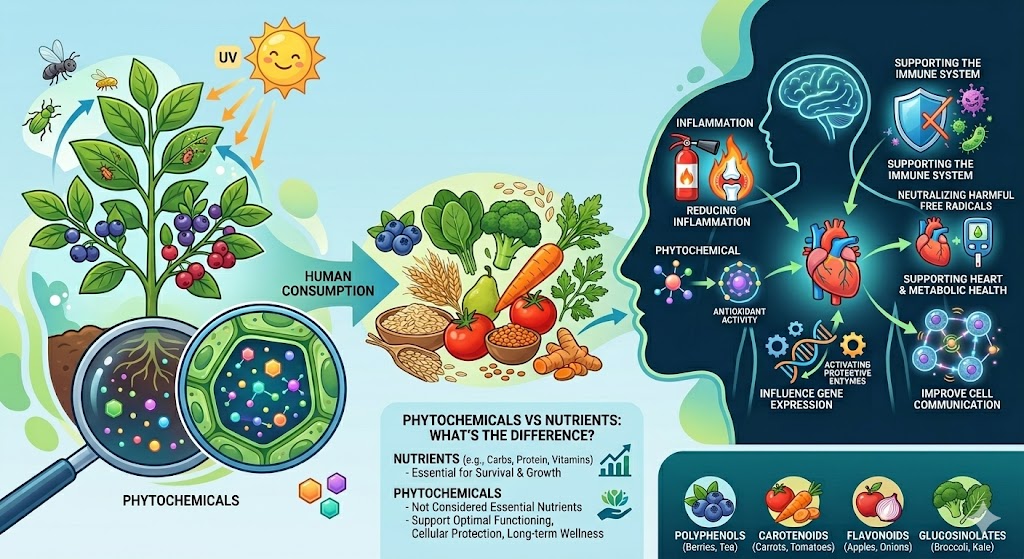
When people talk about eating more fruits, vegetables, herbs, and whole grains, the real health power behind these foods often comes from something most of us rarely notice—phytochemicals. To clearly understand modern nutrition trends and plant-based diets, it is important to first understand the Phytochemical Meaning and why these natural compounds are gaining serious attention in health and science.
In simple terms, phytochemicals are naturally occurring compounds found in plants that help protect the plant itself and, at the same time, offer several benefits to the human body.
What Is the Phytochemical Meaning?
The Phytochemical Meaning refers to plant-derived bioactive compounds that are not considered essential nutrients like carbohydrates, fats, proteins, vitamins, or minerals—but still play a powerful role in supporting overall health.
The word comes from two parts:
- Phyto – meaning plant
- Chemical – referring to the natural compounds produced by plants
Plants produce these substances to defend themselves against insects, diseases, sunlight, and environmental stress. When humans consume these plants, we also gain the protective effects of those compounds.
Why Are Phytochemicals Important for the Human Body?
Unlike vitamins or minerals, phytochemicals do not prevent a specific deficiency disease. However, research shows that they influence important biological processes such as:
- Reducing inflammation
- Supporting the immune system
- Neutralizing harmful free radicals
- Supporting heart and metabolic health
These compounds help maintain balance at the cellular level, which is one reason plant-rich diets are linked to long-term wellness.
Major Types of Phytochemicals
Phytochemicals are grouped into several broad categories. Each group contains hundreds or even thousands of individual compounds.
1. Polyphenols
Polyphenols are one of the most studied phytochemical groups. They are commonly found in:
- Green tea
- Coffee
- Dark chocolate
- Berries
- Grapes
They are well known for their antioxidant activity and their role in protecting cells from oxidative damage.
2. Carotenoids
Carotenoids give plants their bright yellow, orange, and red colors. Examples include beta-carotene and lycopene.
Common sources include:
- Carrots
- Tomatoes
- Sweet potatoes
- Pumpkin
These compounds support eye health and contribute to normal immune function.
3. Flavonoids
Flavonoids are a large sub-group of polyphenols and are widely distributed in plant foods such as:
- Apples
- Citrus fruits
- Onions
- Tea
- Cocoa
They help regulate inflammation and support healthy blood vessels.
4. Glucosinolates
Glucosinolates are mainly found in cruciferous vegetables such as:
- Broccoli
- Cabbage
- Kale
- Brussels sprouts
When these vegetables are chopped or chewed, glucosinolates are converted into biologically active compounds that support detoxification pathways in the body.

How Phytochemicals Work Inside the Body
Rather than acting like traditional nutrients, phytochemicals interact with our body’s signaling systems. They can:
- Activate protective enzymes
- Influence gene expression
- Improve communication between cells
- Reduce oxidative stress
This makes them important contributors to long-term health rather than short-term nutritional needs.
Scientists continue to explore these mechanisms through nutrition and metabolic research. Organizations such as the Linus Pauling Institute regularly publish scientific material explaining how phytochemicals influence chronic disease risk and human metabolism.
For further scientific reading, you can explore this resource:
External link: https://lpi.oregonstate.edu/mic/dietary-factors/phytochemicals
Best Dietary Sources of Phytochemicals
The best way to obtain phytochemicals is through a diverse and colorful diet. The more variety on your plate, the broader range of protective compounds you receive.
Some easy everyday sources include:
- Leafy greens such as spinach and kale
- Berries such as blueberries and strawberries
- Legumes such as lentils and chickpeas
- Herbs and spices such as turmeric, ginger, and oregano
- Whole grains such as oats and brown rice
A helpful guideline is to aim for different colors of fruits and vegetables each day. Each color represents a different phytochemical profile.
Phytochemicals vs Nutrients: What’s the Difference?
A common misunderstanding is to treat phytochemicals the same as vitamins or minerals. While both are found in food, they serve different roles.
- Nutrients are essential for survival and growth.
- Phytochemicals support optimal functioning and protection.
In other words, you can survive without phytochemicals, but your long-term health outcomes may be improved when your diet consistently includes them.
How Cooking Affects Phytochemicals
Cooking can influence phytochemical levels in both positive and negative ways.
- Light steaming may increase the availability of certain compounds.
- Excessive boiling can cause water-soluble phytochemicals to leach out.
- Chopping and crushing vegetables can activate beneficial enzymes.
Simple preparation methods such as steaming, roasting, and light sautéing often preserve most of the valuable compounds.
Should You Take Phytochemical Supplements?
Many supplements claim to provide concentrated plant compounds. However, isolated supplements cannot fully replicate the natural synergy found in whole foods.
Whole fruits, vegetables, herbs, and grains deliver a complex mixture of phytochemicals, fiber, vitamins, and minerals that work together. For most people, a balanced plant-rich diet remains the most reliable approach.
Final Thoughts
Understanding the phytochemical meaning helps explain why nutrition experts consistently recommend eating more whole, plant-based foods. These natural compounds support cellular health, reduce biological stress, and contribute to long-term wellness in ways that go far beyond basic nutrition.
By focusing on food variety, freshness, and color, you can naturally increase your intake of these powerful plant compounds and support your body’s protective systems every day. At iroa technologies, we believe that informed choices and science-backed insights empower healthier living—helping you embrace the full potential of plant-based nutrition for a stronger, more vibrant life.
FAQs
1. What is the simplest way to explain phytochemical meaning?
Phytochemical meaning refers to naturally occurring plant compounds that are not essential nutrients but help support health by protecting cells and regulating biological processes.
2. Are phytochemicals only found in vegetables?
No. Phytochemicals are found in fruits, vegetables, whole grains, legumes, nuts, seeds, herbs, spices, tea, and many plant-based foods.
3. Do phytochemicals help prevent diseases?
Phytochemicals are associated with reduced risk of chronic conditions by supporting antioxidant activity, inflammation control, and cellular protection. They support health rather than directly curing diseases.
4. Can cooking destroy phytochemicals?
Some phytochemicals can be reduced by excessive cooking, but many become more available when lightly cooked or chopped. Gentle cooking methods are usually best.
5. Is it better to rely on supplements instead of food?
Whole foods are generally better because they provide a wide range of phytochemicals and nutrients that work together naturally, which supplements cannot fully replicate.