
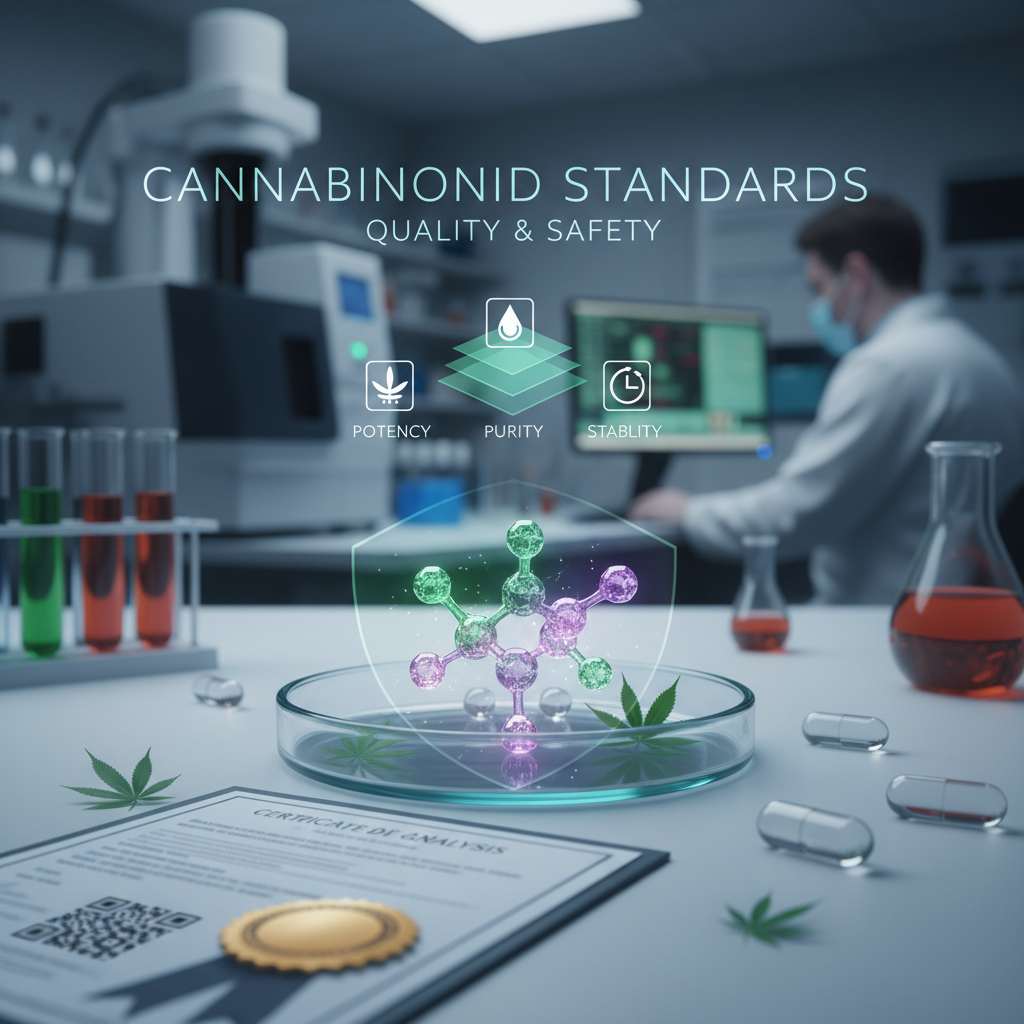
The cannabis industry has experienced unprecedented growth over the past decade, transforming from a niche market into a multi-billion-dollar sector. As this expansion continues, the importance of cannabinoid standards has become increasingly critical for ensuring product quality, consumer safety, and regulatory compliance. This comprehensive guide explores everything you need to know about these essential benchmarks that govern the cannabis industry.
What Are Cannabinoid Standards?
Cannabinoid standards represent a set of scientifically-backed guidelines and specifications that define the quality, purity, and safety requirements for cannabis-derived products. These standards encompass various aspects, including potency testing, contaminant screening, labeling accuracy, and manufacturing protocols.
These benchmarks serve as the foundation for regulatory frameworks worldwide, helping to establish consistency across different markets and ensuring that consumers receive products that meet specific quality criteria. Without these standards, the industry would lack the structure necessary to build trust and maintain public safety.
The Critical Components of Quality Standards
Potency and Cannabinoid Profiling
Accurate cannabinoid profiling forms the cornerstone of quality assurance in cannabis products. Testing laboratories must identify and quantify primary cannabinoids like THC (tetrahydrocannabinol), CBD (cannabidiol), CBG (cannabigerol), and other minor compounds. This process ensures that product labels accurately reflect their contents, allowing consumers to make informed decisions.
Contaminant Testing
Comprehensive contamination screening protects consumers from potentially harmful substances. This includes testing for:
- Heavy metals (lead, cadmium, mercury, arsenic)
- Pesticides and herbicides
- Microbial contaminants (bacteria, yeast, mold)
- Residual solvents from extraction processes
Stability and Shelf Life
Standards also address product stability, ensuring that cannabinoid concentrations remain consistent throughout a product’s shelf life. This involves evaluating how environmental factors like temperature, light, and humidity affect product integrity over time.
Regulatory Landscape and Compliance
The regulatory environment surrounding cannabis varies significantly across different jurisdictions. In the United States, individual states maintain their own testing requirements, while countries like Canada have established federal standards through Health Canada’s Cannabis Regulations.
These regulations typically mandate third-party laboratory testing, requiring products to pass rigorous quality assessments before reaching consumers. Compliance with Cannabinoid standards isn’t just a legal requirement—it’s essential for building brand reputation and consumer trust.
Testing Methodologies and Technologies
Modern cannabinoid testing relies on sophisticated analytical techniques, with High-Performance Liquid Chromatography (HPLC) and Gas Chromatography-Mass Spectrometry (GC-MS) being the gold standards for cannabinoid quantification. These methods provide precise measurements of individual compounds, enabling accurate product labeling and dosing recommendations.
Advanced testing facilities also employ cutting-edge technologies like ultra-high-performance liquid chromatography (UHPLC) and tandem mass spectrometry for enhanced accuracy and efficiency. The evolution of testing technology continues to improve the reliability and speed of quality assessments.
Benefits for Consumers and Industry
Consumer Protection
Rigorous standards protect consumers by ensuring products are free from harmful contaminants and accurately labeled. This transparency allows individuals to make informed choices about dosage and product selection, particularly important for medical cannabis patients who rely on consistent cannabinoid profiles for therapeutic effects.
Industry Credibility
Cannabinoid standards enhance the overall credibility of the cannabis industry, helping to legitimize it in the eyes of regulators, healthcare professionals, and the general public. This legitimacy is crucial for continued market growth and acceptance.
Market Consistency
Standardized testing procedures create consistency across different markets and manufacturers, facilitating interstate commerce and international trade. This uniformity benefits both businesses and consumers by establishing clear expectations for product quality.
Challenges and Future Outlook
Despite significant progress, the cannabis industry faces ongoing challenges in standardization. These include:
- Harmonizing regulations across different jurisdictions.
- Addressing emerging cannabinoids and novel products.
- Improving testing accessibility and affordability.
- Developing standards for new consumption methods and product formats.
The future of cannabinoid testing will likely see continued technological advancement, with artificial intelligence and automation playing larger roles in quality assurance processes. Additionally, as research expands our understanding of minor cannabinoids and their effects, testing standards will evolve to encompass these newly discovered compounds.
For more information about cannabis testing regulations, visit the Association of Official Analytical Chemists (AOAC) Cannabis Analytical Science Program.
Conclusion
Understanding cannabinoid standards is essential for anyone involved in the cannabis industry, from manufacturers and retailers to consumers and healthcare providers. These standards serve as the backbone of a safe, reliable, and trustworthy cannabis market.
As the industry continues to mature, companies like IROA Technologies are at the forefront of developing innovative solutions that support compliance with evolving quality standards. By prioritizing rigorous testing and quality assurance, stakeholders can contribute to a cannabis industry that prioritizes consumer safety while fostering continued growth and innovation.
The commitment to maintaining high cannabinoid standards ultimately benefits everyone—ensuring that consumers receive safe, effective products while supporting the industry’s long-term sustainability and success.
Frequently Asked Questions
How often should cannabis products be tested for cannabinoid content?
Testing frequency varies by jurisdiction, but most regulations require testing for every batch of products before they reach consumers. Some states also mandate periodic retesting during storage.
What happens if a product fails to meet cannabinoid standards?
Products that fail testing typically cannot be sold until they’re remediated or destroyed. The specific consequences depend on the type of failure and local regulations.
Are home testing kits reliable for checking cannabinoid content?
While home testing kits exist, they’re generally less accurate than professional laboratory testing. For critical applications, third-party lab testing is recommended.
Do cannabinoid standards apply to hemp-derived products?
Yes, hemp-derived products are subject to cannabinoid standards, particularly regarding THC content limits and overall product safety.
How do I verify that a cannabis product meets quality standards?
Look for certificates of analysis (COAs) from accredited laboratories, which should be readily available from reputable manufacturers and retailers.