
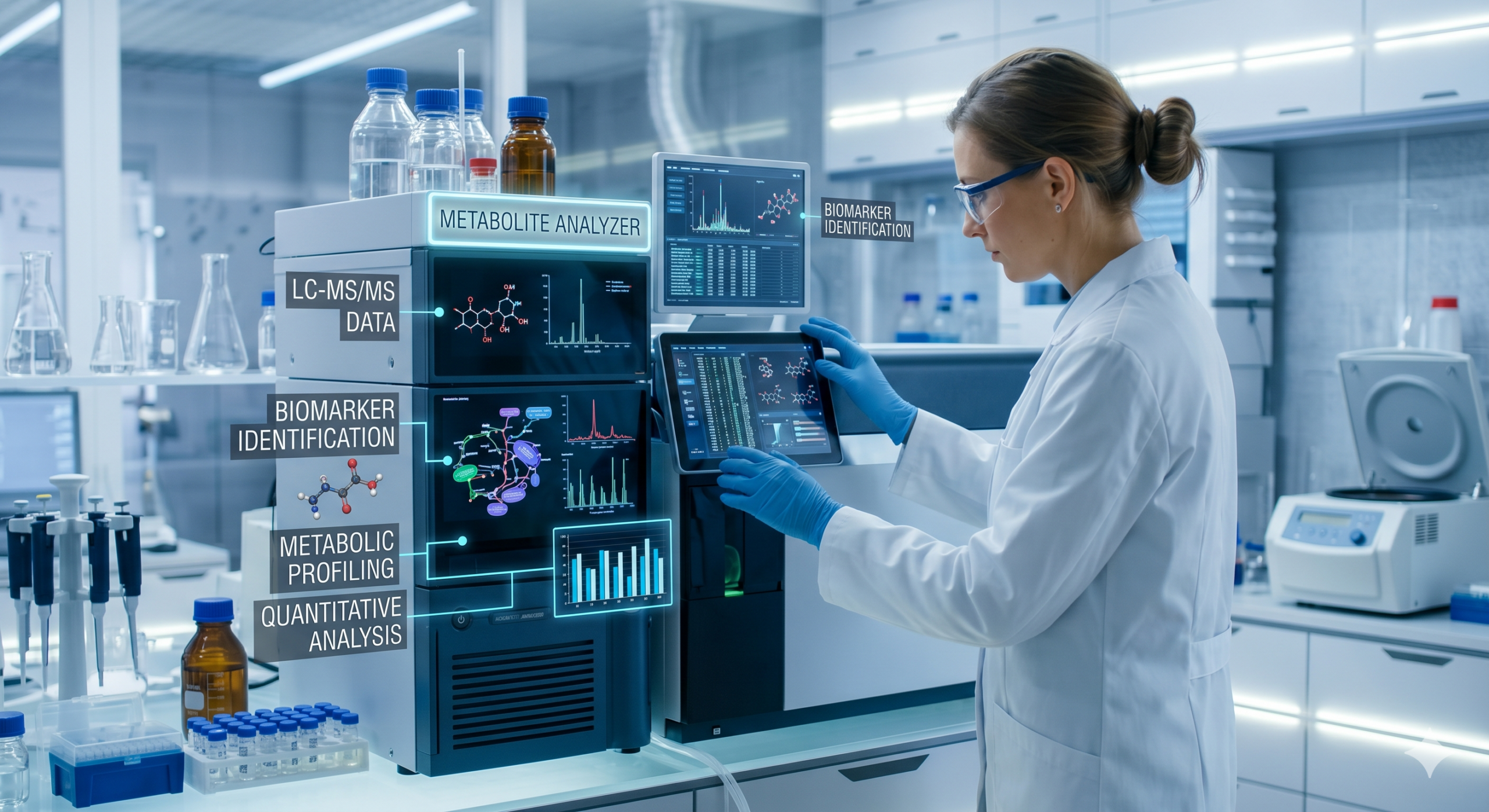
Scientific research has evolved significantly over the last decade, especially in areas such as metabolomics, biotechnology, pharmaceuticals, and clinical diagnostics. Researchers today require advanced analytical tools that can provide accurate, reproducible, and high-throughput data. One of the most important technologies supporting this progress is Metabolite Analyzers.
These sophisticated analytical systems help scientists study metabolites, which are small molecules involved in biological processes. From disease detection to drug development, metabolite analysis has become a crucial part of modern research workflows. As laboratories continue to generate complex biological data, the demand for reliable metabolite analysis tools continues to grow.
Understanding Metabolites in Scientific Research
Metabolites are chemical compounds produced during metabolic processes within cells, tissues, and organisms. These compounds provide valuable insights into cellular activity, disease progression, environmental responses, and physiological conditions.
Scientists analyze metabolites to better understand:
- Cellular metabolism
- Disease biomarkers
- Drug interactions
- Nutritional effects
- Environmental stress responses
- Microbial activity
Because metabolites change rapidly in response to biological conditions, researchers need advanced analytical systems capable of detecting and measuring these compounds with precision.
What Are Metabolite Analyzers?
Metabolite Analyzers are scientific instruments or integrated analytical systems designed to detect, identify, and quantify metabolites in biological samples. These analyzers are commonly used in combination with technologies such as:
- Liquid chromatography-mass spectrometry (LC-MS)
- Gas chromatography-mass spectrometry (GC-MS)
- Nuclear magnetic resonance (NMR)
- High-performance liquid chromatography (HPLC)
These systems help researchers generate detailed metabolic profiles from samples such as blood, urine, tissues, cells, and microbial cultures.
The ability to analyze metabolites accurately allows scientists to gain a deeper understanding of biological systems and improve research outcomes across multiple scientific fields.
Why Metabolite Analyzers Are Important
Modern scientific research relies heavily on accurate and reproducible data. Metabolite analysis helps researchers uncover subtle biochemical changes that may not be visible through other analytical approaches.
Improved Research Accuracy
Advanced analyzers provide precise detection and quantification of metabolites, reducing analytical errors and improving confidence in research findings.
Faster Data Processing
High-throughput analytical systems enable laboratories to process large sample volumes efficiently, which is especially important in clinical and pharmaceutical research.
Better Biomarker Discovery
Metabolite analysis plays a major role in identifying disease biomarkers. Researchers can detect metabolic changes associated with conditions such as cancer, diabetes, cardiovascular diseases, and neurological disorders.
Enhanced Drug Development
Pharmaceutical companies use metabolite analysis to study drug metabolism, toxicity, and treatment responses. This helps improve drug safety and effectiveness during clinical development.
Support for Precision Medicine
Metabolite data contributes to personalized healthcare approaches by helping researchers understand how individuals respond differently to treatments and therapies.
Applications of Metabolite Analyzers
The use of metabolite analysis extends across several industries and research disciplines.
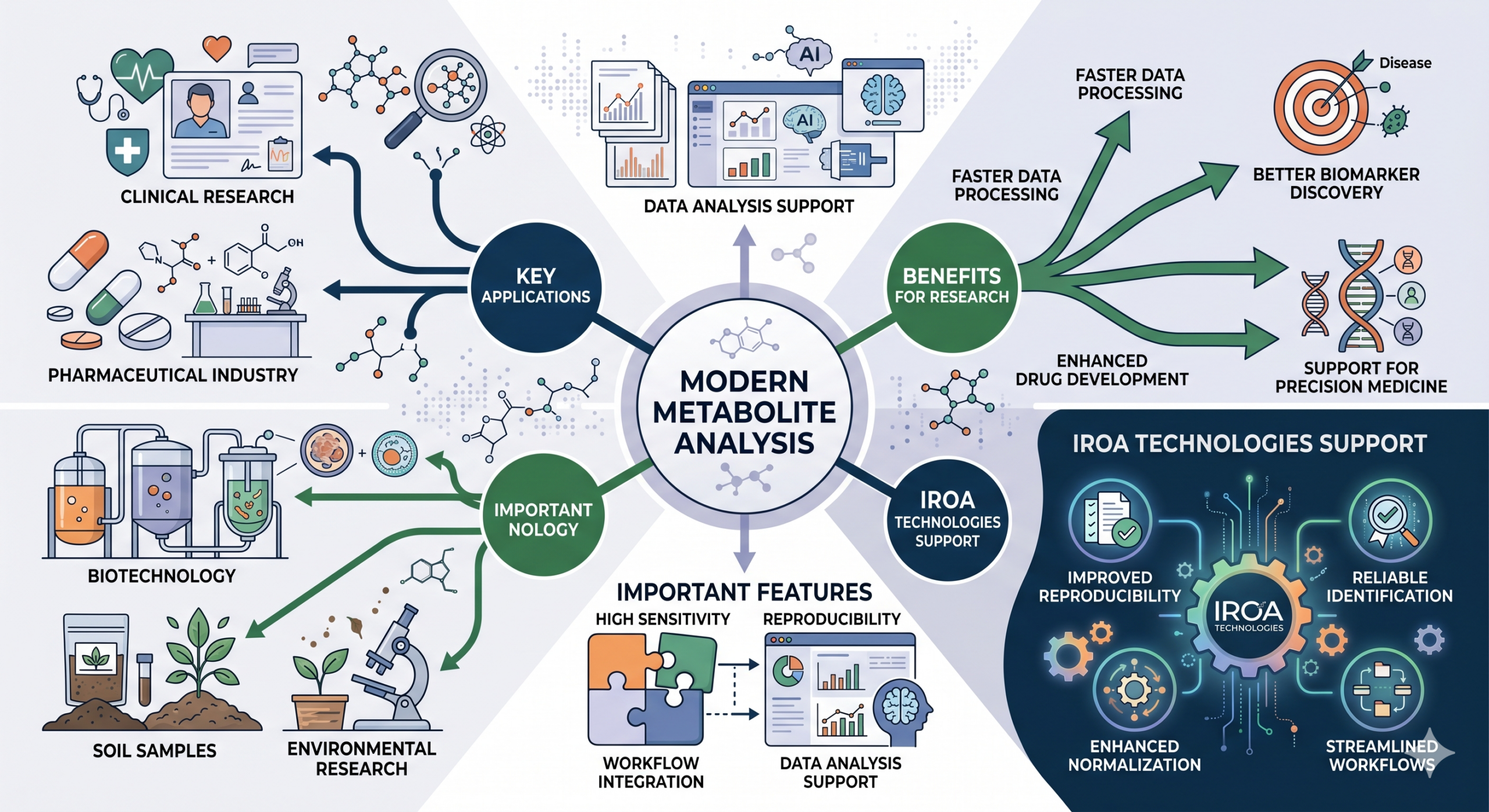
Clinical Research
Clinical laboratories use metabolite analysis to identify biomarkers, monitor disease progression, and support diagnostic research.
Pharmaceutical Industry
Drug developers rely on metabolic profiling to evaluate how drugs interact with biological systems and to monitor treatment outcomes.
Biotechnology Research
Biotechnology companies use metabolite analysis to optimize microbial production systems, fermentation processes, and cellular engineering applications.
Food and Nutrition Science
Researchers study metabolites to understand nutritional effects, food quality, and dietary influences on human health.
Environmental Research
Environmental scientists analyze metabolites to study soil biology, plant stress responses, and ecological changes caused by environmental conditions.
Key Features Researchers Should Look For
Choosing the right analytical solution is critical for achieving reliable scientific results. Researchers should consider several important factors when selecting metabolite analysis systems.
Analytical Sensitivity
The analyzer should detect low-abundance metabolites accurately, especially in complex biological samples.
Reproducibility
Consistent results across multiple experiments are essential for scientific validation and data reliability.
Workflow Integration
Modern laboratories benefit from systems that integrate easily with existing workflows and analytical platforms.
Data Analysis Support
Advanced software tools and data interpretation capabilities help researchers manage complex metabolomics datasets more efficiently.
Quality Control Features
Reliable quality control systems ensure accurate instrument performance and reduce variability in experimental results.
How IROA Technologies Supports Scientific Research
IROA Technologies is recognized for providing advanced metabolomics solutions that help researchers improve analytical accuracy and workflow consistency. The company specializes in technologies that support metabolomics normalization, internal standards, biomarker discovery, and metabolomic data analysis.
Researchers working with IROA Technologies benefit from:
- Improved analytical reproducibility
- Reliable metabolite identification
- Enhanced data normalization
- Streamlined research workflows
- High-quality standards and analytical tools
These solutions help laboratories generate more accurate and reproducible scientific data across clinical, pharmaceutical, and life science research applications.
For additional scientific resources related to metabolomics and metabolite analysis, researchers can visit the National Institutes of Health Metabolomics Program.
The Future of Metabolite Analysis
As research technologies continue to evolve, metabolite analysis will become even more important in understanding complex biological systems. Emerging fields such as artificial intelligence, systems biology, and precision medicine are increasing the demand for advanced analytical tools capable of handling large-scale biological data.
Future developments may include:
- Automated analytical workflows
- Real-time metabolite monitoring
- AI-driven data interpretation
- Expanded metabolite databases
- Multi-omics integration
These innovations will further improve research efficiency, disease understanding, and therapeutic development.
Conclusion
Metabolite analysis has become a cornerstone of modern scientific research. Accurate metabolite detection and quantification allow researchers to better understand biological processes, discover biomarkers, improve drug development, and support precision medicine initiatives.
Advanced Metabolite Analyzers help laboratories achieve higher levels of analytical accuracy, reproducibility, and workflow efficiency. With innovative solutions from IROA Technologies, researchers can strengthen their metabolomics capabilities and generate more reliable scientific insights that contribute to future discoveries.
FAQs
What are metabolite analyzers used for?
Metabolite analyzers are used to detect, identify, and quantify metabolites in biological samples for research, diagnostics, and pharmaceutical studies.
Why are metabolite analyzers important in metabolomics?
They help researchers generate accurate metabolic profiles, improve biomarker discovery, and support reliable data analysis in metabolomics research.
Which industries use metabolite analysis?
Clinical research, pharmaceuticals, biotechnology, food science, and environmental research industries all use metabolite analysis technologies.
How do metabolite analyzers improve research accuracy?
These systems provide sensitive and reproducible measurements that reduce analytical variability and improve confidence in research findings.
Why choose IROA Technologies for metabolomics solutions?
IROA Technologies offers advanced metabolomics tools, normalization solutions, and analytical standards that help researchers improve data consistency, workflow efficiency, and scientific reproducibility.