
Internal Standards for Metabolomics

Browse all articles filed under the "Internal Standards for Metabolomics" tag.

Showing 1–8 of 8 articles

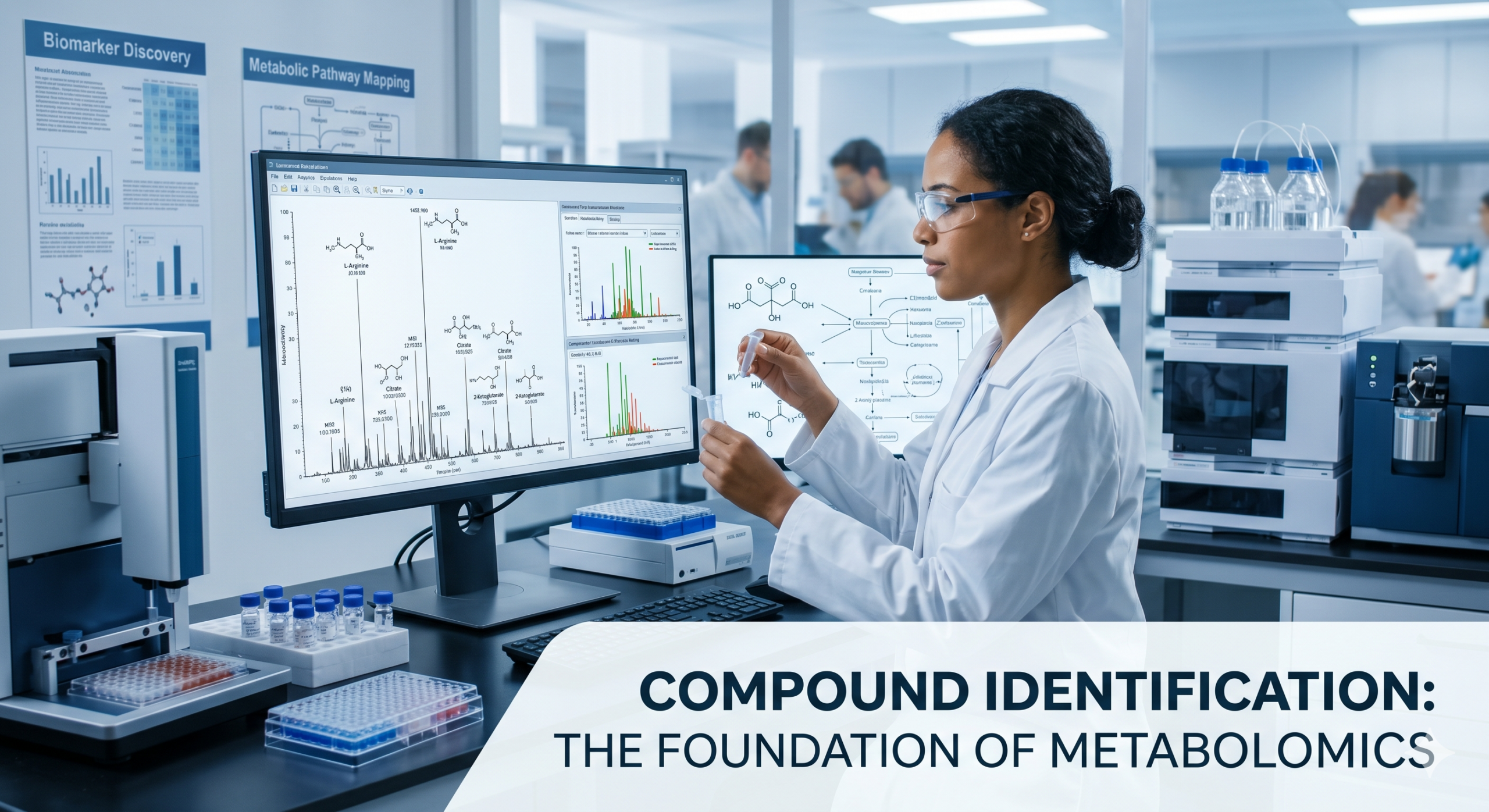
Why Compound Identification Matters in Metabolomics Research

Metabolomics has emerged as one of the most powerful fields in modern life sciences, enabling researchers to study the small molecules, or metabolites, that drive biological processes.

By analyzing these metabolites, scientists can gain valuable insights into health, disease progression, drug responses, and environmental influences. However, the value of metabolomics data depends heavily on one critical step: Compound Identification Without accurately identifying the compounds present in a biological sample, researchers cannot confidently interpret their findings or translate data into meaningful discoveries.

Whether the goal is biomarker discovery, precision medicine, agricultural research, or pharmaceutical development, reliable identification of metabolites forms the foundation of successful metabolomics studies.

Understanding Compound Identification in Metabolomics In metabolomics, thousands of metabolites can be detected within a single sample using advanced analytical techniques such as mass spectrometry...

Understanding Reproducible Science in Metabolomics

The Connection Between Metabolomics Standards and Reproducible Science

Scientific research depends heavily on accuracy, consistency, and reliability. In the rapidly evolving field of metabolomics, researchers analyze small molecules and metabolites to better understand biological systems, diseases, and treatment responses.

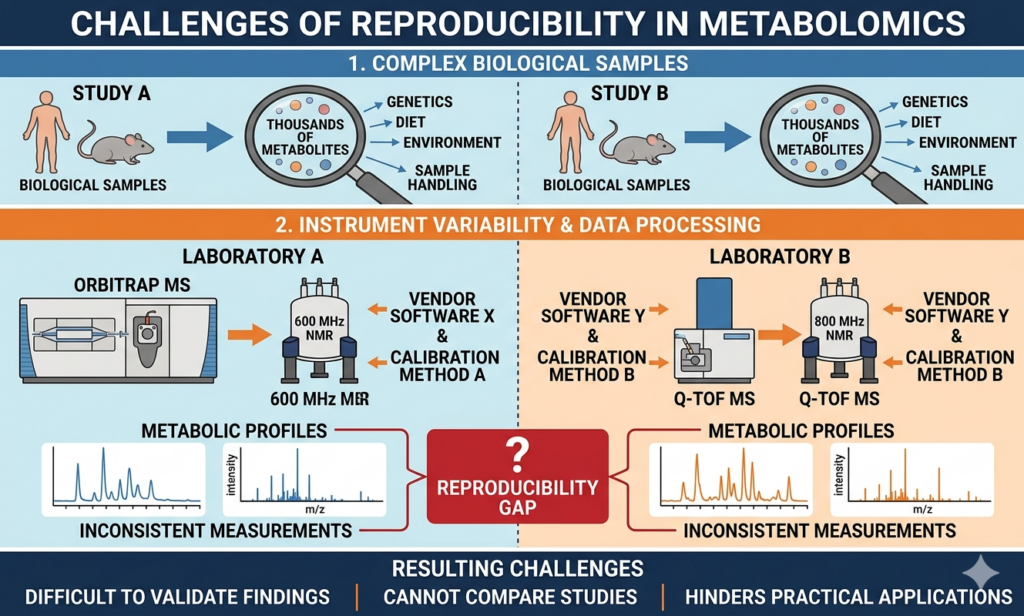
However, achieving reliable outcomes across different laboratories and studies remains a major challenge. This is where Metabolomics Standards play a critical role in supporting reproducible science.

  Understanding Reproducible Science in Metabolomics Reproducible science means that independent researchers should be able to perform the same experiment under similar conditions and obtain comparable results.

In metabolomics research, reproducibility is essential because scientists often deal with highly complex biological data generated through advanced analytical instruments such as mass spectrometry and nuclear magnetic resonance (NMR).

Without consistency in sample preparation, instrument calibration, data acquisition, and analysis methods, results can vary significantly between...

Why Metabolite Analyzers Are Essential for Scientific Research

Why Metabolite Analyzers Are Essential for Scientific Research

Scientific research has evolved significantly over the last decade, especially in areas such as metabolomics, biotechnology, pharmaceuticals, and clinical diagnostics.

Researchers today require advanced analytical tools that can provide accurate, reproducible, and high-throughput data. One of the most important technologies supporting this progress is Metabolite Analyzers.

These sophisticated analytical systems help scientists study metabolites, which are small molecules involved in biological processes. From disease detection to drug development, metabolite analysis has become a crucial part of modern research workflows.

As laboratories continue to generate complex biological data, the demand for reliable metabolite analysis tools continues to grow. Understanding Metabolites in Scientific Research Metabolites are chemical compounds produced during metabolic processes within cells, tissues, and organisms.

These compounds provide valuable insights into cellular activity, disease progression, environmental responses, and physiological conditions....

What-are-metabolomics-standards

Why Metabolomics Standards Matter for Reproducible Science

Metabolomics is transforming our understanding of biology by profiling small molecules that reflect physiological and pathological states. As the field matures, consistent and transparent practices become essential to turning complex data into reliable scientific knowledge.

Metabolomics standards are central to this effort: they ensure data quality, make experiments comparable across labs, and accelerate discovery by enabling data reuse.

In this post, we explain why these standards matter, what they cover, and how organizations like IROA Technologies contribute to building a more reproducible metabolomics ecosystem.

What Are Metabolomics Standards? Metabolomics standards are agreed-upon guidelines, formats, and best practices for designing experiments, collecting and processing data, and reporting results.

They include: Standardized sample collection and storage protocols. Instrument calibration and quality-control procedures. Data formats and metadata requirements to describe experimental context.

Statistical...

Laboratory vials labeled “Fatty Acids Unsaturated Kit” beside a molecular model with chromatography graphs in the background.

How the Fatty Acids Unsaturated Kit Enhances Accuracy in Lipid Profiling

In the world of analytical chemistry and metabolomics, precision and reproducibility are essential. Lipid profiling—analyzing the composition, concentration, and variation of lipids in biological systems—plays a critical role in understanding metabolism, disease mechanisms, and nutritional science.

However, accurately quantifying and identifying fatty acids remains one of the most challenging tasks due to the complexity of lipid structures and variations in saturation levels.

That’s where the fatty acids unsaturated kit becomes invaluable. Designed to simplify and standardize the analysis process, this specialized kit ensures consistent, high-quality results that empower researchers to generate reliable lipidomic data.

Let’s explore how this tool enhances analytical accuracy and contributes to advancing modern metabolomics and lipid research. Understanding Lipid Profiling Lipid profiling (or lipidomics) is a branch of metabolomics that focuses on the identification and quantification...

Digital illustration showing molecular structure, chromatogram, magnifying glass with clusters, and computer screen symbolizing metabolomic research and data clustering.

Why a Cluster Search Engine Is Essential for Accurate Metabolomic Research

In the world of metabolomics, data complexity is one of the biggest challenges researchers face. Modern experiments generate enormous volumes of spectral data, often containing thousands of features that must be accurately identified, clustered, and interpreted.

This is where a cluster search engine becomes indispensable. By enabling efficient data clustering, pattern recognition, and annotation, a cluster search engine empowers metabolomic scientists to streamline analysis and uncover meaningful biological insights faster and with greater accuracy.

At IROA Technologies, we understand that precision in metabolomic research depends on robust data processing tools that can handle variability, eliminate redundancy, and ensure reproducibility across analytical runs.

Let’s explore how a cluster search engine serves as a cornerstone for high-quality metabolomic research. Understanding the Role of a Cluster Search Engine A cluster search engine is...

Why a Robust Metabolomics Workflow Matters in Precision Science

Why a Robust Metabolomics Workflow Matters in Precision Science

Precision science is no longer the future—it’s the present. From personalized medicine and agricultural sustainability to environmental monitoring, science is becoming increasingly tailored, data-driven, and outcome-oriented.

At the center of this transformation is metabolomics, the comprehensive study of small molecules within cells, tissues, and organisms. But metabolomics without structure is just data.

To generate meaningful, reproducible insights, researchers rely on one critical foundation: a robust metabolomics workflow. At IROA Technologies, we believe that optimizing your metabolomics workflow is essential for achieving consistency, accuracy, and scientific breakthroughs.

Let’s explore why your workflow matters and how it impacts everything from experimental design to data interpretation. What Is a Metabolomics Workflow?

A metabolomics workflow refers to the step-by-step process involved in analyzing metabolite profiles in biological samples. It includes: Sample collection and preparation ...

How to Standardize Metabolomics Normalization with IROA?

How to Standardize Metabolomics Normalization with IROA?

Metabolomics has matured into a critical facet of systems biology. Presently, it aims at identifying and quantifying the diverse metabolites within a cell, tissue, or organism under various conditions.

A key component in metabolomics research is the normalization process, ensuring that data is accurate and comparable across experiments. IROA Technologies offers innovative solutions for metabolomics normalization, enhancing analytical precision and accuracy through their unique methodologies.

In this blog, we will explore how to standardize metabolomics normalization with the help of IROA. Understanding Metabolomics Normalization Before we delve into the IROA's methodologies, it is crucial to understand the concept of metabolomics normalization.

Normalization is a process that adjusts for variability in metabolomics data that does not relate to the biological condition under study, such as instrument fluctuations or differences in sample...