
Bile acids are essential biological molecules that play a central role in digestion, metabolism, and cellular signaling. Although traditionally recognized for their function in fat absorption, modern research has revealed that they are far more than digestive agents. Their structural complexity and diverse biological activity make them important targets in clinical research, metabolic studies, and biomarker discovery. Understanding their structure and function provides valuable insights into human health and disease mechanisms.
What Are Bile Acids?
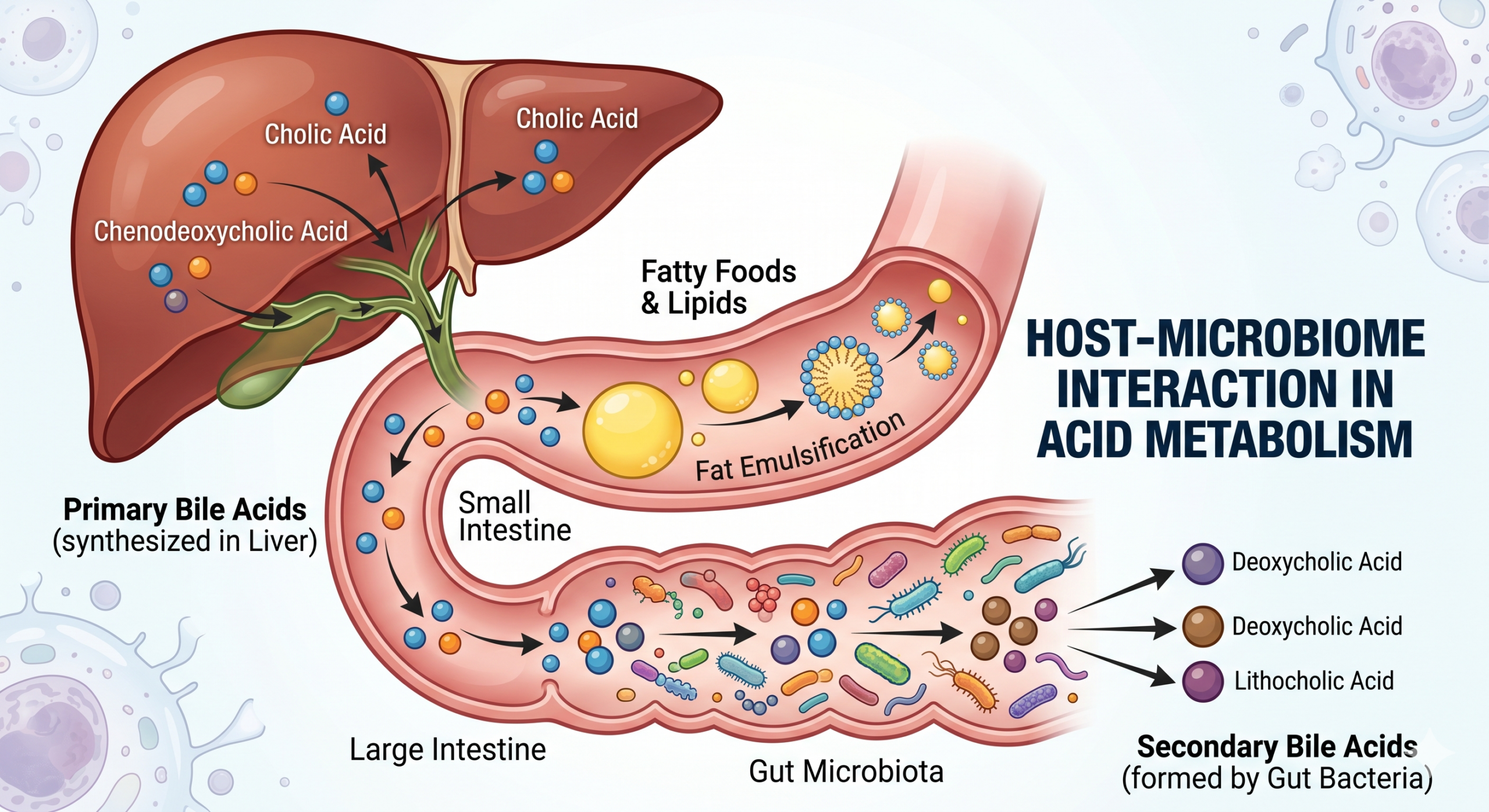
Bile acids are steroid-derived molecules synthesized in the liver from cholesterol. After synthesis, they are stored in the gallbladder and released into the small intestine during digestion. Their primary function is to emulsify dietary fats, making them easier for digestive enzymes to break down and absorb.
These molecules are produced in two main forms: primary and secondary bile acids. Primary bile acids are synthesized directly in the liver, while secondary bile acids are formed by gut microbiota through biochemical modification. This interaction between host metabolism and intestinal bacteria highlights the close relationship between bile acids and the microbiome.
In metabolomics research, detailed profiling of these compounds provides insights into disease mechanisms and therapeutic responses. Advanced analytical techniques such as mass spectrometry are commonly used to detect and quantify bile acid compounds with high precision.
Structural Characteristics
The structure of bile acids is what enables their unique biological functions. They are amphipathic molecules, meaning they contain both hydrophilic (water-attracting) and hydrophobic (water-repelling) regions. This dual nature allows them to interact with fats and water simultaneously, making them effective emulsifiers.
At the core of their structure is a rigid steroid nucleus composed of four fused carbon rings. Attached to this nucleus are hydroxyl groups and a side chain ending in a carboxylic acid group. The position and number of hydroxyl groups influence their solubility, biological activity, and interaction with receptors.
Conjugation is another important structural modification. In the liver, bile acids are often conjugated with amino acids such as glycine or taurine. This process increases their solubility and reduces toxicity. Conjugated forms are more efficient in forming micelles, which are essential for lipid absorption.
These structural variations determine how bile acids behave within biological systems, affecting their signaling capacity and metabolic impact.
Biological Functions Beyond Digestion
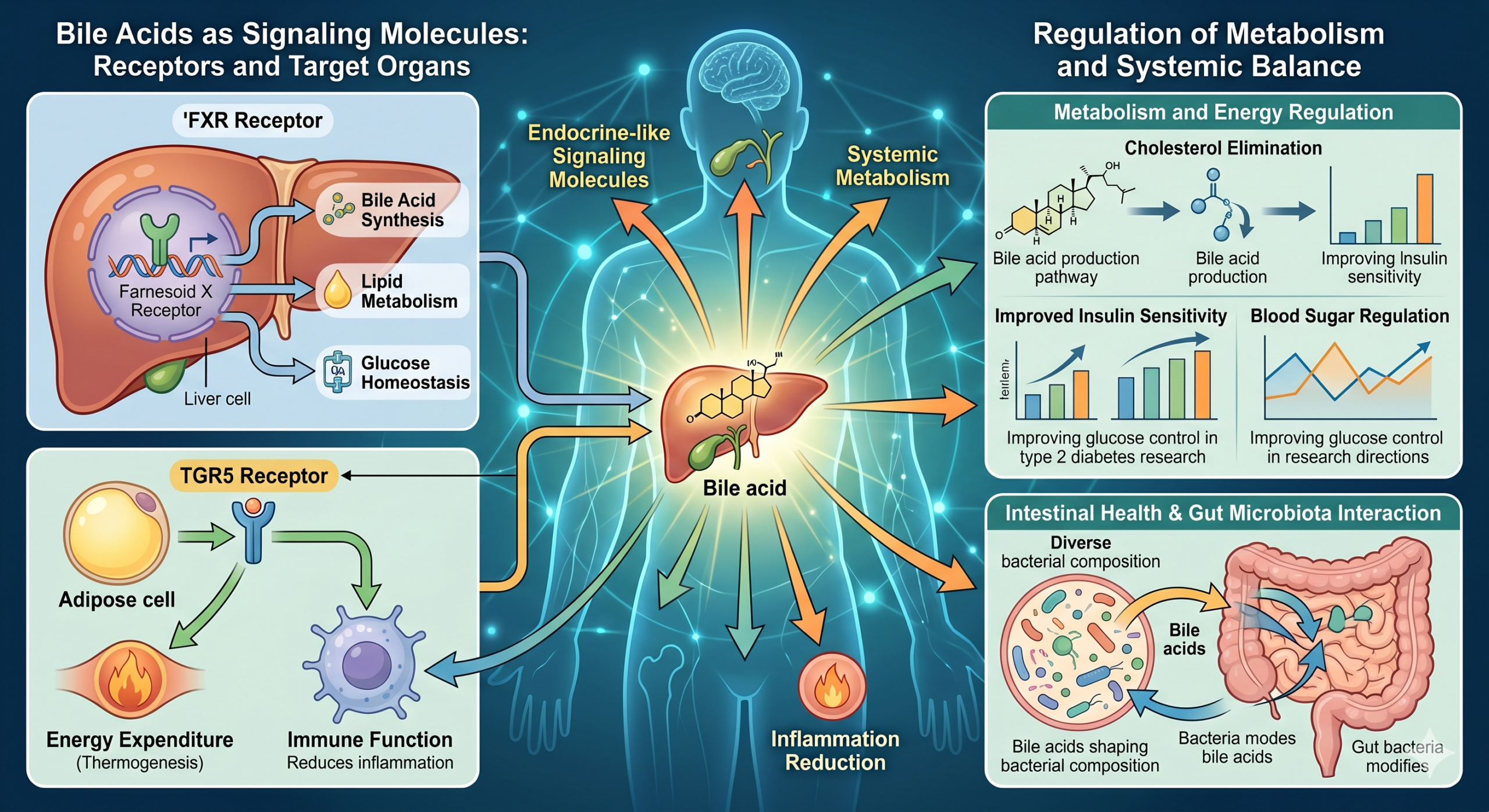
While their digestive role is well known, bile acids also function as signaling molecules. They activate specific receptors in the body, influencing metabolic pathways, inflammation, and energy balance.
One key receptor is the farnesoid X receptor (FXR), which regulates bile acid synthesis, lipid metabolism, and glucose homeostasis. Activation of FXR helps maintain metabolic balance and prevents excessive bile acid accumulation. Another important receptor is the TGR5 receptor, which is involved in energy expenditure and immune regulation.
Through these receptor-mediated pathways, bile acids influence liver function, insulin sensitivity, and systemic metabolism. This expanded understanding has shifted scientific perspectives, positioning bile acids as endocrine-like molecules rather than just digestive agents.
Role in Metabolism and Energy Regulation
Bile acids play a regulatory role in cholesterol homeostasis. Since cholesterol is the precursor for their synthesis, bile acid production serves as a major pathway for cholesterol elimination from the body. This process helps maintain lipid balance and reduce cardiovascular risk.
They also influence glucose metabolism. Research suggests that bile acid signaling can improve insulin sensitivity and regulate blood sugar levels. These findings have opened new research directions in metabolic disorders such as obesity and type 2 diabetes.
Furthermore, bile acids interact with gut microbiota, shaping microbial composition and function. In return, gut bacteria modify bile acids, creating a dynamic feedback system. This interaction affects inflammation, intestinal health, and metabolic regulation.
Clinical and Research Significance
Due to their involvement in multiple physiological systems, bile acids are increasingly studied as biomarkers. Altered bile acid profiles have been associated with liver diseases, metabolic syndrome, inflammatory bowel disease, and certain cancers.
In liver disorders such as cholestasis, bile acid accumulation can cause toxicity and tissue damage. Monitoring bile acid levels helps in diagnosis and disease management. Similarly, changes in bile acid composition can indicate disruptions in gut-liver communication.
For further scientific reading, you may refer to this external resource on bile acid biology:
https://www.ncbi.nlm.nih.gov/books/NBK279396/
This resource provides comprehensive information about bile acid synthesis, metabolism, and physiological roles.
Analytical Approaches in Bile Acid Research
Studying bile acids requires accurate and sensitive analytical methods. Liquid chromatography coupled with mass spectrometry (LC-MS) is widely used for their detection due to its high specificity and ability to distinguish between structurally similar molecules.
Quantitative analysis is particularly important because bile acids exist in low concentrations and undergo dynamic changes based on diet, microbiome composition, and disease state. Internal standards and validated methods improve data reliability in clinical and research settings.
Such analytical approaches are essential for understanding their functional roles and for identifying potential diagnostic markers.
Emerging Therapeutic Applications
The regulatory functions of bile acids have led to therapeutic interest. Certain bile acid derivatives are being investigated for the treatment of liver diseases and metabolic disorders. Modulating bile acid signaling pathways, especially FXR and TGR5, represents a promising strategy for improving metabolic health.
In addition, synthetic bile acid analogs are being developed to target specific receptors with improved safety and efficacy profiles. These advancements demonstrate the expanding clinical relevance of bile acid research.
Conclusion
Bile acids are structurally specialized molecules with wide-ranging biological functions. Their amphipathic design enables fat digestion, while their receptor interactions regulate metabolism, inflammation, and energy balance. Increasing evidence highlights their importance in disease mechanisms and biomarker discovery. Detailed analysis of these compounds supports advancements in clinical research and metabolomics.
At Iroa Technologies, we focus on providing reliable metabolomics solutions that support accurate profiling and interpretation of complex biological compounds, including bile acids, to advance scientific research and innovation.
FAQs
1. What are bile acid compounds?
Bile acid compounds are steroid-derived molecules produced in the liver from cholesterol. They help digest fats and also function as signaling molecules in metabolic regulation.
2. Why are bile acids important in research?
They are important because changes in their levels are associated with liver diseases, metabolic disorders, and gut microbiome imbalances. They are also studied as potential biomarkers.
3. How are bile acids analyzed in laboratories?
They are commonly analyzed using advanced techniques such as liquid chromatography–mass spectrometry (LC-MS), which provides high sensitivity and accuracy.
4. Do bile acids have functions beyond digestion?
Yes. They regulate cholesterol metabolism, influence glucose balance, interact with gut bacteria, and activate specific cellular receptors involved in energy and immune regulation.
5. Can bile acid levels indicate disease?
Altered bile acid profiles can signal liver dysfunction, metabolic syndrome, or gastrointestinal disorders, making them valuable in clinical diagnostics.