
Phytochemicals are naturally occurring compounds found in plants that play an essential role in human health. Although they are not classified as vitamins or minerals, they contribute significantly to disease prevention and overall wellness. Scientific research continues to explore how these plant-based compounds influence cellular function, immunity, and long-term health outcomes.
In this article, we provide a clear and research-based explanation of the Types of Phytochemicals, their biological roles, and why they matter in nutrition science. This overview is especially useful for students, researchers, and health professionals interested in plant-based bioactive compounds. Insights like these are aligned with the research-driven approach supported by IROA Technologies, which focuses on advanced scientific solutions in analytical and biological research fields.
What Are Phytochemicals?
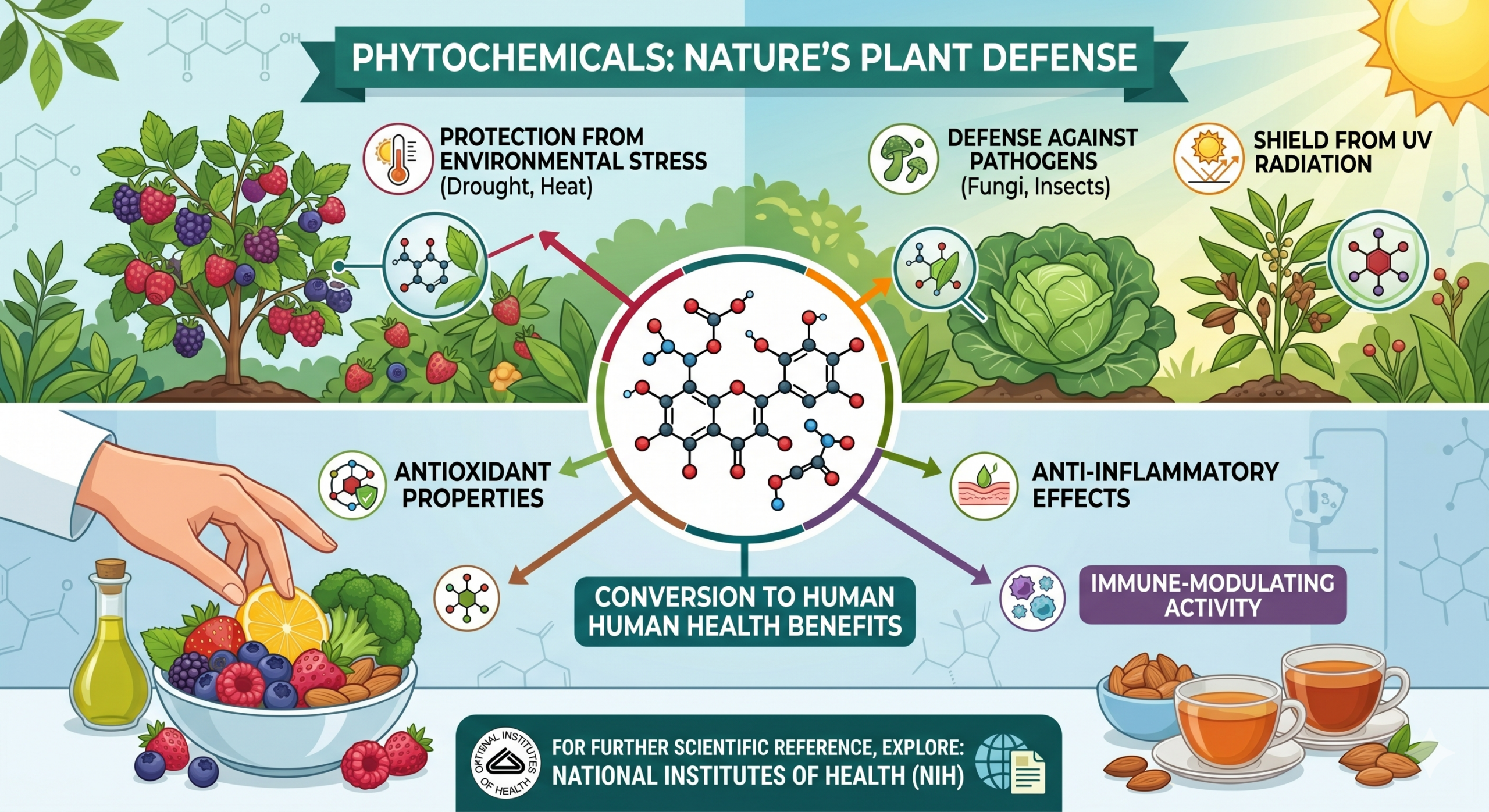
Phytochemicals are bioactive compounds produced by plants to protect themselves from environmental stress, pathogens, and ultraviolet radiation. When consumed through fruits, vegetables, grains, legumes, herbs, and spices, these compounds may provide protective effects in the human body.
They are widely studied in nutrition science, pharmacology, and clinical research due to their antioxidant, anti-inflammatory, and immune-modulating properties.
For further scientific reference, you can explore information from the National Institutes of Health (NIH):
National Institutes of Health (NIH) Biomedical Research Resources
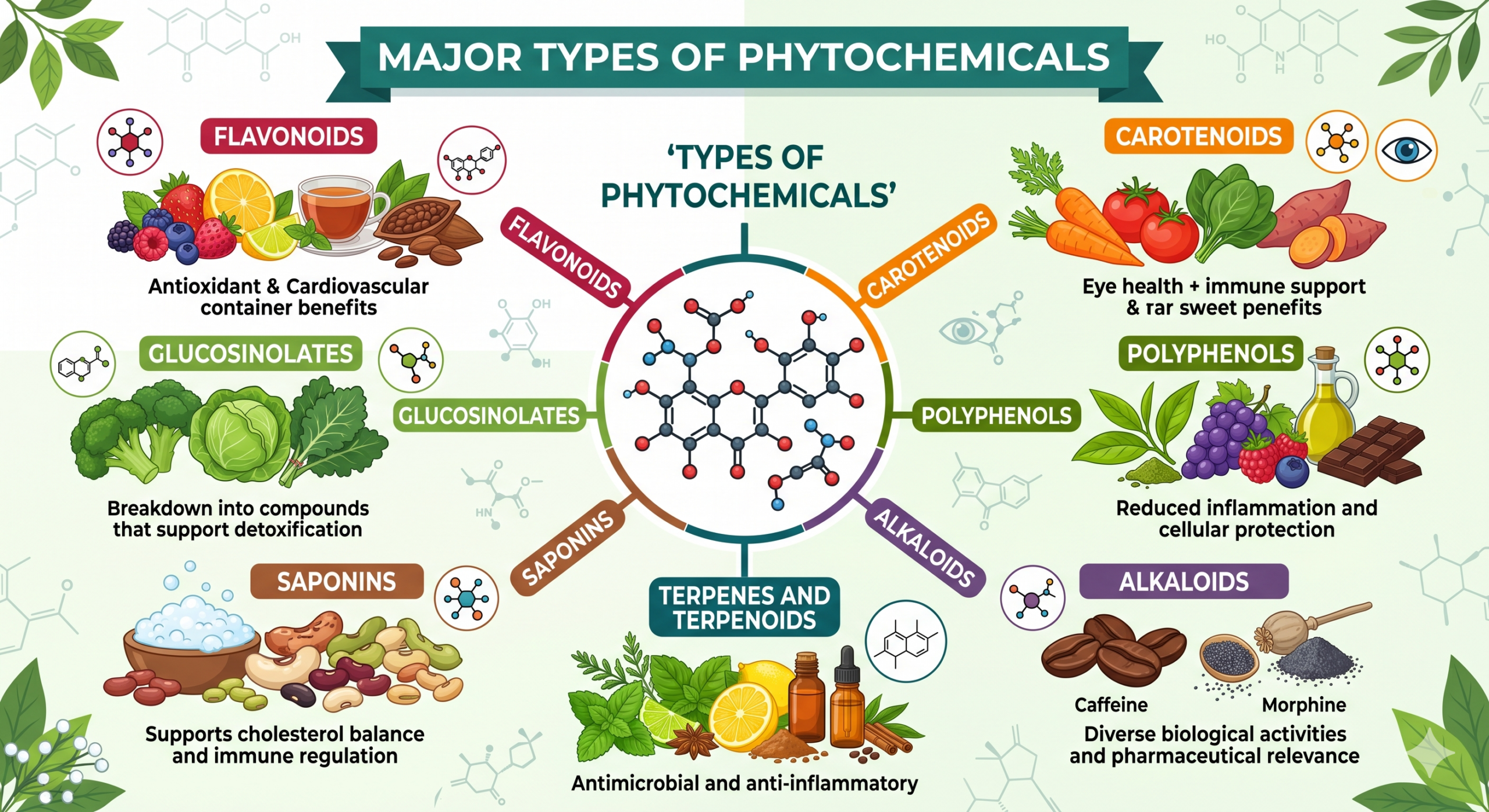
Major Types of Phytochemicals
Scientists categorize phytochemicals into several groups based on their chemical structure and biological activity. Below are the most recognized classifications.
1. Flavonoids
Flavonoids are one of the most researched Types of Phytochemicals. They are known for their strong antioxidant properties and are commonly found in fruits, vegetables, tea, cocoa, and citrus foods.
Subcategories include:
- Flavonols
- Flavones
- Flavanones
- Anthocyanins
- Isoflavones
Flavonoids may help reduce oxidative stress, support cardiovascular health, and improve vascular function.
2. Carotenoids
Carotenoids are pigments responsible for the yellow, orange, and red colors in plants. They are fat-soluble compounds found in carrots, tomatoes, spinach, and sweet potatoes.
Key carotenoids include:
- Beta-carotene
- Lycopene
- Lutein
- Zeaxanthin
These compounds are widely studied for their antioxidant activity and potential role in eye health and immune support.
3. Polyphenols
Polyphenols represent a broad category that includes flavonoids and other related compounds. They are among the most abundant Types of Phytochemicals in plant-based diets.
Polyphenols are found in:
- Green tea
- Berries
- Grapes
- Olive oil
- Dark chocolate
They are associated with reduced inflammation and protection against cellular damage.
4. Alkaloids
Alkaloids are naturally occurring compounds containing nitrogen. Many have biological activity and are used in pharmaceutical applications.
Examples include:
- Caffeine
- Morphine
- Quinine
While some alkaloids have medicinal uses, others must be consumed carefully due to their potent effects.
5. Terpenes and Terpenoids
Terpenes are aromatic compounds found in herbs, spices, and essential oils. They contribute to the fragrance and flavor of plants.
Common examples:
- Menthol (mint)
- Limonene (citrus)
- Carotene-related compounds
Terpenes are studied for their antimicrobial and anti-inflammatory properties.
6. Saponins
Saponins are compounds that can produce a soap-like foam when mixed with water. They are found in legumes, beans, and some grains.
Research suggests saponins may:
- Support cholesterol balance
- Contribute to immune regulation
- Offer antimicrobial effects
7. Glucosinolates
Glucosinolates are sulfur-containing compounds primarily found in cruciferous vegetables such as broccoli, cabbage, and kale.
When these vegetables are chopped or chewed, glucosinolates break down into biologically active substances that may support detoxification processes.
Biological Importance of Phytochemicals
The scientific interest in phytochemicals continues to grow because of their potential health benefits. Research suggests they may:
- Act as antioxidants
- Reduce chronic inflammation
- Support immune defense
- Promote cellular health
- Contribute to long-term disease prevention
Many studies focus on how plant-based diets rich in these compounds may reduce the risk of chronic conditions. However, more research is still needed to fully understand mechanisms and optimal intake levels.
Sources of Phytochemicals in the Diet
A balanced diet rich in colorful plant foods ensures intake of multiple phytochemical groups. Examples include:
- Leafy greens
- Berries
- Citrus fruits
- Whole grains
- Nuts and seeds
- Herbs and spices
Variety is important because different foods provide different Types of Phytochemicals, each contributing uniquely to health.
Role of Research and Technology
Modern analytical techniques, including mass spectrometry and metabolomic profiling, help scientists study phytochemical composition in detail. Advanced research tools allow accurate identification, quantification, and analysis of bioactive compounds in plants.
Organizations like IROA Technologies contribute to scientific advancements by supporting precise analytical solutions that help researchers better understand biochemical pathways and metabolic interactions. Such technology plays a critical role in expanding knowledge about plant-based compounds and their applications in clinical and nutritional research.
Conclusion
Phytochemicals are essential bioactive compounds found in plant foods that contribute significantly to human health. Understanding the Types of Phytochemicals helps researchers and health professionals appreciate the complexity and benefits of plant-based nutrition.
From flavonoids and carotenoids to alkaloids and glucosinolates, each group plays a unique biological role. Continued scientific research will further clarify their mechanisms and potential applications in preventive healthcare and therapeutic development.
A diverse, plant-rich diet remains the most effective way to benefit from these naturally occurring compounds.
Frequently Asked Questions (FAQs)
1. What are phytochemicals?
Phytochemicals are natural compounds found in plants that provide biological activity and potential health benefits when consumed in the diet.
2. How many Types of Phytochemicals are there?
There are several major categories, including flavonoids, carotenoids, polyphenols, alkaloids, terpenes, saponins, and glucosinolates.
3. Are phytochemicals the same as vitamins?
No. Phytochemicals are not classified as essential nutrients like vitamins or minerals, but they may support health through antioxidant and anti-inflammatory actions.
4. Which foods contain the most phytochemicals?
Fruits, vegetables, whole grains, legumes, nuts, seeds, herbs, and spices are rich sources of various phytochemical compounds.
5. Why are phytochemicals important in research?
They are widely studied for their potential role in disease prevention, cellular protection, and therapeutic applications in nutrition and medical science.