
Phytochemicals Definition

Browse all articles filed under the "Phytochemicals Definition" tag.

What Are Phytochemical Standards

Showing 1–7 of 7 articles

What Are Phytochemical Standards

A Complete Guide to Phytochemical Standards in Scientific and Pharmaceutical Applications

Natural compounds derived from plants have played a significant role in medicine, nutrition, and biotechnology for centuries. As research into botanical compounds continues to expand, ensuring the accuracy, purity, and consistency of these substances has become increasingly important.

This is where Phytochemical Standards serve as essential tools for scientific and pharmaceutical research. From drug development and quality control to metabolomics and analytical chemistry, standardized plant compounds provide researchers with reliable references that support reproducible and high-quality results.

Understanding their role can help laboratories and pharmaceutical organizations improve the reliability of their studies and product development processes. What Are Phytochemical Standards?

Phytochemical standards are highly purified compounds extracted from plants or synthesized to serve as reference materials in analytical and pharmaceutical applications.

These compounds are used to identify, quantify, and validate...
Scientific Overview of the Different Types of Phytochemicals

Scientific Overview of the Different Types of Phytochemicals

Phytochemicals are naturally occurring compounds found in plants that play an essential role in human health. Although they are not classified as vitamins or minerals, they contribute significantly to disease prevention and overall wellness.

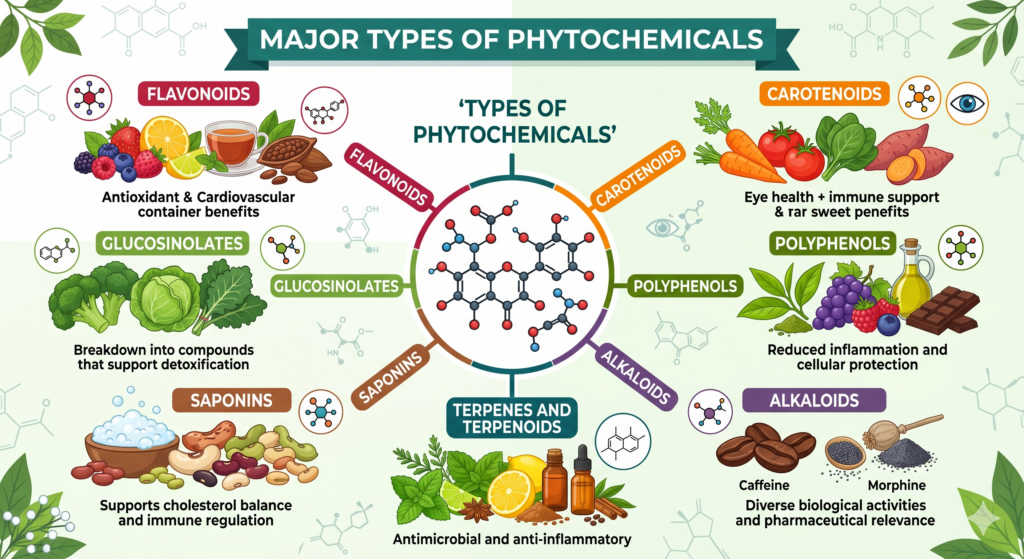
Scientific research continues to explore how these plant-based compounds influence cellular function, immunity, and long-term health outcomes. In this article, we provide a clear and research-based explanation of the Types of Phytochemicals, their biological roles, and why they matter in nutrition science.

This overview is especially useful for students, researchers, and health professionals interested in plant-based bioactive compounds. Insights like these are aligned with the research-driven approach supported by IROA Technologies, which focuses on advanced scientific solutions in analytical and biological research fields.

What Are Phytochemicals? Phytochemicals are bioactive compounds produced by plants to protect themselves...

Phytochemicals Definition: The Science Behind Plant-Based Nutrition

Phytochemicals Definition: The Science Behind Plant-Based Nutrition

In recent years, plant-based nutrition has gained significant attention for its role in promoting overall health and preventing chronic diseases.

At the core of this nutritional approach lies a fascinating group of naturally occurring compounds known as phytochemicals. Understanding the phytochemicals definition is essential for anyone looking to make informed dietary choices and improve their well-being.

What Are Phytochemicals? To begin with, the phytochemicals definition refers to bioactive compounds found in plants that contribute to their color, flavor, and resistance to diseases.

Unlike essential nutrients such as vitamins and minerals, phytochemicals are not required for survival. However, they play a crucial role in supporting human health by offering protective and therapeutic benefits.

These compounds are present in fruits, vegetables, grains, legumes, nuts, and seeds. From the vibrant red of tomatoes...

Phytochemicals in Plants: Types, Benefits, and Sources

Have you ever wondered why fruits and vegetables come in such vibrant colors? The answer lies in phytochemicals in plants – nature's incredible compounds that not only give plants their distinctive hues, flavors, and aromas but also offer remarkable health benefits to humans.

These naturally occurring substances represent one of the most fascinating aspects of plant biology and nutrition science. What Are Phytochemicals?

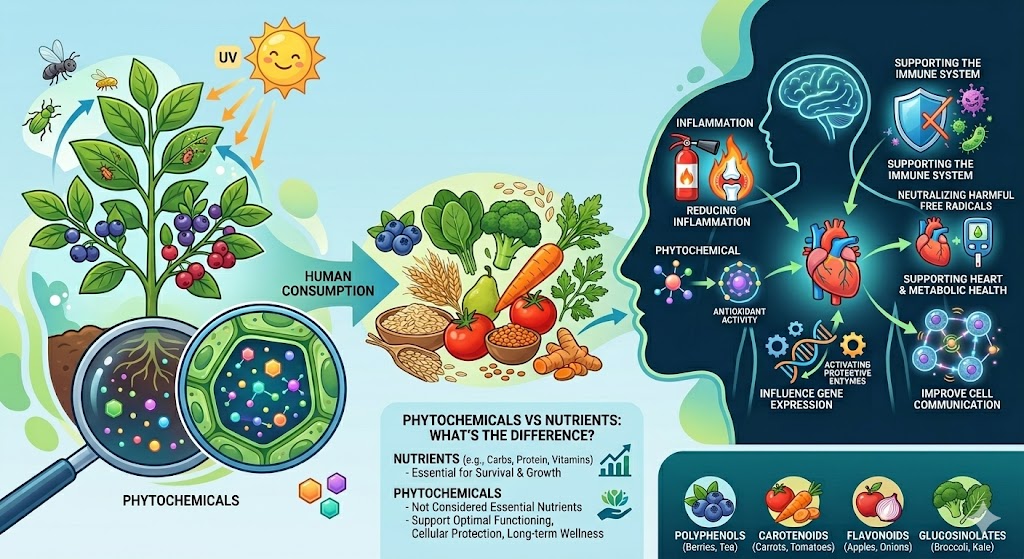
Phytochemicals, derived from the Greek word "phyto" meaning plant, are bioactive compounds that plants produce to protect themselves from environmental stressors such as UV radiation, insects, bacteria, and fungi.

Unlike essential nutrients like vitamins and minerals, phytochemicals aren't required for basic human survival, but research increasingly shows they play crucial roles in disease prevention and overall health optimization.

These powerful compounds act as a plant's natural defense...

Phytochemicals Definition: Types, Benefits & Examples

Phytochemicals Definition: Types, Benefits & Examples

Have you ever wondered why fruits and vegetables come in such vibrant colors? Or why certain plants have been used for medicinal purposes for thousands of years?

The answer lies in fascinating compounds called phytochemicals—nature's own pharmacy that's been hiding in plain sight on our dinner plates.

What Are Phytochemicals? The phytochemicals definition is quite straightforward: these are naturally occurring chemical compounds found in plants that give them their color, flavor, and natural protection against diseases and pests.

The word "phytochemical" comes from the Greek word phyto, meaning plant. Unlike essential nutrients like vitamins and minerals, phytochemicals aren't required for basic survival, but they play a crucial role in promoting optimal health and preventing chronic diseases.

Think of phytochemicals as nature's multitasking molecules. They serve as a plant's defense system...

How Phytochemical Compounds Support Immunity and Longevity

Phytochemical compounds are natural chemicals produced by plants that offer more than color, flavor, and aroma—they play an important role in human health.

Growing evidence links these plant-derived molecules to improved immune function and increased longevity. In this article, we’ll explore how phytochemical compounds work, which foods are richest in them, practical ways to include them in your diet, and what the science says about their long-term benefits.

This post is brought to you by IROA Technologies. What Are Phytochemical Compounds? Phytochemical compounds (often simply called phytochemicals) are bioactive compounds found in fruits, vegetables, herbs, seeds, and whole grains.

Unlike vitamins or minerals, phytochemicals are not classified as essential nutrients, yet they influence bodily systems in powerful ways. Common categories include flavonoids, carotenoids, polyphenols, glucosinolates, and alkaloids—each with unique biological...

Phytochemical-Meaning-Explained-With-Plant-Compounds-and-Their-Role-in-Human-Health

Phytochemical Meaning Explained With Plant Compounds and Their Role in Human Health

When people talk about eating more fruits, vegetables, herbs, and whole grains, the real health power behind these foods often comes from something most of us rarely notice—phytochemicals.

To clearly understand modern nutrition trends and plant-based diets, it is important to first understand the Phytochemical Meaning and why these natural compounds are gaining serious attention in health and science.

In simple terms, phytochemicals are naturally occurring compounds found in plants that help protect the plant itself and, at the same time, offer several benefits to the human body.

  What Is the Phytochemical Meaning? The Phytochemical Meaning refers to plant-derived bioactive compounds that are not considered essential nutrients like carbohydrates, fats, proteins, vitamins, or minerals—but still play a powerful role in supporting overall health.

The word comes from two parts:...