
In today’s data-driven scientific landscape, laboratories are expected to deliver results that are not only accurate but also reproducible, traceable, and defensible. Whether researchers are studying plant-based medicines, food safety, nutraceuticals, or environmental samples, the quality of analytical data directly impacts regulatory compliance, product safety, and scientific credibility. One of the most critical yet often underappreciated pillars supporting this accuracy is the use of well-defined analytical standards.
As natural products gain popularity across pharmaceutical, wellness, and agricultural sectors, laboratories face increasing pressure to validate complex mixtures of plant-derived compounds. This is where phytochemical analytical standard materials become essential for calibration, validation, and quality assurance. Organizations like IROA Technologies play an important role in advancing analytical reliability by providing innovative solutions that support consistency and confidence in laboratory testing.
Understanding Phytochemicals and Why They Matter
Phytochemicals are bioactive compounds naturally present in plants. They include flavonoids, alkaloids, terpenes, phenolics, carotenoids, and many other chemical classes. These compounds are responsible for the color, flavor, aroma, and biological activity of plants. In human health, phytochemicals are widely studied for their antioxidant, anti-inflammatory, antimicrobial, and therapeutic properties.
Because phytochemicals often exist in complex matrices and at varying concentrations, accurately identifying and quantifying them can be challenging. Slight variations in extraction methods, instrumentation, or sample handling can significantly alter results. Without standardized references, laboratories risk inconsistent data, which can undermine product quality and regulatory acceptance.
What Are Analytical Standards?
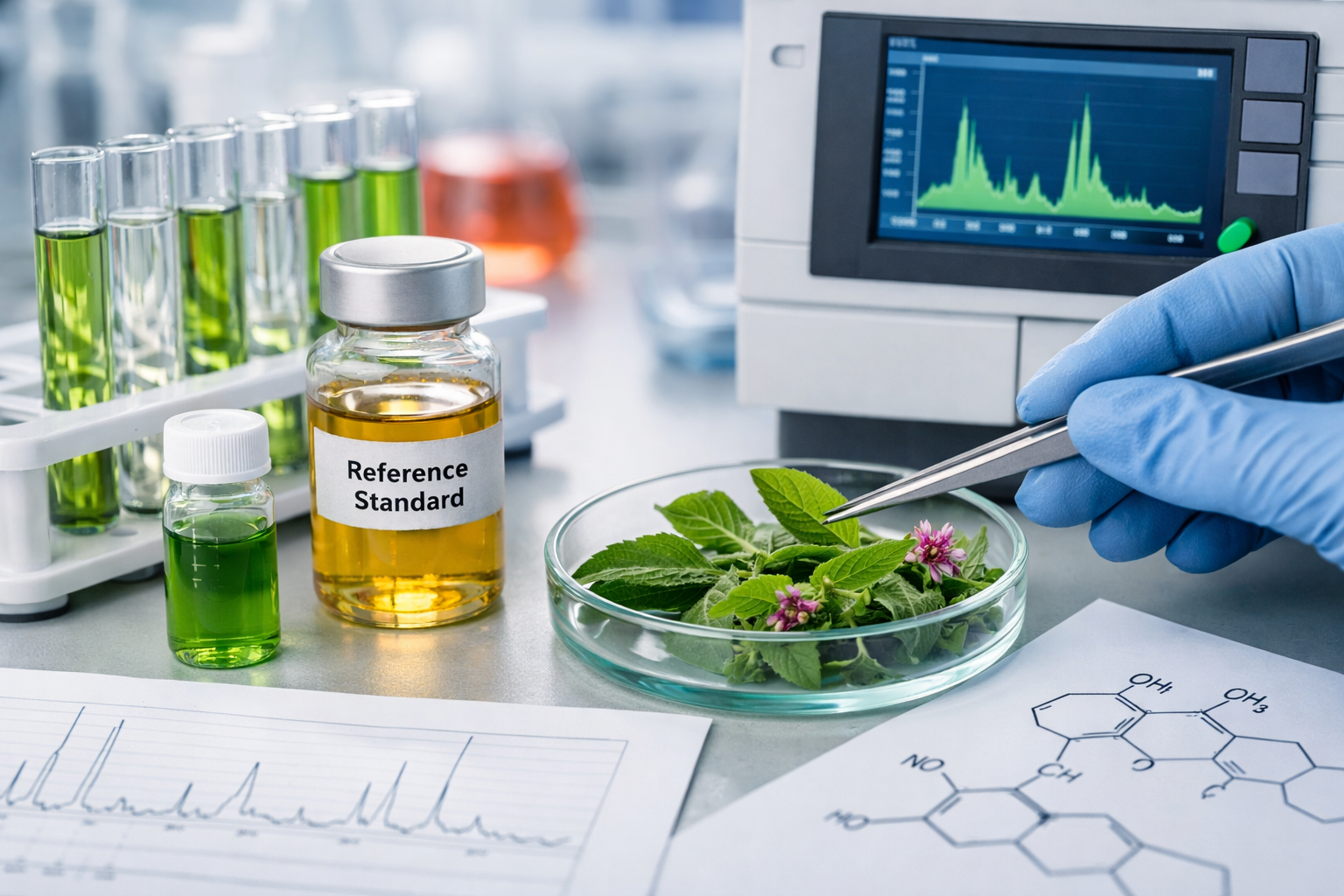
Analytical standards are reference materials with known purity, composition, and concentration. They are used to calibrate instruments, validate analytical methods, and confirm compound identity. In modern laboratories, standards serve as the benchmark against which unknown samples are compared.
High-quality standards help ensure that measurements are:
-
Accurate: Results reflect the true concentration or identity of a compound.
-
Precise: Repeated measurements produce consistent values.
-
Traceable: Data can be linked back to recognized reference materials.
-
Comparable: Results can be reproduced across laboratories and over time.
In phytochemical research and testing, standards reduce uncertainty and enable meaningful comparisons between batches, studies, and laboratories.
Why Phytochemical Standards Are Critical in Modern Testing
1. Ensuring Method Validation and Compliance
Regulatory agencies require laboratories to demonstrate that their analytical methods are fit for purpose. Method validation involves assessing accuracy, linearity, sensitivity, specificity, and robustness. Using reliable standards allows laboratories to verify that their instruments and methods perform within acceptable limits.
Industries such as pharmaceuticals, food safety, cosmetics, and dietary supplements often face strict regulatory scrutiny. Proper use of reference materials supports audit readiness and compliance with international quality systems.
2. Improving Data Reproducibility
Scientific credibility depends on reproducibility. When laboratories across different locations analyze the same compound, they should obtain comparable results. Standardized reference materials minimize variability caused by instrument calibration differences or operator techniques, enabling consistent data generation worldwide.
3. Supporting Advanced Analytical Techniques
Modern laboratories rely heavily on technologies such as LC-MS, GC-MS, NMR, and high-resolution chromatography. These sophisticated instruments require precise calibration to achieve accurate mass detection, retention time consistency, and compound identification. Well-characterized standards allow laboratories to fully leverage the power of advanced instrumentation.
4. Enhancing Product Quality and Safety
In consumer-facing industries, inaccurate phytochemical measurements can lead to mislabeling, dosage inconsistencies, or safety risks. For example, herbal supplements must contain the correct amount of active compounds while staying within safety limits for potentially toxic constituents. Analytical standards provide confidence that products meet their intended specifications.
Challenges in Working with Plant-Based Compounds
Phytochemicals present unique analytical challenges:
-
Complexity: Plant extracts often contain hundreds of compounds with similar structures.
-
Matrix Interference: Other components in the sample can interfere with detection.
-
Stability Issues: Some compounds degrade when exposed to light, heat, or oxygen.
-
Availability: Pure reference compounds may be difficult or expensive to source.
These challenges highlight the importance of robust quality systems and carefully selected reference materials. A single error in calibration can propagate through an entire dataset, affecting downstream decisions and conclusions.
The Strategic Role of IROA Technologies
IROA Technologies is recognized for delivering innovative tools that enhance analytical accuracy, reproducibility, and confidence in complex chemical analysis. By focusing on advanced solutions that support mass spectrometry and metabolomics workflows, the company helps laboratories maintain consistency and reliability in demanding analytical environments.
IROA Technologies’ commitment to scientific rigor supports researchers and quality control teams who need dependable data for product development, regulatory compliance, and discovery science. Their approach aligns with the broader goal of improving transparency and standardization across laboratory testing workflows.
Data Integrity and Traceability in the Digital Age
Laboratory data management has become increasingly digital, with integrated software systems capturing, storing, and analyzing large volumes of data. Analytical standards contribute directly to data integrity by providing reference points that validate every analytical run.
Traceability is especially important when audits, investigations, or regulatory submissions occur. Clear documentation linking results to certified standards ensures that data can withstand scrutiny and maintain long-term credibility.
For laboratories seeking authoritative guidance on reference materials, the National Institute of Standards and Technology (NIST) reference materials program offers valuable insights into certified standards and measurement traceability.
Best Practices for Using Analytical Standards
To maximize the value of standards in phytochemical testing, laboratories should follow best practices:
-
Proper Storage: Maintain temperature, humidity, and light protection as recommended.
-
Expiration Monitoring: Track shelf life and replace expired materials promptly.
-
Documentation: Record lot numbers, preparation dates, and calibration details.
-
Routine Verification: Regularly verify instrument performance using standards.
-
Training: Ensure staff understand correct handling and preparation techniques.
Consistency in these practices protects data quality and reduces operational risk.
Future Trends in Phytochemical Testing
The future of phytochemical analysis is moving toward higher automation, artificial intelligence, and expanded metabolomics databases. As laboratories handle increasingly complex datasets, the demand for robust, traceable standards will only grow.
Emerging trends include:
-
Digital reference libraries integrated with analytical software
-
Automated calibration and quality checks
-
Improved stability and shelf life of reference materials
-
Global harmonization of analytical benchmarks
These developments will strengthen confidence in data while accelerating research and product development timelines.
Why Analytical Standards Are a Strategic Investment
 Rather than viewing standards as a routine expense, forward-thinking laboratories recognize them as a strategic investment. Reliable data reduces rework, minimizes regulatory risk, protects brand reputation, and accelerates innovation. In competitive markets, data quality can be a key differentiator.
The use of a properly characterized phytochemical analytical standard ensures that laboratories can confidently identify and quantify plant-derived compounds while maintaining consistency across projects and locations.
Frequently Asked Questions (FAQs)
1. What is a phytochemical analytical standard used for?
It is used to calibrate instruments, validate analytical methods, and confirm compound identity and concentration in plant-based testing.
2. Why are analytical standards important in regulated industries?
They support compliance, traceability, audit readiness, and consistent product quality across manufacturing and testing processes.
3. How often should analytical standards be replaced?
Standards should be replaced according to manufacturer expiration dates or sooner if degradation or contamination is suspected.
4. Can one standard be used for multiple analytical methods?
Some standards can be shared across methods, but compatibility should always be verified based on method requirements and matrix complexity.
5. How does IROA Technologies support laboratory accuracy?
IROA Technologies provides advanced solutions that enhance data reliability, reproducibility, and confidence in complex analytical workflows.
6. What risks arise from using poor-quality standards?
Inaccurate standards can lead to faulty calibration, unreliable results, regulatory non-compliance, and compromised product safety.
Conclusion
Modern laboratory testing relies on precision, transparency, and repeatability. Analytical standards form the foundation that supports these principles, especially in the complex world of plant-based compound analysis. From regulatory compliance and product safety to scientific discovery and innovation, standardized reference materials play a decisive role in shaping reliable outcomes.
With organizations like IROA Technologies advancing analytical science through innovative tools and solutions, laboratories are better equipped to meet evolving demands and maintain confidence in their results. As technology advances and global standards continue to evolve, the importance of reliable analytical benchmarks will remain central to scientific progress and quality assurance.