bile acid analysis

Browse all articles filed under the "bile acid analysis" tag.

Advances in Bile Acids Research Emerging Trends & Discoveries

Showing 1–11 of 11 articles

Advances in Bile Acids Research Emerging Trends & Discoveries

Advances in Bile Acids Research: Emerging Trends and Scientific Discoveries

Bile acids have long been recognized for their essential role in digestion and nutrient absorption. However, scientific understanding of these molecules has expanded significantly over the past decade.

Researchers now view bile acids as powerful signaling molecules that influence metabolism, immune function, gut microbiota, and disease progression. As analytical technologies continue to evolve, new discoveries are reshaping our understanding of how bile acids contribute to human health and disease.

This article explores recent advancements in Bile Acids Research, emerging trends in the field, and the technologies driving these scientific breakthroughs.

Understanding Bile Acids Beyond Digestion Bile acids are synthesized in the liver from cholesterol and released into the digestive tract to aid in the breakdown and absorption of dietary fats.

Traditionally, their primary function was considered digestive. Today, researchers know...
Structural and Functional Insights into Bile Acid Compounds

Structural and Functional Insights into Bile Acid Compounds

Bile acids are essential biological molecules that play a central role in digestion, metabolism, and cellular signaling. Although traditionally recognized for their function in fat absorption, modern research has revealed that they are far more than digestive agents.

Their structural complexity and diverse biological activity make them important targets in clinical research, metabolic studies, and biomarker discovery. Understanding their structure and function provides valuable insights into human health and disease mechanisms.

What Are Bile Acids? Bile acids are steroid-derived molecules synthesized in the liver from cholesterol. After synthesis, they are stored in the gallbladder and released into the small intestine during digestion.

Their primary function is to emulsify dietary fats, making them easier for digestive enzymes to break down and absorb. These molecules are produced in two main forms: primary...

Why Bile Acid Research Is Transforming Modern Biomedical Science

In the evolving world of biomedical science, few areas have gained as much attention in recent years as bile acid research.

Once thought to play a simple role in digestion, bile acids are now recognized as powerful signaling molecules that influence metabolism, immunity, and even disease progression.

This shift in understanding has opened new doors for scientists, clinicians, and pharmaceutical developers alike. As research tools become more advanced and data-driven approaches gain momentum, the study of bile acids is redefining how we understand human health at a molecular level.

Understanding Bile Acids Beyond Digestion Traditionally, bile acids were associated with the breakdown and absorption of dietary fats in the intestine.

Produced in the liver and stored in the gallbladder, they help emulsify fats, making them easier to digest. However, modern...

Why the Bile Acids Microbiome Matters for Personalized Medicine

Why the Bile Acids Microbiome Matters for Personalized Medicine and Nutrition

In recent years, the connection between gut health and overall well-being has gained significant attention. While most discussions focus on gut bacteria, a lesser-known yet equally important player is the bile acids microbiome—a dynamic interaction between bile acids and gut microbes that plays a crucial role in regulating metabolism, immunity, and digestion.

Understanding this relationship is opening new doors in personalized medicine and nutrition, offering more precise and effective approaches to health management.

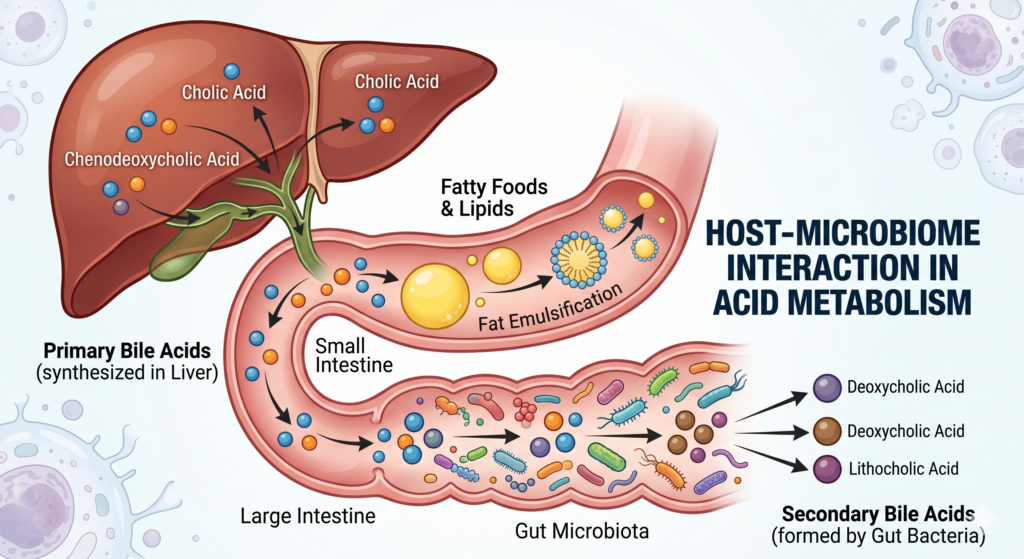
Understanding the Bile Acids–Microbiome Connection Bile acids are produced in the liver and stored in the gallbladder, where they aid in the digestion and absorption of dietary fats.

Once released into the intestine, these compounds undergo chemical transformations by gut bacteria. This interaction creates a complex biochemical network that influences not just digestion, but also metabolic signaling...

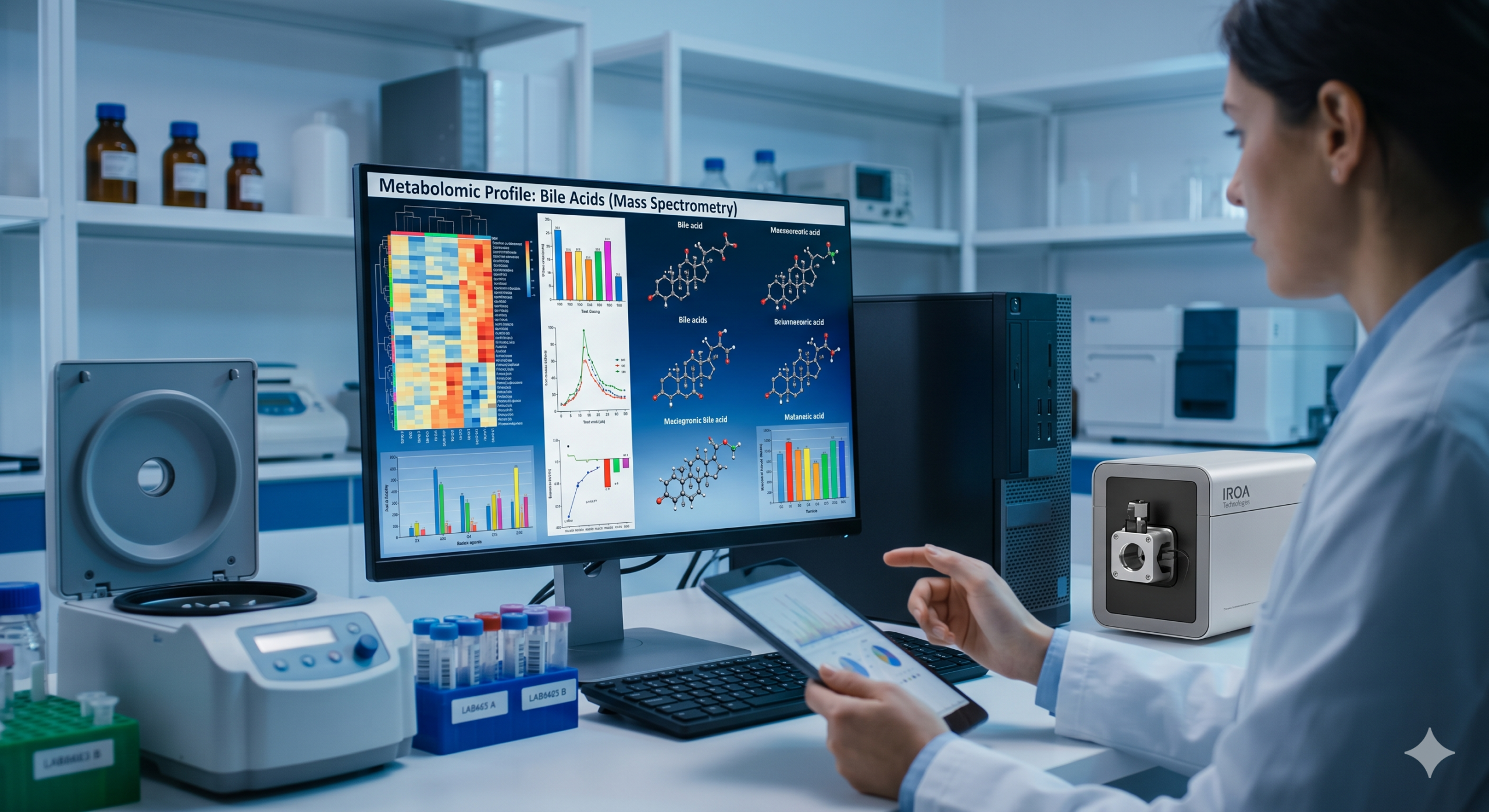
How Bile Acid Analysis Helps Detect Liver and Gut Disorders

How Bile Acid Analysis Helps Detect Liver and Gut Disorders

 Modern healthcare is increasingly focused on early detection and precise diagnosis. Many digestive and metabolic conditions develop silently, showing symptoms only when they have progressed significantly.

This is where advanced diagnostic tools play a vital role. One such powerful diagnostic approach is Bile Acid Analysis, a specialized test that helps clinicians evaluate liver function, intestinal health, and metabolic balance.

At IROA Technologies, cutting-edge analytical solutions enable healthcare professionals and researchers to gain deeper insights into metabolic pathways and disease markers.

Understanding how bile acids function—and how their imbalance signals disease—can help improve diagnosis, treatment, and long-term patient outcomes. Understanding Bile Acids and Their Role in the Body Bile acids are essential compounds produced in the liver from cholesterol.

They are stored in the gallbladder and released into the small intestine...

How-Bile-Acids-Metabolite-Shapes-Metabolic-and-Digestive-Health

How Bile Acids Metabolite Shapes Metabolic and Digestive Health

For decades, bile acids were viewed as simple digestive detergents—substances produced by the liver to help break down dietary fats.

Today, that view has dramatically changed. Modern metabolomics and systems biology research reveal that bile acids are powerful metabolic regulators, influencing digestion, gut microbiota, energy balance, and even chronic disease risk.

At IROA Technologies, we work closely with researchers who are uncovering how metabolites act as signaling molecules rather than passive byproducts.

Among these, the bile acids metabolite family stands out as a key driver of metabolic and digestive health. Understanding how bile acids function as metabolites—and how their balance shifts in health and disease—offers valuable insights for nutrition science, drug development, and personalized medicine.

Let's explore how bile acids metabolites shape the body from the gut outward. What Are...

How-Bile-Acid-Molecules-for-Research-Support-Breakthroughs-in-Drug-Discovery

How Bile Acid Molecules for Research Support Breakthroughs in Drug Discovery

Drug discovery rarely follows a straight line. It’s more like solving a massive biological puzzle, one where every small molecule can reveal an entirely new piece of the picture.

Among these molecules, bile acids have quietly emerged as powerful research tools that are transforming how scientists understand metabolism, disease pathways, and therapeutic development.

For years, bile acids were seen mainly as digestive helpers. Today, researchers recognize them as complex signaling molecules that influence everything from liver health to immune response and even the gut–brain connection.

This shift in perspective has elevated the importance of bile acid molecules for research, positioning them at the forefront of modern pharmaceutical innovation.

So, how exactly are these naturally occurring compounds helping scientists unlock new treatments? Let’s break it down in plain, human language.

Understanding...

How Bile Acids Research Drives Innovation in Drug Discovery

How Bile Acids Research Drives Innovation in Drug Discovery

Drug discovery has always been a complex, high-stakes process. From identifying a promising biological target to developing a safe and effective therapy, the journey can take years sometimes decades with no guarantee of success.

In recent years, however, one area of science has been quietly transforming how researchers understand disease mechanisms and identify new therapeutic opportunities: bile acids research.

Once thought of simply as digestive agents, bile acids are now recognized as powerful signaling molecules that influence metabolism, immunity, inflammation, and cellular communication.

This expanded understanding has positioned bile acids at the intersection of biology and pharmacology, making them highly relevant to modern drug discovery strategies.

At IROA Technologies, we support researchers working at the cutting edge of metabolomics and systems biology. In this blog, we explore how bile acids...

A pipette drips liquid into a beaker with green leaves. Nearby, amber bottles, test tubes, capsules, and laboratory equipment suggest scientific research.

The Role of Phytochemical Analytical Standards in Modern Laboratory Testing

In today’s data-driven scientific landscape, laboratories are expected to deliver results that are not only accurate but also reproducible, traceable, and defensible.

Whether researchers are studying plant-based medicines, food safety, nutraceuticals, or environmental samples, the quality of analytical data directly impacts regulatory compliance, product safety, and scientific credibility.

One of the most critical yet often underappreciated pillars supporting this accuracy is the use of well-defined analytical standards. As natural products gain popularity across pharmaceutical, wellness, and agricultural sectors, laboratories face increasing pressure to validate complex mixtures of plant-derived compounds.

This is where phytochemical analytical standard materials become essential for calibration, validation, and quality assurance. Organizations like IROA Technologies play an important role in advancing analytical reliability by providing innovative solutions that support consistency and confidence in laboratory testing.

Understanding Phytochemicals...

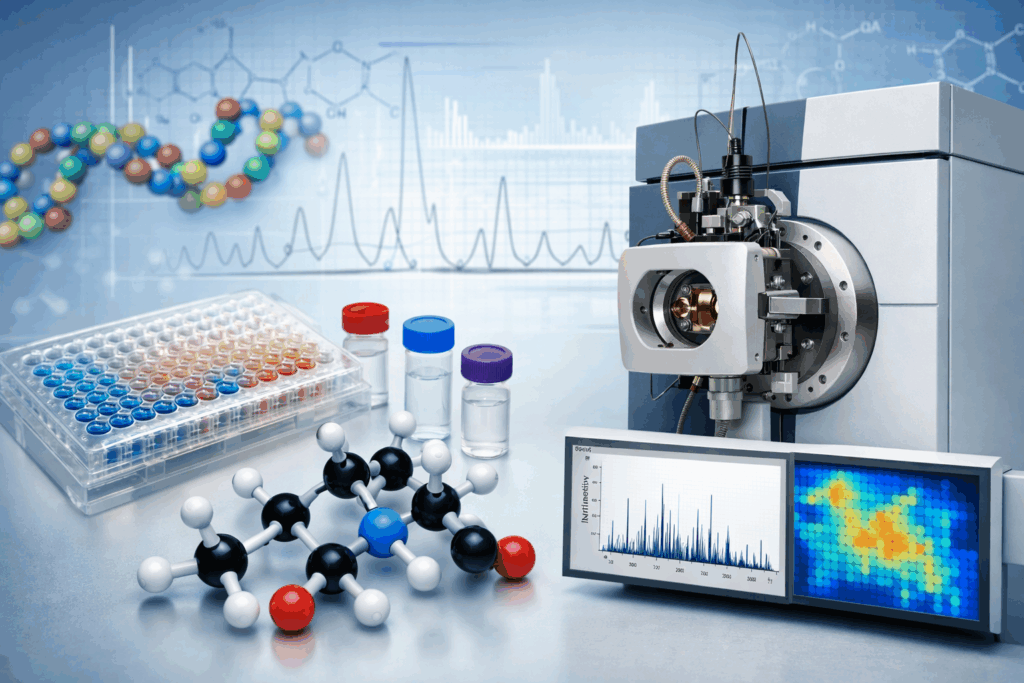
Mass spectrometry workflow showing peptide standards, molecular structures, and analytical data used for proteomics research

How a Standard Peptide Library Enables Consistent MS-Based Research

In the world of proteomics and metabolomics, mass spectrometry (MS) stands as one of the most powerful analytical technologies available today.

From biomarker discovery and drug development to systems biology and clinical research, MS-based workflows enable scientists to measure thousands of molecules with exceptional sensitivity.

Yet, despite its power, mass spectrometry comes with a persistent challenge: reproducibility. Variability in sample preparation, instrument performance, data acquisition, and analysis can undermine confidence in experimental results.

This is where a standard peptide library plays a crucial role. By providing a consistent, well-characterized reference, peptide libraries help researchers benchmark performance, control variability, and generate reliable data across experiments, instruments, and laboratories.

In this article, we explore how a standard peptide library enables consistent MS-based research, why it is essential for modern laboratories, and how...

Why Bile Acids for Research Matter in Metabolic and Clinical Science

Bile acids were once viewed as simple digestive molecules with a limited role in fat absorption. Today, scientific understanding has evolved dramatically.

Researchers now recognize bile acids as powerful metabolic regulators, signaling molecules, and indicators of disease processes. This shift has made bile acids for research a critical focus in metabolic, clinical, and translational science.

From studying liver health to understanding gut microbiome interactions and metabolic disorders, bile acids offer valuable insights into human biology.

This blog explores why bile acids matter in modern research, how they are used across scientific disciplines, and why high-quality analytical standards are essential for accurate results.

Understanding Bile Acids Beyond Digestion Bile acids are synthesized in the liver from cholesterol and released into the intestine to aid fat digestion.

While this digestive role is...