

In modern biochemical and life science laboratories, precision is everything. Whether researchers are studying metabolic pathways, cell signaling, lipidomics, or pharmaceutical development, the quality of reagents directly influences the accuracy and reproducibility of results. Among these critical reagents, unsaturated fatty acids stand out for their biological relevance and analytical complexity. To ensure consistency, purity, and confidence in experimental outcomes, laboratories increasingly rely on high-quality reference materials and standardized kits.
IROA Technologies has built a strong reputation for delivering advanced analytical solutions that help researchers maintain data integrity, streamline workflows, and improve reproducibility. One of the most valuable tools in lipid research is a high-purity fatty acids unsaturated kit designed to support reliable quantitative and qualitative analysis. In this article, we’ll explore why unsaturated fatty acids matter, the challenges researchers face when working with them, and how a premium kit can enhance laboratory performance and scientific confidence.
Understanding Unsaturated Fatty Acids in Research
Unsaturated fatty acids are lipids that contain one or more double bonds within their hydrocarbon chain. These structural features influence membrane fluidity, signaling pathways, inflammation processes, and energy metabolism. Common examples include oleic acid, linoleic acid, arachidonic acid, and docosahexaenoic acid (DHA).
In biological systems, these molecules play vital roles in:
-
Cell membrane structure and permeability
-
Hormone and signaling molecule synthesis
-
Immune system modulation
-
Neurological development and function
-
Metabolic regulation and energy storage
Because unsaturated fatty acids are chemically reactive and prone to oxidation, maintaining their purity and stability in laboratory experiments is essential. Even small impurities or degradation products can introduce variability into data, compromise reproducibility, or lead to misinterpretation of results.
For a deeper overview of how fatty acids are studied in biological systems, you may find this resource helpful:
fatty acids in biological research
Why High Purity Matters in Analytical Work
High-purity reagents are not just a preference; they are a necessity for accurate science. In lipidomics, chromatography, mass spectrometry, and biochemical assays, contaminants or inconsistent concentrations can significantly affect signal intensity, peak identification, and quantification.
Key benefits of high-purity unsaturated fatty acid standards include:
1. Enhanced Accuracy
Pure reference materials allow precise calibration of instruments and reliable quantification of samples. This reduces the risk of false positives or skewed results.
2. Improved Reproducibility
Standardized reagents help ensure that experiments can be replicated across different labs, instruments, and time points.
3. Reduced Background Noise
Minimizing impurities leads to cleaner spectra and chromatograms, improving data clarity and interpretation.
4. Regulatory and Publication Confidence
High-quality standards support compliance with internal quality controls and strengthen the credibility of published research.
Challenges in Working with Unsaturated Fatty Acids
Despite their importance, unsaturated fatty acids present several technical challenges:
-
Oxidation Sensitivity: Double bonds make these molecules susceptible to oxidative degradation when exposed to light, heat, or air.
-
Handling and Storage: Improper storage can lead to breakdown or concentration shifts over time.
-
Solubility Issues: Fatty acids often require specific solvents or preparation techniques for consistent dissolution.
-
Analytical Variability: Small differences in purity or composition can influence detection sensitivity and retention times.
A well-designed kit helps mitigate these challenges by offering carefully prepared, stabilized, and validated components that simplify laboratory workflows.
How a High-Purity Kit Supports Laboratory Efficiency
A professionally formulated kit saves time, reduces preparation errors, and ensures consistency across experiments. Instead of sourcing individual standards, validating purity, and managing storage conditions separately, laboratories can rely on a ready-to-use solution optimized for performance.
A comprehensive fatty acids unsaturated kit typically provides:
-
Pre-measured, traceable standards
-
Validated purity and concentration specifications
-
Consistent batch-to-batch performance
-
Clear documentation and handling guidelines
-
Compatibility with LC-MS, GC-MS, and related analytical platforms
This approach allows researchers to focus on experimental design and data interpretation rather than reagent preparation and troubleshooting.
IROA Technologies: Advancing Analytical Confidence
IROA Technologies is recognized for its innovative approach to metabolomics, stable isotope labeling, and analytical quality assurance. The company emphasizes reproducibility, accuracy, and workflow efficiency across laboratory environments. By offering advanced reagent solutions and analytical tools, IROA Technologies supports researchers in generating reliable data that stands up to scrutiny.
Their commitment to quality includes rigorous manufacturing controls, documentation standards, and customer support designed to help laboratories maintain consistent performance. Whether used in academic research, pharmaceutical development, or clinical investigations, their solutions align with modern analytical demands.
When laboratories integrate high-quality reference materials into their workflows, they reduce experimental variability, streamline validation processes, and strengthen confidence in their findings.
Applications Across Research Fields
High-purity unsaturated fatty acid kits serve a wide range of scientific disciplines, including:
Lipidomics and Metabolomics
Accurate profiling of lipid species requires reliable standards to ensure precise identification and quantification.
Pharmaceutical Research
Drug development studies often investigate lipid metabolism, inflammation pathways, and membrane interactions influenced by fatty acids.
Nutrition and Health Sciences
Understanding the role of dietary fats in disease prevention, cognitive health, and metabolic balance depends on high-quality analytical measurements.
Cell Biology and Biochemistry
Unsaturated fatty acids influence membrane dynamics, signal transduction, and enzyme activity, making them critical experimental variables.
Environmental and Food Testing
Quality control and contamination analysis frequently rely on standardized lipid references.
Best Practices for Storage and Handling
To maximize the lifespan and reliability of unsaturated fatty acid standards, laboratories should follow best practices:
-
Store at recommended temperatures, often refrigerated or frozen, to reduce oxidation.
-
Protect from light and air exposure by using sealed containers and inert atmospheres when possible.
-
Use clean, dry tools and solvents to prevent contamination.
-
Follow expiration guidelines and lot tracking to maintain quality assurance.
-
Avoid repeated freeze–thaw cycles, which may degrade sensitive compounds.
A well-documented kit simplifies compliance with these practices and supports laboratory quality systems.
Driving Reproducibility and Confidence in Results
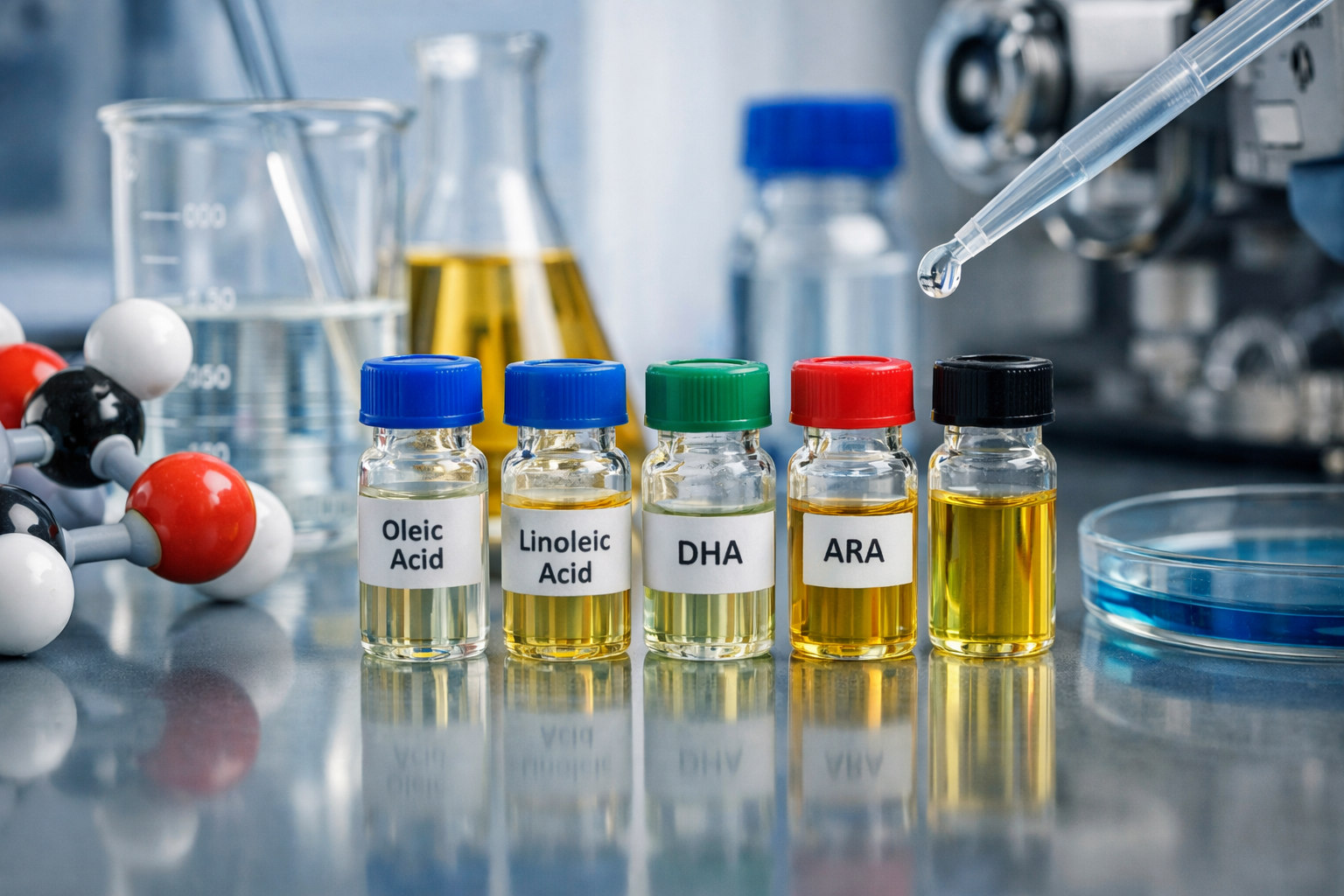 Reproducibility remains a central challenge in scientific research. Variations in reagents, preparation methods, and analytical standards can introduce inconsistencies that undermine trust in experimental outcomes. High-purity kits help address this challenge by offering standardized components that reduce variability across experiments and institutions.
By integrating premium-quality standards into daily workflows, laboratories can:
-
Minimize analytical drift
-
Improve inter-lab comparability
-
Enhance long-term data integrity
-
Reduce troubleshooting and rework
-
Strengthen regulatory and peer-review confidence
In fast-moving research environments, these benefits translate directly into productivity, credibility, and innovation.
Frequently Asked Questions (FAQs)
1. What are unsaturated fatty acids used for in laboratory research?
Unsaturated fatty acids are studied for their roles in cell signaling, membrane structure, metabolism, inflammation, and neurological function. They are widely used in lipidomics, pharmaceutical research, and nutritional studies.
2. Why is reagent purity so important in fatty acid analysis?
High purity ensures accurate quantification, reduces background interference, and improves reproducibility across experiments. Impurities can distort analytical results and compromise data integrity.
3. How should unsaturated fatty acid standards be stored?
They should typically be stored in cool, dark conditions, protected from air and moisture. Following manufacturer guidelines helps maintain stability and performance.
4. Can these kits be used with mass spectrometry and chromatography systems?
Yes, high-quality kits are designed to be compatible with common analytical platforms such as LC-MS and GC-MS for precise identification and quantification.
5. What makes IROA Technologies a reliable provider of laboratory solutions?
IROA Technologies emphasizes rigorous quality control, analytical accuracy, and reproducibility, offering solutions that support modern research demands and regulatory standards.
6. How does a standardized kit improve laboratory efficiency?
It reduces preparation time, minimizes handling errors, ensures consistent concentrations, and simplifies documentation, allowing researchers to focus on data analysis and experimental outcomes.
Conclusion
High-purity unsaturated fatty acid standards are essential for accurate, reproducible, and reliable laboratory research. From lipidomics and pharmaceutical development to nutrition and cell biology, the quality of analytical reagents plays a decisive role in the integrity of scientific data.
IROA Technologies continues to support the research community with advanced solutions designed to improve consistency and analytical confidence. A well-formulated fatty acids unsaturated kit offers laboratories a practical way to streamline workflows, minimize variability, and maintain the highest standards of data quality. Investing in trusted, high-purity reagents is not just about convenience—it’s about protecting the validity of your science and accelerating meaningful discovery.