The way new medicines are discovered and personalized for patients is changing faster than ever. One of the biggest drivers behind this shift is Metabolic Profiling—a scientific approach that helps researchers understand how thousands of small molecules inside the body respond to disease, treatment, and lifestyle.
Instead of focusing on a single gene or protein, modern life-science teams now examine the entire biochemical activity of cells and tissues. This deeper biological insight is reshaping how drugs are developed, tested, and matched to the right patient at the right time.
In this article, we’ll explore how this technology is redefining drug discovery and accelerating the future of precision medicine in a practical and easy-to-understand way.
Understanding the role of metabolites in human health
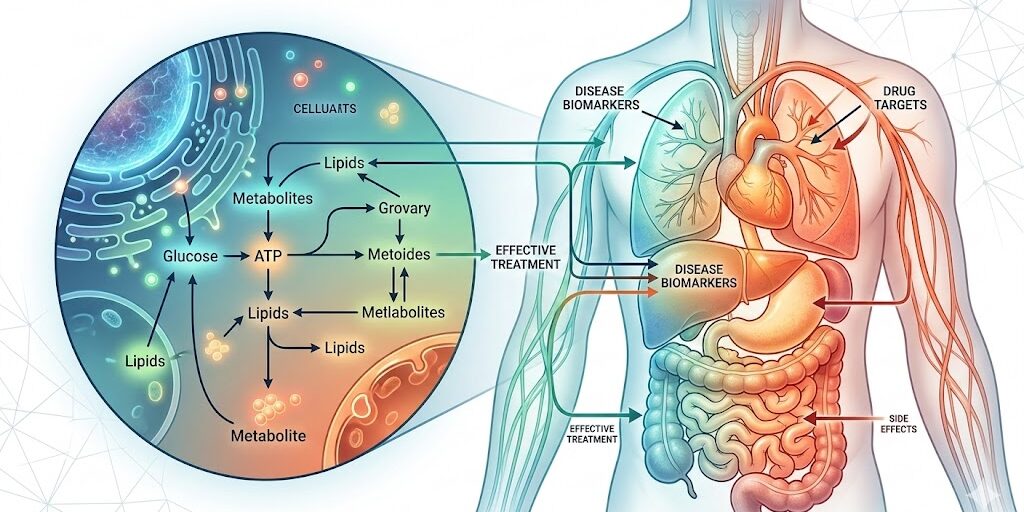
Every cell in the body is constantly producing and consuming small molecules such as sugars, amino acids, lipids, and organic acids. These molecules—called metabolites—are the direct products of cellular activity.
While genes may tell us what could happen in the body, metabolites reveal what is actually happening right now. This makes metabolic analysis especially powerful for studying complex diseases such as cancer, diabetes, cardiovascular disorders, and neurological conditions.
Large research initiatives supported by organizations like the National Institutes of Health have demonstrated how metabolite data can uncover hidden biological pathways and reveal early signals of disease progression long before symptoms appear.
Why traditional drug discovery is no longer enough
Conventional drug discovery often relies on targeting a single protein or pathway. However, human biology rarely works in isolation. Diseases usually involve multiple interconnected systems, and targeting one molecule may not produce lasting clinical benefits.
This is where systems-level approaches come in. By capturing global biochemical changes in cells and biofluids, scientists can understand:
- how diseases disrupt metabolism
- how drugs modify entire biological networks
- and why some patients respond differently to the same treatment
This broader biological context helps research teams design drugs that are not only effective, but also safer and more precise.
How metabolic insights guide modern drug development
Advanced Metabolic Profiling platforms now play an active role throughout the drug development pipeline.
During early discovery, researchers compare healthy and diseased samples to detect metabolic signatures linked to specific conditions. These signatures often reveal previously unknown therapeutic targets.
Later in development, metabolite patterns help scientists understand how experimental compounds influence cellular function. This allows them to:
- detect off-target toxicity earlier
- optimize drug dosing strategies
- and reduce the risk of late-stage clinical failure
Instrument manufacturers and solution providers such as Thermo Fisher Scientific support these workflows by delivering high-resolution mass spectrometry systems and integrated data platforms used in pharmaceutical and clinical research laboratories worldwide.
Accelerating biomarker discovery for precision medicine
One of the most valuable outcomes of this technology is biomarker discovery.
A biomarker is a measurable biological signal that indicates disease presence, progression, or treatment response. Because metabolites are extremely sensitive to physiological changes, they often serve as early and reliable indicators.
By analyzing metabolite profiles from patient samples, researchers can:
- stratify patients into biological subgroups
- identify early disease onset
- monitor how individuals respond to therapy in real time
This approach supports the foundation of personalized healthcare—delivering the right therapy based on the patient’s unique biological state rather than relying on population averages.
Improving clinical trial design and patient selection
Clinical trials remain one of the most expensive and risky stages of drug development. Many promising drugs fail not because they are ineffective, but because the trial population was poorly matched.
Using Metabolic Profiling, researchers can better characterize patient populations before enrollment. This allows trial designers to:
- select patients who are more likely to benefit from a therapy
- reduce variability caused by hidden metabolic differences
- improve statistical power with smaller, more targeted cohorts
As a result, trials become more efficient, ethically sound, and cost-effective.
Supporting regulatory and translational decisions
Regulatory agencies are increasingly recognizing the value of advanced molecular data for drug evaluation and safety monitoring. Organizations such as the U.S. Food and Drug Administration are actively exploring how multi-omics and metabolic datasets can strengthen clinical evidence and post-market surveillance.
When metabolic signatures demonstrate how a drug affects biological pathways, regulators gain greater confidence in:
- safety assessments
- mechanism of action claims
- and real-world effectiveness
This improves transparency across the entire translational research pipeline—from laboratory discovery to clinical implementation.
The growing role of advanced data analysis
High-throughput metabolic experiments generate extremely large and complex datasets. To turn this information into actionable insights, researchers rely on advanced computational tools, machine learning models, and dedicated analytical software.
Companies such as IROA Technologies specialize in standardized workflows and software platforms that help scientists interpret metabolic patterns with higher confidence and reproducibility.
These digital tools are essential for identifying subtle metabolic shifts that would otherwise remain hidden in raw experimental data.
A global research ecosystem driving innovation
Large collaborative initiatives now support open access metabolomics resources that accelerate innovation across academia and industry. One such widely used platform is the 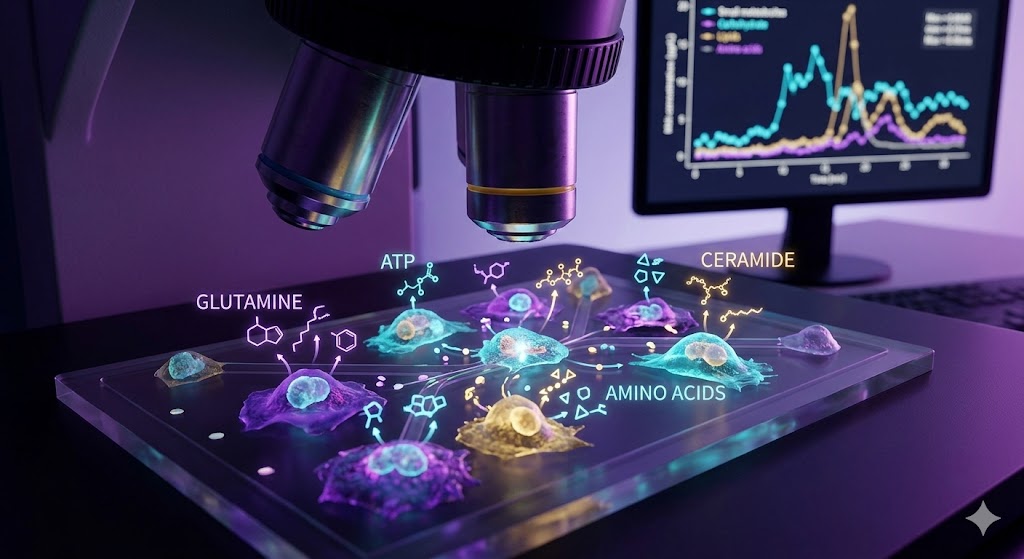 Metabolomics Workbench, which provides curated datasets, protocols, and analytical tools for researchers worldwide.
You can explore this public resource here:
https://www.metabolomicsworkbench.org
Open scientific infrastructure like this helps ensure that discoveries are reproducible, scalable, and accessible across global research communities.
The future of precision healthcare
Looking ahead, the integration of metabolic information with genomics, transcriptomics, and proteomics will further refine patient stratification and treatment personalization.
As artificial intelligence and digital health systems mature, clinicians may soon use metabolic signatures as routine decision-support tools in hospitals and outpatient clinics.
In the long term, Metabolic Profiling is expected to move beyond research laboratories and become part of standard clinical diagnostics—reshaping how diseases are detected, monitored, and treated.
FAQs
What is metabolic profiling used for in drug discovery?
It is used to identify disease-specific biochemical changes, discover new drug targets, and evaluate how experimental compounds affect biological pathways across entire metabolic networks.
How does metabolic profiling support precision medicine?
By revealing patient-specific metabolic patterns, it helps clinicians and researchers tailor therapies to individual biological responses instead of relying on generalized treatment strategies.
Can metabolic profiling improve clinical trial success?
Yes. It helps identify suitable patient subgroups, reduces biological variability, and improves the ability to detect true treatment effects during trials.
Is metabolic profiling only used in pharmaceutical research?
No. It is also widely applied in nutrition science, toxicology, environmental health, and disease prevention research.
Will metabolic profiling become part of routine healthcare?
As technologies become faster and more affordable, it is likely to play a growing role in clinical diagnostics and personalized treatment planning in the near future.