

In the world of proteomics and metabolomics, mass spectrometry (MS) stands as one of the most powerful analytical technologies available today. From biomarker discovery and drug development to systems biology and clinical research, MS-based workflows enable scientists to measure thousands of molecules with exceptional sensitivity. Yet, despite its power, mass spectrometry comes with a persistent challenge: reproducibility.
Variability in sample preparation, instrument performance, data acquisition, and analysis can undermine confidence in experimental results. This is where a standard peptide library plays a crucial role. By providing a consistent, well-characterized reference, peptide libraries help researchers benchmark performance, control variability, and generate reliable data across experiments, instruments, and laboratories.
In this article, we explore how a standard peptide library enables consistent MS-based research, why it is essential for modern laboratories, and how organizations like IROA Technologies support scientists in achieving reproducibility at scale.
The Reproducibility Challenge in MS-Based Research
Mass spectrometry workflows are complex. Even minor variations can have significant downstream effects on data quality.
Common Sources of Variability
-
Sample preparation differences (digestion efficiency, cleanup losses)
-
Instrument drift over time
-
Retention time shifts in LC separations
-
Ion suppression and matrix effects
-
Inconsistent fragmentation patterns
-
Software and algorithm variability
These factors can make it difficult to determine whether observed changes in peptide abundance are biologically meaningful or simply technical artifacts.
As MS-based research expands into regulated environments and multi-site collaborations, the need for robust standardization has never been greater.
What Is a Standard Peptide Library?
A standard peptide library is a curated collection of synthetic or well-characterized peptides with known sequences, concentrations, and physicochemical properties. These peptides are designed to behave predictably during MS analysis, serving as internal or external benchmarks for system performance.
Unlike biological samples, which are inherently variable, a peptide library provides a stable reference point that can be used repeatedly across experiments.
Key Characteristics of an Effective Peptide Library
-
Known peptide identities and sequences
-
Reproducible ionization and fragmentation behavior
-
Broad coverage of mass-to-charge (m/z) and retention time ranges
-
Compatibility with common LC-MS/MS platforms
-
High batch-to-batch consistency
When integrated properly, a standard peptide library becomes a cornerstone of quality control and experimental confidence.
Why Standard Peptide Libraries Matter for Consistency
1. Instrument Performance Monitoring
One of the most important uses of a standard peptide library is monitoring instrument health. By running the same peptides under identical conditions, researchers can detect:
-
Sensitivity loss
-
Mass accuracy drift
-
Changes in chromatographic performance
-
Declines in fragmentation efficiency
Because the expected results are well-defined, deviations are immediately apparent. This allows labs to identify issues early—before valuable samples or entire studies are compromised.
2. Retention Time Alignment and Calibration
Retention time variability is a common problem in LC-MS workflows, particularly in long-term or multi-instrument studies. A standard peptide library provides reference points across the chromatographic gradient, enabling:
-
Retention time calibration
-
Improved alignment across runs
-
Enhanced confidence in peptide identification
This is especially valuable in data-dependent and data-independent acquisition methods, where accurate retention time prediction supports better matching and quantification.
3. Improved Peptide Identification Confidence
MS-based identification relies on matching observed spectra to expected fragmentation patterns. A standard peptide library includes peptides with known fragmentation behavior, which helps:
-
Validate instrument tuning
-
Benchmark search algorithms
-
Optimize collision energies
-
Reduce false identifications
By comparing experimental data against known standards, researchers can verify that their system is performing as expected and producing high-quality spectra.
4. Quantitative Accuracy and Precision
Quantitative proteomics demands consistency. Whether using label-free methods or isotope-based strategies, variability can distort abundance measurements.
A standard peptide library supports:
-
Assessment of quantitative linearity
-
Evaluation of dynamic range
-
Monitoring of signal stability across runs
-
Normalization and scaling strategies
When used routinely, it becomes much easier to distinguish true biological variation from technical noise.
Supporting Cross-Lab and Longitudinal Studies
Modern research increasingly involves collaborations across institutions, time zones, and even continents. Without standardization, comparing MS data from different labs can be extremely challenging.
A standard peptide library enables:
-
Cross-laboratory benchmarking
-
Harmonized workflows
-
Comparable datasets across instruments and vendors
-
Long-term studies with consistent reference points
This level of consistency is critical for large-scale projects, biobanking initiatives, and translational research where reproducibility directly impacts conclusions.
Role of Standard Peptide Libraries in Method Development
Method development is an iterative process. Researchers must tune gradients, collision energies, scan settings, and acquisition strategies.
Using a standard peptide library during development allows scientists to:
-
Rapidly evaluate method changes
-
Compare different acquisition strategies
-
Optimize sensitivity and coverage
-
Ensure robustness before analyzing precious samples
Instead of guessing whether a method improvement is real, researchers can rely on objective performance metrics derived from known standards.
Standard Peptide Libraries in Regulated and Clinical Research
As MS-based assays move closer to clinical and regulated environments, expectations for data quality and traceability increase significantly.
A standard peptide library supports:
-
Method validation
-
System suitability testing
-
Audit readiness
-
Regulatory compliance documentation
In clinical proteomics, where decisions may impact patient outcomes, consistency is not optional—it is mandatory.
How IROA Technologies Supports Consistent MS-Based Research
IROA Technologies has built its reputation around improving reproducibility and reliability in mass spectrometry workflows. Through innovative quality control solutions and thoughtfully designed standards, the company helps laboratories minimize variability and maximize confidence.
By integrating a standard peptide library into routine workflows, researchers can:
-
Establish baseline system performance
-
Track trends over time
-
Reduce troubleshooting cycles
-
Generate data that stands up to peer review and regulatory scrutiny
IROA’s approach aligns with the broader goal of making MS-based research more transparent, comparable, and reproducible across the scientific community.
Best Practices for Using a Standard Peptide Library
To get the most value from a standard peptide library, consider these best practices:
-
Run standards regularly (daily or weekly) to track performance trends
-
Use consistent acquisition parameters for meaningful comparisons
-
Document results as part of quality control records
-
Integrate with data analysis pipelines for automated monitoring
-
Train staff on interpreting standard-based metrics
Consistency is not achieved by standards alone—it comes from disciplined, repeatable workflows.
The Future of MS Standardization
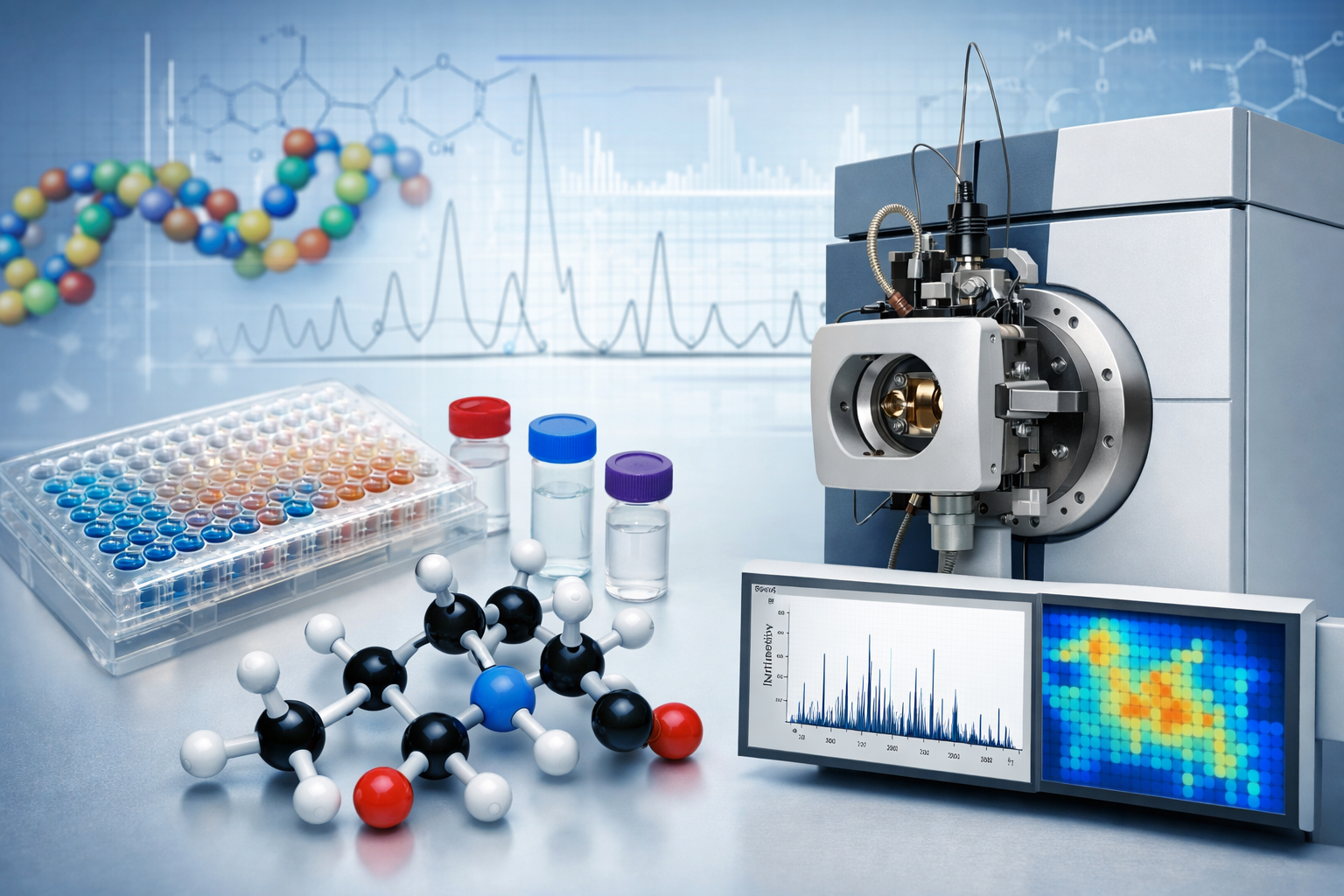 As mass spectrometry technologies continue to evolve, standardization will play an even greater role. High-throughput platforms, AI-driven data analysis, and clinical translation all depend on reliable, comparable data.
The use of a standard peptide library will increasingly be seen not as an optional add-on, but as a foundational requirement for credible MS-based research.
For further reading on best practices in mass spectrometry standardization, you can explore this overview from Nature Methods on mass spectrometry in proteomics, which highlights the importance of quality control and reproducibility in modern workflows.
Frequently Asked Questions (FAQs)
1. What is the main purpose of a standard peptide library?
The primary purpose of a standard peptide library is to provide a consistent reference for monitoring instrument performance, validating methods, and improving reproducibility in MS-based research.
2. How often should a standard peptide library be run?
Most laboratories run standards daily or weekly, depending on throughput and regulatory requirements. Regular use helps detect performance drift early.
3. Can a standard peptide library improve quantitative accuracy?
Yes. A standard peptide library helps assess linearity, dynamic range, and signal stability, all of which contribute to more accurate and precise quantification.
4. Is a standard peptide library useful for both research and clinical labs?
Absolutely. It is valuable in exploratory research, large-scale studies, and regulated or clinical environments where consistency and traceability are essential.
5. Does using a standard peptide library replace biological controls?
No. Biological controls and standards serve different purposes. A peptide library controls technical variability, while biological controls address biological variation.
6. How does IROA Technologies contribute to MS reproducibility?
IROA Technologies develops quality control solutions and standardized approaches that help researchers minimize variability and generate reliable, comparable MS data across experiments and labs.
Conclusion
Consistency is the backbone of meaningful scientific discovery. In MS-based research, where complexity and sensitivity go hand in hand, a standard peptide library provides the reference framework needed to ensure reproducibility, accuracy, and confidence.
From instrument monitoring and method development to cross-lab collaboration and clinical validation, standard peptide libraries enable researchers to focus on biology—not technical uncertainty. By adopting standardized approaches and leveraging proven solutions from leaders like IROA Technologies, laboratories can produce data that is not only innovative, but also reliable and reproducible.