
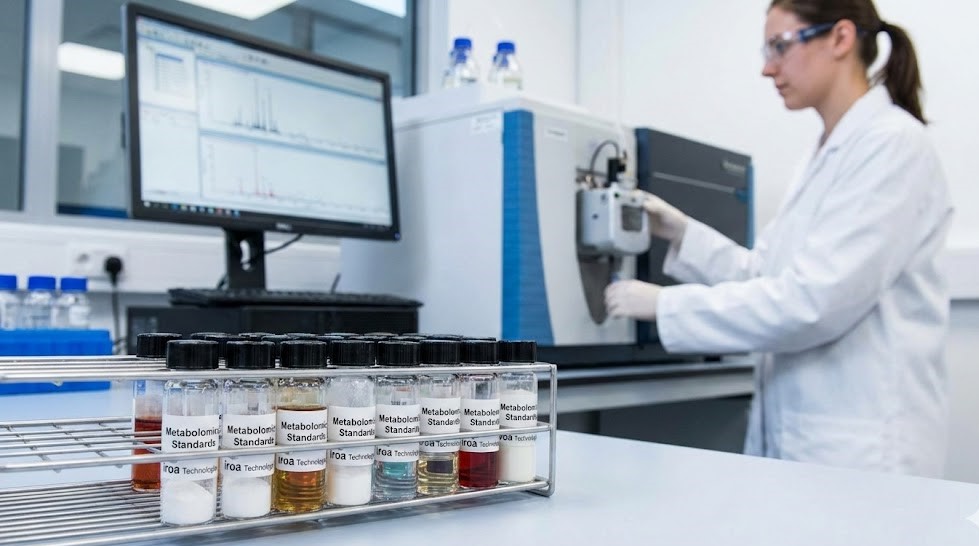
In the rapidly evolving world of life sciences, metabolomics has emerged as one of the most powerful tools for understanding biological systems at the molecular level. Whether researchers are exploring disease mechanisms, developing pharmaceuticals, improving agricultural outputs, or optimizing clinical diagnostics, metabolomics provides the biochemical insights needed to move science forward.
Yet, as metabolomics continues to expand, so does the need for accurate, consistent, and high-quality Metabolomics Standards. Without dependable reference materials, even the most advanced mass spectrometry instrumentation or analytical workflows can produce misleading or irreproducible results.
Recognizing this challenge, IROA Technologies has become a trusted leader in developing robust Metabolomics Standards designed to improve data reliability, increase confidence in metabolite identification, and streamline workflows across laboratories worldwide.
In this comprehensive article, we explore the importance of reliable Metabolomics Standards, the challenges faced within the field, and how IROA Technologies is redefining quality, precision, and reproducibility for metabolomics researchers everywhere.
Why Metabolomics Standards Matter More Than Ever
Metabolomics focuses on the small molecules—metabolites—that drive biological processes. These metabolites can reveal everything from disease progression and drug responses to nutritional status, environmental exposures, and microbial activity.
To accurately identify and quantify these metabolites, scientists rely heavily on reference materials known as Metabolomics Standards.
These standards serve several essential purposes:
1. Providing Accurate Identification
Metabolomics Standards enable researchers to match unknown metabolites against known reference spectra. Without reliable standards, the risk of false positives and misidentification increases significantly.
2. Enabling Reproducible Quantification
Quantitative metabolomics requires consistent benchmarks to measure metabolite levels across samples, laboratories, and instruments. Standards help reduce variability and ensure accurate comparisons.
3. Supporting Method Development
Analytical laboratories continuously refine workflows, instruments, and software tools. High-quality Metabolomics Standards provide stable references for validating these improvements.
4. Improving Data Confidence for Regulatory and Clinical Use
As metabolomics expands into clinical diagnostics and regulated environments, data consistency becomes essential. Standards help maintain the reliability required for critical scientific decisions.
Because metabolomics is still developing compared with genomics and proteomics, standardized protocols can vary between laboratories. This makes the demand for thoroughly characterized Metabolomics Standards increasingly important.
The Challenges in Developing Reliable Metabolomics Standards
Creating high-quality Metabolomics Standards is more complex than producing traditional chemical standards. Researchers face several challenges:
1. The Diversity of Metabolites
Metabolites exist in thousands of chemical forms, including lipids, sugars, amino acids, organic acids, hormones, nucleotides, and more. Each requires specialized handling and stable formulation.
2. Stability Issues
Many metabolites are sensitive to degradation, oxidation, or chemical changes. Standards must remain stable over time to provide reliable results.
3. Ion Suppression and Matrix Effects
Mass spectrometry measurements can be influenced by complex sample matrices, resulting in signal suppression. Standards must help compensate for these effects and improve quantitative accuracy.
4. Lack of Universal Reference Materials
Unlike genomics and proteomics, metabolomics does not yet have universally accepted reference benchmarks. This increases the importance of high-quality commercial standards.
5. Capturing Biological Variability
Biological samples vary significantly between individuals and conditions. Effective standards must support accurate analysis without introducing unnecessary complexity.
IROA Technologies addresses these challenges through innovative workflows, stable isotope technologies, and rigorous quality control.

How IROA Technologies Leads the Field in Metabolomics Standards
1. Precision Engineered Standards
IROA Technologies develops Metabolomics Standards with a focus on accuracy, reproducibility, and chemical stability. Each standard undergoes extensive characterization using advanced mass spectrometry and quality control procedures.
2. Stable Isotope Labeling for Confidence and Clarity
Stable isotope labeling improves quantitative accuracy by reducing background noise, minimizing matrix effects, and enhancing detection confidence.
3. Compatibility with Multiple Analytical Platforms
IROA Metabolomics Standards are designed to integrate with multiple platforms, including LC-MS, GC-MS, HRMS, and hybrid instruments, supporting academic, clinical, pharmaceutical, and environmental research.
4. Comprehensive Metabolite Coverage
IROA Technologies provides standards covering a broad range of biologically relevant metabolites, enabling accurate measurement across multiple metabolic pathways.
5. Batch-to-Batch Consistency
Strict manufacturing controls and quality assurance processes ensure reproducibility between batches, supporting long-term studies and multi-site collaborations.
6. Research-Friendly Formats
IROA Technologies provides standards in convenient concentrations and formats designed to reduce preparation time and minimize handling errors.
Applications of Metabolomics Standards Across Industries
Reliable metabolomics research supports numerous scientific fields. Applications of IROA Technologies’ Metabolomics Standards include:
1. Biomedical Research
Researchers studying disease pathways, biomarkers, and therapeutic targets rely on accurate standards for metabolite identification and quantification.
2. Pharmaceutical Development
Drug metabolism studies, toxicology research, and clinical development require precise metabolite measurements supported by validated standards.
3. Nutritional Science
Metabolomics Standards help researchers analyze dietary metabolites, nutritional biomarkers, and metabolic health indicators.
4. Environmental Research
Scientists use metabolomics to evaluate environmental stress, pollution exposure, and ecosystem health.
5. Agricultural Sciences
Plant metabolism studies, soil microbiome research, and crop stress analysis benefit from accurate metabolite quantification.
Across these industries, the demand for reliable Metabolomics Standards continues to increase, and IROA Technologies remains committed to supporting researchers worldwide.
The Future of Metabolomics Standards and Innovation at IROA Technologies
As metabolomics technology evolves, IROA Technologies continues developing advanced solutions, including:
- Expanded compound libraries covering emerging metabolite classes
- Enhanced stable isotope labeling technologies for improved accuracy
- High-throughput and automation-friendly formats
- Integration with AI-driven analytical workflows
- Collaborations with academic, clinical, and industrial researchers
These initiatives reinforce IROA Technologies’ commitment to advancing the future of metabolomics research.
How IROA Technologies Supports Researchers Beyond Standards
Beyond high-quality standards, IROA Technologies provides:
- Expert technical guidance and support
- Educational resources and scientific training
- Research collaboration opportunities
- Access to advanced metabolomics technologies and protocols
For researchers seeking dependable, accurate, and innovative solutions, IROA Technologies provides more than products—it provides a partnership focused on scientific excellence.
Conclusion: Setting the Standard for Metabolomics Excellence
Metabolomics has the power to transform our understanding of biology, disease, and environmental systems. However, its success depends on the quality of analytical tools researchers use.
With increasing demands for rigor, reproducibility, and precision, reliable Metabolomics Standards are more important than ever.
IROA Technologies continues to advance the field through rigorous quality control, innovative stable isotope technologies, and a commitment to scientific accuracy.
Whether you are a clinician, academic researcher, pharmaceutical scientist, environmental scientist, or metabolomics specialist, IROA Technologies provides the confidence and reliability needed to advance your research.
Learn more about metabolomics science through this external resource:
FAQs About Metabolomics Standards
1. What are Metabolomics Standards?
Metabolomics Standards are reference materials used to accurately identify and quantify metabolites in biological samples. They provide benchmarks that improve analytical reliability and reproducibility.
2. Why are Metabolomics Standards important in LC-MS and GC-MS analysis?
They help correct analytical variability, validate methods, and reduce errors caused by ion suppression and matrix effects. Standards are essential for both qualitative and quantitative metabolomics.
3. How does IROA Technologies ensure the quality of its Metabolomics Standards?
IROA Technologies uses strict quality control, stable isotope labeling, and comprehensive characterization to ensure accuracy and consistency.
4. Are IROA Technologies’ Metabolomics Standards compatible with different mass spectrometry platforms?
Yes. They are designed for compatibility with LC-MS, GC-MS, HRMS, and hybrid analytical platforms.
5. Who uses Metabolomics Standards?
Users include biomedical researchers, pharmaceutical companies, environmental scientists, agricultural researchers, clinicians, and academic laboratories working in metabolomics.