
amino acid internal standard sets

Browse all articles filed under the "amino acid internal standard sets" tag.

The Growing Role of Search Clustering in Research and Analytics

Showing 1–6 of 6 articles

The Growing Role of Search Clustering in Research and Analytics

Choosing the Right Amino Acid Internal Standard Sets for Reliable Data Analysis

In modern metabolomics and analytical chemistry, accuracy and reproducibility are critical for generating meaningful research outcomes. Whether scientists are working in biomarker discovery, clinical diagnostics, pharmaceutical development, or food testing, even small variations in sample preparation or instrument performance can affect data quality.

This is where Amino Acid Internal Standard Sets play a vital role. Internal standards help researchers achieve consistent quantification, improve calibration accuracy, and minimize analytical errors in LC-MS and GC-MS workflows.

Selecting the right standard set is not simply about adding reference compounds to a sample—it is about ensuring reliability throughout the entire analytical process.

What Are Amino Acid Internal Standard Sets? Amino acid internal standards are carefully selected reference compounds added to samples before analysis.

These standards are often isotopically labeled amino acids that behave similarly...

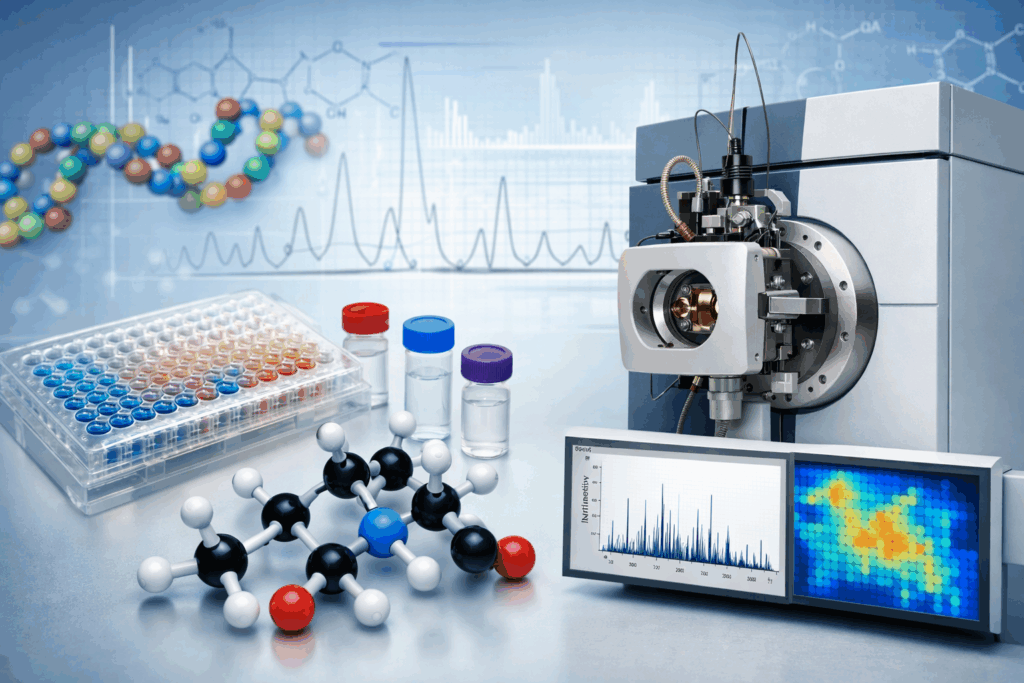
Modern laboratory setup showing mass spectrometry equipment and amino acid molecular structures used in quantitative analysis.

How Amino Acid Internal Standards Are Used in Quantitative Testing

In modern analytical laboratories, accuracy is everything. Whether scientists are measuring nutrients in food, monitoring metabolites in clinical samples, or validating pharmaceutical formulations, they rely on precise quantitative testing to make confident decisions.

Even a small error in measurement can lead to misleading conclusions, regulatory issues, or costly rework. One of the most trusted ways to ensure reliable results in analytical chemistry is the use of internal standards—particularly amino acid–based standards.

At IROA Technologies, advanced stable isotope standards and workflows help laboratories improve consistency, traceability, and data confidence across a wide range of applications.

In this article, we’ll explore what internal standards are, why amino acids are so valuable in quantitative testing, how they are applied in real-world workflows, and what benefits they bring to modern laboratories.

Understanding Internal Standards...

How Mass Spectrometry Reference Standards Support Method Validation

In modern analytical laboratories, method validation is the foundation of reliable, defensible data. Whether you are developing assays for pharmaceuticals, environmental testing, food safety, or metabolomics research, your results are only as strong as the standards you use to measure them.

Among the most critical tools in this process are mass spectrometry reference standards, which provide accuracy, reproducibility, and confidence at every stage of method development and validation.

This article explores how mass spectrometry reference standards support method validation, why they are indispensable in regulated and research environments, and how laboratories can use them strategically to meet quality and compliance requirements.

Understanding Method Validation in Mass Spectrometry Method validation is the documented process of proving that an analytical method is suitable for its intended purpose.

In mass spectrometry (MS), this...

Mass spectrometry workflow showing peptide standards, molecular structures, and analytical data used for proteomics research

How a Standard Peptide Library Enables Consistent MS-Based Research

In the world of proteomics and metabolomics, mass spectrometry (MS) stands as one of the most powerful analytical technologies available today.

From biomarker discovery and drug development to systems biology and clinical research, MS-based workflows enable scientists to measure thousands of molecules with exceptional sensitivity.

Yet, despite its power, mass spectrometry comes with a persistent challenge: reproducibility. Variability in sample preparation, instrument performance, data acquisition, and analysis can undermine confidence in experimental results.

This is where a standard peptide library plays a crucial role. By providing a consistent, well-characterized reference, peptide libraries help researchers benchmark performance, control variability, and generate reliable data across experiments, instruments, and laboratories.

In this article, we explore how a standard peptide library enables consistent MS-based research, why it is essential for modern laboratories, and how...

amino-acid-internal-standard

Amino Acid Internal Standard Sets Improving Quantitation Across Complex Workflows

In the fast-moving world of metabolomics, researchers face constant pressure to deliver precise, reproducible, and biologically meaningful data. As analytical instruments become more sensitive and sample matrices grow more complex, the ability to control variability and improve quantitation has never been more important.

Among the many tools available to scientists, Amino Acid Internal Standard Sets stand out as one of the most reliable strategies for achieving higher accuracy in LC-MS metabolomics workflows.

At IROA Technologies, we've spent years developing high-quality standards and isotope-based tools designed to overcome the persistent challenges of metabolite measurement.

Our focus on eliminating quantitation errors, reducing suppression effects, and enhancing reproducibility has helped researchers around the world obtain clearer and more consistent metabolic data—especially when working with amino acid pathways.

This blog explores how Amino Acid...

Advanced Amino Acid Internal Standard Sets from iroa Technologies

Accurate metabolomics relies on precision. Whether researchers are studying disease pathways, nutritional metabolism, biomarker development, or therapeutic responses, the ability to measure amino acids with consistency is essential.

Even the smallest variations introduced during sample preparation, instrument drift, or data processing can significantly impact the accuracy of quantitative results.

That is why high-quality, rigorously validated internal standards have become a cornerstone of modern analytical workflows. At IROA Technologies, we understand that every metabolomics experiment requires more than just good instrumentation—it demands reliable tools that enhance reproducibility and remove analytical bias.

Our advanced amino acid internal standard sets are specifically designed to empower researchers with the highest level of accuracy, enabling them to transform raw metabolomic data into meaningful biological insights.

This comprehensive blog explores the importance of internal standards, the...