
blog

Browse all articles in the "blog" category.

How Cannabis Analysis Ensures Quality, Potency & Consumer Safety

Showing 61–72 of 131 articles

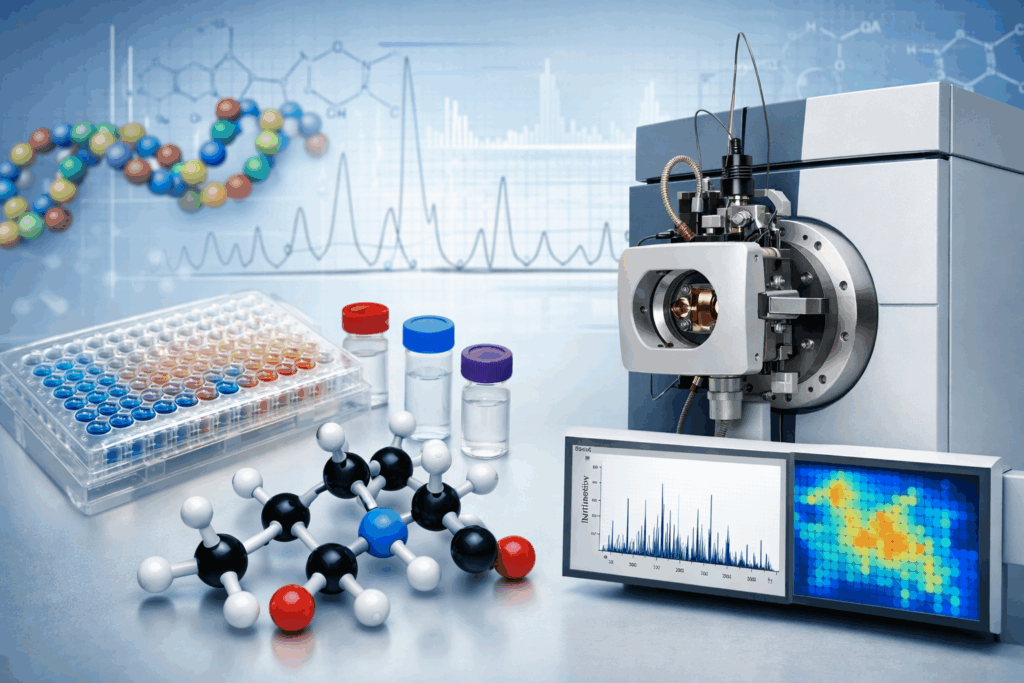
Modern laboratory setup showing mass spectrometry equipment and amino acid molecular structures used in quantitative analysis.

How Amino Acid Internal Standards Are Used in Quantitative Testing

In modern analytical laboratories, accuracy is everything. Whether scientists are measuring nutrients in food, monitoring metabolites in clinical samples, or validating pharmaceutical formulations, they rely on precise quantitative testing to make confident decisions.

Even a small error in measurement can lead to misleading conclusions, regulatory issues, or costly rework. One of the most trusted ways to ensure reliable results in analytical chemistry is the use of internal standards—particularly amino acid–based standards.

At IROA Technologies, advanced stable isotope standards and workflows help laboratories improve consistency, traceability, and data confidence across a wide range of applications.

In this article, we’ll explore what internal standards are, why amino acids are so valuable in quantitative testing, how they are applied in real-world workflows, and what benefits they bring to modern laboratories.

Understanding Internal Standards...

Laboratory setup displaying unsaturated fatty acid samples, molecular models, and analytical testing equipment

High-Purity Fatty Acids Unsaturated Kit for Laboratory Research

In modern biochemical and life science laboratories, precision is everything. Whether researchers are studying metabolic pathways, cell signaling, lipidomics, or pharmaceutical development, the quality of reagents directly influences the accuracy and reproducibility of results.

Among these critical reagents, unsaturated fatty acids stand out for their biological relevance and analytical complexity. To ensure consistency, purity, and confidence in experimental outcomes, laboratories increasingly rely on high-quality reference materials and standardized kits.

IROA Technologies has built a strong reputation for delivering advanced analytical solutions that help researchers maintain data integrity, streamline workflows, and improve reproducibility.

One of the most valuable tools in lipid research is a high-purity fatty acids unsaturated kit designed to support reliable quantitative and qualitative analysis.

In this article, we’ll explore why unsaturated fatty acids matter, the challenges researchers face...

Advanced laboratory analysis of biological samples using metabolomics instruments and digital data visualization

The Role of Clinical Metabolomics in Disease Diagnosis and Personalized Care

Modern healthcare is undergoing a profound transformation. Instead of relying solely on symptoms and generalized treatment pathways, clinicians are increasingly turning to data-driven insights that reveal what is happening inside the body at a molecular level.

Among the most powerful tools driving this change is metabolomics—the comprehensive study of small molecules produced during metabolism. When applied in medical settings, this approach enables earlier diagnosis, deeper disease understanding, and more personalized treatment strategies.

As analytical technologies continue to advance, laboratories can now measure thousands of metabolites from a single biological sample. This unprecedented level of detail allows clinicians and researchers to observe subtle biochemical changes that often precede visible symptoms.

Companies such as IROA Technologies are helping push this innovation forward by supporting high-quality, reproducible analytical workflows that strengthen confidence in...

Laboratory setup showing calibration vials, internal standards, chromatogram data, and a mass spectrometer system

Understanding Mass Spectrometry Standards for Reliable Analytical Results

In modern analytical laboratories, precision is not optional—it is the foundation of credible science, regulatory compliance, and product quality. From pharmaceutical development and clinical research to food safety, environmental monitoring, and metabolomics, laboratories rely on mass spectrometry to identify, quantify, and characterize complex chemical compounds with exceptional sensitivity.

However, even the most advanced instruments cannot deliver trustworthy results without proper calibration, validation, and quality control. This is where analytical standards play a decisive role.

Mass spectrometry standards provide the reference framework that ensures instruments produce accurate, reproducible, and defensible data. For laboratories striving to maintain consistency across workflows, understanding how standards function and how to implement them effectively is essential.

Companies such as IROA Technologies contribute to this ecosystem by delivering innovative solutions that help laboratories improve confidence in complex...

A pipette drips liquid into a beaker with green leaves. Nearby, amber bottles, test tubes, capsules, and laboratory equipment suggest scientific research.

The Role of Phytochemical Analytical Standards in Modern Laboratory Testing

In today’s data-driven scientific landscape, laboratories are expected to deliver results that are not only accurate but also reproducible, traceable, and defensible.

Whether researchers are studying plant-based medicines, food safety, nutraceuticals, or environmental samples, the quality of analytical data directly impacts regulatory compliance, product safety, and scientific credibility.

One of the most critical yet often underappreciated pillars supporting this accuracy is the use of well-defined analytical standards. As natural products gain popularity across pharmaceutical, wellness, and agricultural sectors, laboratories face increasing pressure to validate complex mixtures of plant-derived compounds.

This is where phytochemical analytical standard materials become essential for calibration, validation, and quality assurance. Organizations like IROA Technologies play an important role in advancing analytical reliability by providing innovative solutions that support consistency and confidence in laboratory testing.

Understanding Phytochemicals...

Cluster Search Engine Architecture for Distributed Data Systems

How a Cluster Search Engine Optimizes Distributed Data Search

In today’s digital-first world, organizations generate and store massive volumes of data across multiple systems, servers, and locations. From cloud platforms and data centers to edge devices, information is no longer centralized.

While this distributed approach improves resilience and scalability, it also introduces a major challenge: how do you search through all that data quickly, accurately, and efficiently?

This is where a Cluster Search Engine becomes essential. At IROA Technologies, we help enterprises design intelligent search architectures that make distributed data not only searchable but also actionable.

In this blog, we’ll explore how cluster-based search engines work and how they optimize distributed data search in modern environments.

Understanding Distributed Data Search Distributed data search refers to the process of querying information that is stored across multiple nodes, servers, or locations...

Laboratory table with cannabis samples, bottles of liquid with droppers, test tubes, a molecular model, and a chart displaying analysis data.

Why Cannabinoid Standards Are Critical for Cannabis Quality Control

The global cannabis industry has evolved rapidly over the past decade. What was once an underground or loosely regulated market has transformed into a sophisticated, science-driven industry focused on safety, consistency, and consumer trust.

At the center of this transformation lies one essential concept: quality control. Among the many tools used to ensure quality, cannabinoid standards play a foundational role.

From laboratory testing and product formulation to regulatory compliance and brand credibility, cannabinoid standards are indispensable. In this article, we’ll explore what cannabinoid standards are, why they matter so much, and how they support accurate testing, consumer safety, and long-term industry growth.

We’ll also look at how science-driven companies like IROA Technologies contribute to improving quality control through advanced analytical solutions. Understanding Cannabinoid Standards Cannabinoids are the chemical compounds found...

How Mass Spectrometry Reference Standards Support Method Validation

How Mass Spectrometry Reference Standards Support Method Validation

In modern analytical laboratories, method validation is the foundation of reliable, defensible data. Whether you are developing assays for pharmaceuticals, environmental testing, food safety, or metabolomics research, your results are only as strong as the standards you use to measure them.

Among the most critical tools in this process are mass spectrometry reference standards, which provide accuracy, reproducibility, and confidence at every stage of method development and validation.

This article explores how mass spectrometry reference standards support method validation, why they are indispensable in regulated and research environments, and how laboratories can use them strategically to meet quality and compliance requirements.

Understanding Method Validation in Mass Spectrometry Method validation is the documented process of proving that an analytical method is suitable for its intended purpose.

In mass spectrometry (MS), this...

Mass spectrometry workflow showing peptide standards, molecular structures, and analytical data used for proteomics research

How a Standard Peptide Library Enables Consistent MS-Based Research

In the world of proteomics and metabolomics, mass spectrometry (MS) stands as one of the most powerful analytical technologies available today.

From biomarker discovery and drug development to systems biology and clinical research, MS-based workflows enable scientists to measure thousands of molecules with exceptional sensitivity.

Yet, despite its power, mass spectrometry comes with a persistent challenge: reproducibility. Variability in sample preparation, instrument performance, data acquisition, and analysis can undermine confidence in experimental results.

This is where a standard peptide library plays a crucial role. By providing a consistent, well-characterized reference, peptide libraries help researchers benchmark performance, control variability, and generate reliable data across experiments, instruments, and laboratories.

In this article, we explore how a standard peptide library enables consistent MS-based research, why it is essential for modern laboratories, and how...

How Mass Spectrometry Reference Standards Help Validate Your Data

How Mass Spectrometry Reference Standards Help Validate Your Data

In today’s data-driven life sciences landscape, mass spectrometry (MS) has become one of the most powerful analytical tools for metabolomics, proteomics, lipidomics, and clinical research.

However, as powerful as mass spectrometry is, the quality of the results depends heavily on how well the data is validated.

This is where mass spectrometry reference standards play a crucial role. Whether you are working in academic research, pharmaceutical development, clinical diagnostics, or biotechnology, validating your MS data is non-negotiable.

Without proper validation, even the most sophisticated instruments can produce misleading or irreproducible results. In this blog, we’ll explore how mass spectrometry reference standards help validate your data, why they are essential, and how organizations like IROA Technologies support accurate, confident data interpretation.

Understanding Mass Spectrometry Data Validation Mass spectrometry generates complex datasets that...

Bile Acid Compounds

Why Bile Acids for Research Matter in Metabolic and Clinical Science

Bile acids were once viewed as simple digestive molecules with a limited role in fat absorption. Today, scientific understanding has evolved dramatically.

Researchers now recognize bile acids as powerful metabolic regulators, signaling molecules, and indicators of disease processes. This shift has made bile acids for research a critical focus in metabolic, clinical, and translational science.

From studying liver health to understanding gut microbiome interactions and metabolic disorders, bile acids offer valuable insights into human biology.

This blog explores why bile acids matter in modern research, how they are used across scientific disciplines, and why high-quality analytical standards are essential for accurate results.

Understanding Bile Acids Beyond Digestion Bile acids are synthesized in the liver from cholesterol and released into the intestine to aid fat digestion.

While this digestive role is...

METABOLICS-Analysis

Metabolomics Data Analysis for Accurate Biological Insights

Understanding biology at a deeper level requires more than just identifying genes or proteins. Small molecules known as metabolites provide the closest snapshot of what is actually happening inside a biological system at any given moment.

This is where metabolomics data analysis plays a critical role. By turning complex chemical data into meaningful biological insights, researchers can better understand disease mechanisms, cellular responses, and metabolic pathways.

At IROA Technologies, metabolomics data analysis is approached with a strong focus on accuracy, reproducibility, and scientific confidence. This blog explores what metabolomics data analysis involves, why it matters, and how advanced tools and standardized workflows help researchers achieve reliable results.

What Is Metabolomics Data Analysis? Metabolomics data analysis is the process of interpreting data generated from analytical platforms such as mass spectrometry and...