

The global cannabis industry has evolved rapidly over the past decade. What was once an underground or loosely regulated market has transformed into a sophisticated, science-driven industry focused on safety, consistency, and consumer trust. At the center of this transformation lies one essential concept: quality control. Among the many tools used to ensure quality, cannabinoid standards play a foundational role.
From laboratory testing and product formulation to regulatory compliance and brand credibility, cannabinoid standards are indispensable. In this article, we’ll explore what cannabinoid standards are, why they matter so much, and how they support accurate testing, consumer safety, and long-term industry growth. We’ll also look at how science-driven companies like IROA Technologies contribute to improving quality control through advanced analytical solutions.
Understanding Cannabinoid Standards
Cannabinoids are the chemical compounds found in cannabis that interact with the human endocannabinoid system. THC, CBD, CBG, CBN, and dozens of others each have unique effects and therapeutic potential. Accurately measuring these compounds is essential for labeling, dosing, research, and compliance.
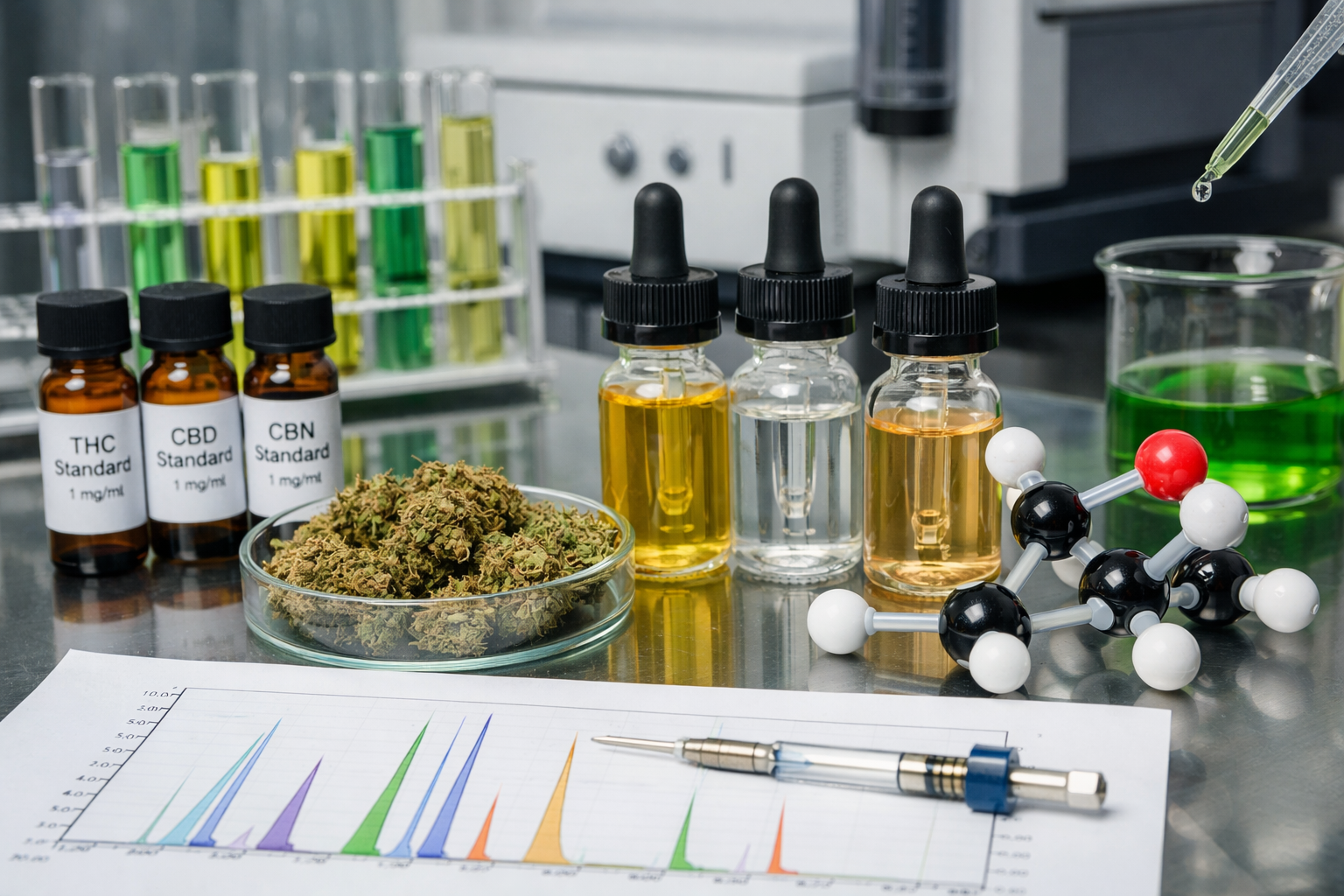
Cannabinoid standards are highly characterized reference materials with known purity and concentration. Laboratories use them to calibrate instruments such as HPLC (High-Performance Liquid Chromatography) and GC (Gas Chromatography). In simple terms, cannabinoid standards act as the benchmark against which all cannabis samples are measured.
Without reliable cannabinoid standards, lab results would vary wildly from one facility to another, undermining trust in test results and product labels.
Why Quality Control Is Non-Negotiable in Cannabis
Cannabis is not a typical consumer product. It is inhaled, ingested, or applied topically, and it often contains psychoactive compounds. This makes quality control not just a business concern, but a public health issue.
Quality control ensures:
-
Accurate potency labeling
-
Consistent effects for consumers
-
Detection of contaminants or degradation
-
Compliance with local and international regulations
At the heart of all these goals is reliable measurement, and reliable measurement depends on cannabinoid standards.
The Role of Cannabinoid Standards in Accurate Testing
1. Ensuring Potency Accuracy
Consumers rely on THC and CBD percentages to make informed decisions. Medical patients, in particular, depend on consistent potency for symptom management. If potency is overstated or understated due to poor calibration, the consequences can range from ineffective treatment to adverse effects.
Cannabinoid standards allow labs to:
-
Generate accurate calibration curves
-
Validate analytical methods
-
Minimize batch-to-batch variability
Without high-quality cannabinoid standards, potency results become estimates rather than facts.
2. Supporting Method Validation and Reproducibility
Regulatory agencies increasingly require laboratories to validate their testing methods. Validation proves that a method is accurate, precise, specific, and reproducible.
Cannabinoid standards are essential for:
-
Linearity testing
-
Accuracy and recovery studies
-
Limit of detection (LOD) and limit of quantification (LOQ) assessments
Using well-characterized standards ensures that test results can be reproduced across different labs and over time—an absolute necessity for quality control.
Regulatory Compliance Depends on Standards
As cannabis regulations mature, authorities are placing greater emphasis on data integrity and analytical rigor. Inconsistent or poorly supported test results can lead to failed audits, product recalls, or loss of licensure.
Many regulatory frameworks reference internationally accepted testing practices similar to those outlined in cannabis testing guidelines provided by regulatory bodies and scientific organizations.
By using certified cannabinoid standards, laboratories demonstrate:
-
Adherence to good laboratory practices (GLP)
-
Commitment to accurate and defensible data
-
Readiness for inspections and audits
This not only protects labs but also safeguards producers and retailers throughout the supply chain.
Consumer Trust Starts with Consistency
In today’s competitive cannabis market, trust is everything. Consumers expect that a product labeled “20% THC” will deliver a similar experience every time they purchase it.
Inconsistent testing erodes confidence and damages brand reputation. Cannabinoid standards help prevent this by enabling consistent analytical performance, regardless of:
-
Product format (flower, edibles, concentrates, topicals)
-
Batch size
-
Testing laboratory
When brands and labs align around high-quality cannabinoid standards, consistency becomes achievable and scalable.
Beyond THC and CBD: The Need for Comprehensive Standards
Early cannabis testing focused almost exclusively on THC and CBD. Today, the industry recognizes the importance of minor cannabinoids and the so-called “entourage effect.”
Modern quality control programs increasingly test for:
-
CBG
-
CBC
-
CBN
-
THCV
-
Acidic cannabinoids like THCA and CBDA
Each of these compounds requires its own reliable reference material. Expanding cannabinoid standards portfolios allows labs to keep pace with scientific discovery and market demand.
Stability, Degradation, and Shelf-Life Studies
Cannabinoids are not static. They degrade over time due to heat, light, oxygen, and formulation conditions. For example, THC can oxidize into CBN, altering both potency and effect.
Cannabinoid standards are essential for:
-
Stability testing
-
Shelf-life determination
-
Monitoring degradation pathways
By comparing product samples against stable reference standards, manufacturers can make informed decisions about packaging, storage, and expiration dates.
The IROA Technologies Approach to Quality Control
At IROA Technologies, scientific rigor and data integrity are central to everything we do. With deep expertise in analytical chemistry and metabolomics, IROA Technologies supports laboratories and manufacturers in achieving higher confidence in their analytical results.
Our approach emphasizes:
-
Precision and reproducibility
-
Robust method development
-
Advanced analytical workflows
By integrating high-quality reference materials and best-in-class analytical strategies, companies can elevate their quality control programs and stay ahead in a rapidly evolving regulatory landscape.
Cost of Poor Standards: A Risk the Industry Can’t Afford
 Some labs attempt to cut costs by using low-quality or poorly characterized reference materials. While this may reduce short-term expenses, the long-term risks are significant:
-
Inaccurate labeling
-
Regulatory penalties
-
Product recalls
-
Loss of consumer trust
Investing in reliable cannabinoid standards is not an optional upgrade—it is a fundamental requirement for sustainable success in the cannabis industry.
The Future of Cannabis Quality Control
As legalization expands globally, cannabis quality standards will continue to align more closely with pharmaceutical and food testing models. This means:
-
Stricter validation requirements
-
Greater emphasis on traceability
-
Increased scrutiny of reference materials
Cannabinoid standards will remain central to this evolution, supporting innovation while protecting consumers.
Frequently Asked Questions (FAQs)
1. What are cannabinoid standards?
Cannabinoid standards are certified reference materials with known concentrations of specific cannabinoids. They are used to calibrate analytical instruments and validate testing methods.
2. How often should labs use cannabinoid standards?
Labs should use cannabinoid standards during method development, routine calibration, validation, and ongoing quality control checks to ensure consistent accuracy.
3. Are cannabinoid standards required by regulators?
While requirements vary by jurisdiction, most regulatory frameworks expect laboratories to use validated methods supported by appropriate reference standards.
4. Do cannabinoid standards cover minor cannabinoids?
Yes. High-quality cannabinoid standards are available for both major and minor cannabinoids, allowing labs to expand their testing capabilities.
5. How do cannabinoid standards impact consumers?
They ensure accurate labeling, consistent product effects, and safer cannabis products—directly benefiting consumer trust and well-being.
Conclusion
Cannabis quality control begins and ends with accurate measurement. Cannabinoid standards provide the scientific foundation that makes reliable testing possible. They ensure potency accuracy, support regulatory compliance, enable product consistency, and build consumer trust.
For laboratories, manufacturers, and brands alike, investing in high-quality cannabinoid standards is an investment in credibility, safety, and long-term growth. With science-driven partners like IROA Technologies, the cannabis industry can continue to mature responsibly and confidently.