biomarkers in bile acids

Browse all articles filed under the "biomarkers in bile acids" tag.

Advances in Bile Acids Research Emerging Trends & Discoveries

Showing 1–5 of 5 articles

Advances in Bile Acids Research Emerging Trends & Discoveries

Advances in Bile Acids Research: Emerging Trends and Scientific Discoveries

Bile acids have long been recognized for their essential role in digestion and nutrient absorption. However, scientific understanding of these molecules has expanded significantly over the past decade.

Researchers now view bile acids as powerful signaling molecules that influence metabolism, immune function, gut microbiota, and disease progression. As analytical technologies continue to evolve, new discoveries are reshaping our understanding of how bile acids contribute to human health and disease.

This article explores recent advancements in Bile Acids Research, emerging trends in the field, and the technologies driving these scientific breakthroughs.

Understanding Bile Acids Beyond Digestion Bile acids are synthesized in the liver from cholesterol and released into the digestive tract to aid in the breakdown and absorption of dietary fats.

Traditionally, their primary function was considered digestive. Today, researchers know...
Structural and Functional Insights into Bile Acid Compounds

Structural and Functional Insights into Bile Acid Compounds

Bile acids are essential biological molecules that play a central role in digestion, metabolism, and cellular signaling. Although traditionally recognized for their function in fat absorption, modern research has revealed that they are far more than digestive agents.

Their structural complexity and diverse biological activity make them important targets in clinical research, metabolic studies, and biomarker discovery. Understanding their structure and function provides valuable insights into human health and disease mechanisms.

What Are Bile Acids? Bile acids are steroid-derived molecules synthesized in the liver from cholesterol. After synthesis, they are stored in the gallbladder and released into the small intestine during digestion.

Their primary function is to emulsify dietary fats, making them easier for digestive enzymes to break down and absorb. These molecules are produced in two main forms: primary...

Why Bile Acid Research Is Transforming Modern Biomedical Science

In the evolving world of biomedical science, few areas have gained as much attention in recent years as bile acid research.

Once thought to play a simple role in digestion, bile acids are now recognized as powerful signaling molecules that influence metabolism, immunity, and even disease progression.

This shift in understanding has opened new doors for scientists, clinicians, and pharmaceutical developers alike. As research tools become more advanced and data-driven approaches gain momentum, the study of bile acids is redefining how we understand human health at a molecular level.

Understanding Bile Acids Beyond Digestion Traditionally, bile acids were associated with the breakdown and absorption of dietary fats in the intestine.

Produced in the liver and stored in the gallbladder, they help emulsify fats, making them easier to digest. However, modern...

Why the Bile Acids Microbiome Matters for Personalized Medicine

Why the Bile Acids Microbiome Matters for Personalized Medicine and Nutrition

In recent years, the connection between gut health and overall well-being has gained significant attention. While most discussions focus on gut bacteria, a lesser-known yet equally important player is the bile acids microbiome—a dynamic interaction between bile acids and gut microbes that plays a crucial role in regulating metabolism, immunity, and digestion.

Understanding this relationship is opening new doors in personalized medicine and nutrition, offering more precise and effective approaches to health management.

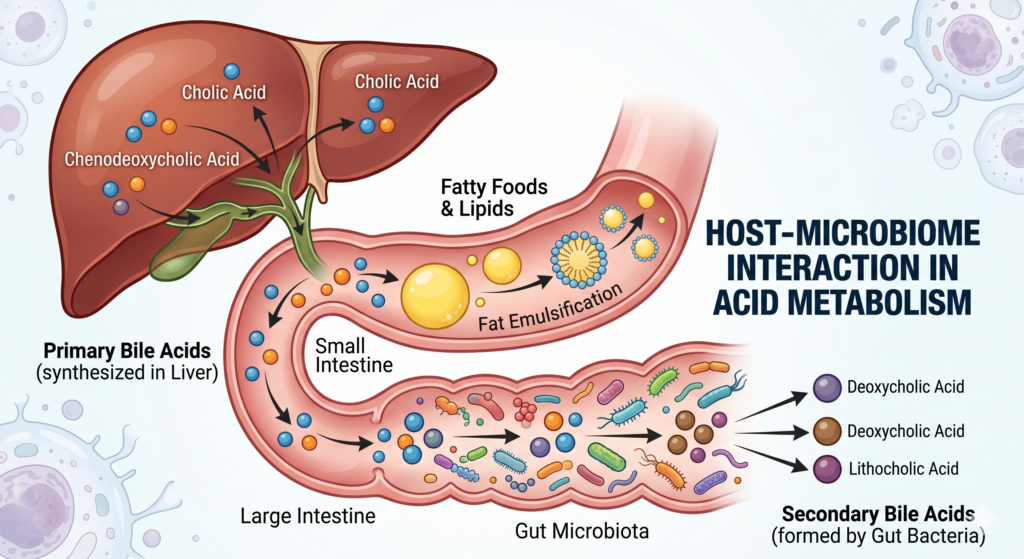
Understanding the Bile Acids–Microbiome Connection Bile acids are produced in the liver and stored in the gallbladder, where they aid in the digestion and absorption of dietary fats.

Once released into the intestine, these compounds undergo chemical transformations by gut bacteria. This interaction creates a complex biochemical network that influences not just digestion, but also metabolic signaling...

Laboratory glass bottle with bile acids and test tubes for scientific research

Why Bile Acids for Research Are Essential in Modern Life Sciences

In modern biomedical science, few compounds have sparked as much interest as bile acids. Once thought to be merely digestive detergents produced in the liver to aid in fat absorption, bile acids are now recognized as powerful signaling molecules with diverse physiological roles.

For researchers, bile acids for research have become a critical tool for exploring metabolism, gut health, liver disease, microbiome interactions, and even drug development.

In this blog, we'll dive deep into why bile acids are so valuable for scientific investigation, how they are used across life sciences, and what their growing importance means for the future of precision medicine and clinical research.

What Are Bile Acids? Bile acids are amphipathic molecules derived from cholesterol in the liver. They are secreted into the bile, stored in the gallbladder,...