blog

Browse all articles in the "blog" category.

Bile Acid Compounds

Showing 85–96 of 131 articles

Laboratory vials labeled “Fatty Acids Unsaturated Kit” beside a molecular model with chromatography graphs in the background.

How the Fatty Acids Unsaturated Kit Enhances Accuracy in Lipid Profiling

In the world of analytical chemistry and metabolomics, precision and reproducibility are essential. Lipid profiling—analyzing the composition, concentration, and variation of lipids in biological systems—plays a critical role in understanding metabolism, disease mechanisms, and nutritional science.

However, accurately quantifying and identifying fatty acids remains one of the most challenging tasks due to the complexity of lipid structures and variations in saturation levels.

That’s where the fatty acids unsaturated kit becomes invaluable. Designed to simplify and standardize the analysis process, this specialized kit ensures consistent, high-quality results that empower researchers to generate reliable lipidomic data.

Let’s explore how this tool enhances analytical accuracy and contributes to advancing modern metabolomics and lipid research. Understanding Lipid Profiling Lipid profiling (or lipidomics) is a branch of metabolomics that focuses on the identification and quantification...

High Purity Fatty Acid in Analytical Chemistry Laboratory

How High Purity Fatty Acid Enhances Precision in Analytical Chemistry

In analytical chemistry, precision is everything. Whether scientists are quantifying metabolites, developing pharmaceuticals, or assessing food quality, the accuracy of their results depends heavily on the quality of their reference materials.

Among these, high purity fatty acid standards play an indispensable role. Fatty acids — the fundamental building blocks of lipids — serve as critical biomarkers and analytical targets in metabolomics, lipidomics, and clinical diagnostics.

However, to achieve reliable and reproducible data, scientists need pure, stable, and well-characterized reference compounds. This is where high purity fatty acid standards come in, ensuring that every measurement reflects true biological or chemical reality rather than experimental noise.

Understanding Fatty Acids and Their Analytical Significance Fatty acids are long-chain hydrocarbons that contain a carboxylic acid group at one end.

They are vital components of...

Cannabis Research Laboratory with Cannabinoids Standards

The Role of Cannabinoids Standards in Advancing Cannabis Research

The growing field of cannabis research is unlocking an entirely new world of medical, agricultural, and biochemical potential. From therapeutic applications to product formulation and quality control, cannabinoids standards play a vital role in ensuring accuracy, reproducibility, and global consistency in research data.

Without standardized reference materials, the identification and quantification of cannabinoids would vary between laboratories, leading to unreliable results and misinterpretation of findings.

This blog explores the importance of cannabinoids standards, their scientific applications, and how they are driving innovation in cannabis research and analytical testing.

Understanding Cannabinoids and Their Diversity Cannabinoids are naturally occurring compounds found in the Cannabis sativa plant. They interact with the body’s endocannabinoid system (ECS), influencing processes like mood, pain, appetite, and memory.

The most well-known cannabinoids include tetrahydrocannabinol (THC) and cannabidiol (CBD),...

Phytochemical Analytical Standards in Laboratory Setup

Why Phytochemical Analytical Standards Are Vital for Accurate Data Analysis

In the world of metabolomics and natural product research, accuracy is everything. Whether scientists are identifying plant metabolites, validating bioactive compounds, or quantifying phytochemicals, the reliability of their data depends on one key factor — the use of phytochemical analytical standards.

These reference materials ensure that every compound detected in a sample is correctly identified and quantified, eliminating uncertainty and improving reproducibility across laboratories and instruments.

At IROA Technologies, we recognize the growing need for standardized phytochemical reference libraries that meet the highest analytical requirements. Our Phytochemical Metabolite Library of Standards is designed to empower researchers with the precision and reproducibility that advanced metabolomic studies demand.

Understanding Phytochemical Analytical Standards Phytochemicals are naturally occurring compounds found in plants — such as flavonoids, alkaloids, terpenes, and phenolic acids — that play...

Digital illustration showing molecular structure, chromatogram, magnifying glass with clusters, and computer screen symbolizing metabolomic research and data clustering.

Why a Cluster Search Engine Is Essential for Accurate Metabolomic Research

In the world of metabolomics, data complexity is one of the biggest challenges researchers face. Modern experiments generate enormous volumes of spectral data, often containing thousands of features that must be accurately identified, clustered, and interpreted.

This is where a cluster search engine becomes indispensable. By enabling efficient data clustering, pattern recognition, and annotation, a cluster search engine empowers metabolomic scientists to streamline analysis and uncover meaningful biological insights faster and with greater accuracy.

At IROA Technologies, we understand that precision in metabolomic research depends on robust data processing tools that can handle variability, eliminate redundancy, and ensure reproducibility across analytical runs.

Let’s explore how a cluster search engine serves as a cornerstone for high-quality metabolomic research. Understanding the Role of a Cluster Search Engine A cluster search engine is...

Laboratory glass vials and an amber bottle labeled “Internal Standard” representing internal standard sets used for accurate metabolomic analysis in a research lab.

Why Internal Standard Sets Are Essential for Reliable Metabolomic Analysis

Metabolomics is a powerful tool for understanding the complex biochemical processes that define life. It enables researchers to study small molecules and their interactions within biological systems, offering insights into disease mechanisms, drug efficacy, and metabolic health.

However, the accuracy of metabolomics data depends heavily on one critical factor Internal Standard Sets. Without proper standardization, even the most advanced mass spectrometry or chromatography instruments can produce data that’s inconsistent, incomparable, or misleading.

This is where Internal Standard Sets become indispensable, ensuring that every dataset reflects true biological changes rather than technical variability.

What Are Internal Standard Sets? Internal Standard Sets are reference compounds added to biological samples before extraction or analysis. These standards, often isotopically labeled (like ¹³C or ¹⁵N compounds), serve as benchmarks to normalize and calibrate results throughout...

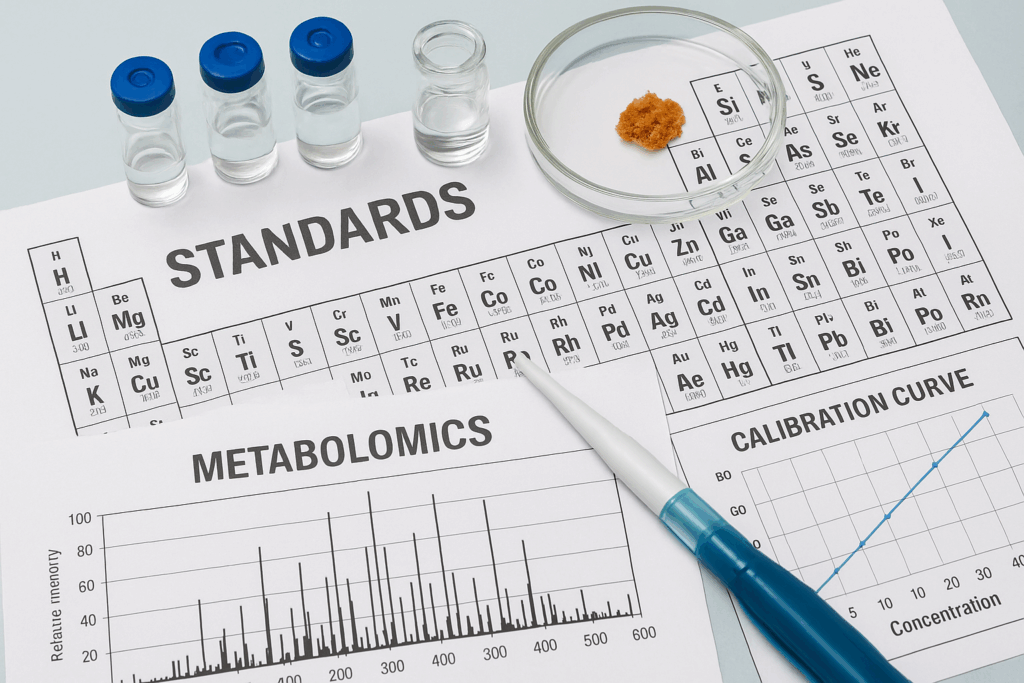
Laboratory setup showing vials, a pipette, chromatogram graphs, and calibration curve charts representing precision and reproducibility in metabolomics internal standards research at IROA Technologies.

Why Researchers Choose to Buy Metabolomics Internal Standards for Accurate Analysis

Precision is the heartbeat of metabolomics research. Every peak, signal, and concentration value tells a story about the biological system under study — but only if the data is accurate and reproducible.

For researchers who value reliability, choosing to buy Metabolomics Internal Standards is a crucial step toward ensuring analytical accuracy and consistency across experiments.

At IROA Technologies, we understand that metabolomic analysis depends on more than high-resolution mass spectrometers or cutting-edge software. It depends on robust internal standards that guarantee each data point reflects biological reality rather than technical variability.

1. What Are Metabolomics Internal Standards? Metabolomics internal standards are stable reference compounds added to biological samples before analysis. They act as benchmarks, correcting for technical variations in sample preparation, extraction, and instrument performance.

These standards may be isotopically labeled (for example, 13C- or...

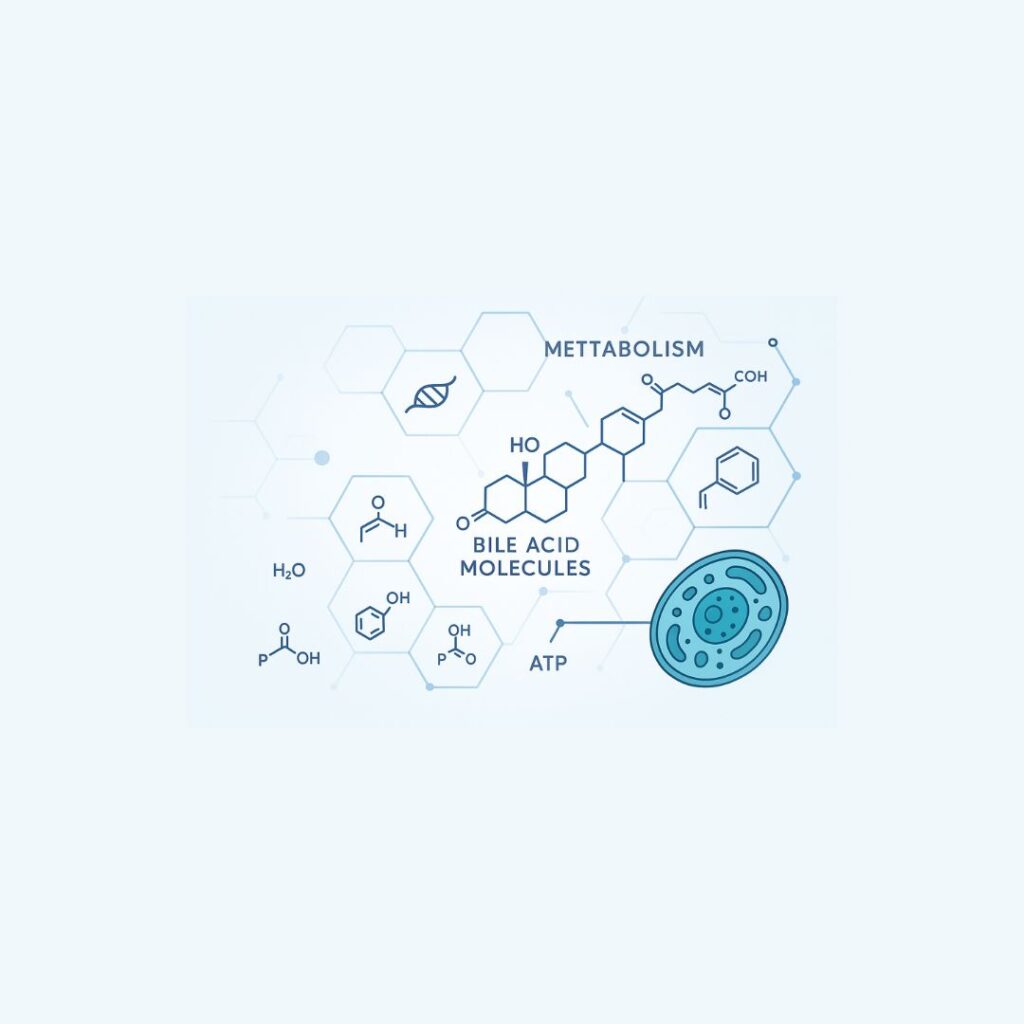
Scientific illustration showing bile acid molecules and metabolic pathways connected to cellular processes, representing bile acid research in metabolomics by IROA Technologies.

How Bile Acid Research Is Transforming Our Understanding of Metabolism

Bile acids were once thought to play a simple role in digestion — breaking down fats and aiding nutrient absorption.

But recent discoveries have redefined these molecules as powerful metabolic regulators and signaling agents that influence nearly every aspect of human physiology.

Modern bile acid research has revealed that these compounds are far more than digestive detergents; they are master communicators linking the liver, gut, and microbiome to regulate metabolism, immunity, and even neurological health.

At IROA Technologies, metabolomic innovation drives this scientific transformation. Through precision standards, isotopic labeling, and advanced analytical software, IROA supports researchers uncovering the true role of bile acids in metabolic regulation and disease.

What Are Bile Acids? Bile acids are steroid-based molecules synthesized in the liver from cholesterol. They are stored in the gallbladder and...

How Bile Acid Compounds Are Advancing Metabolomic Research

How Bile Acid Compounds Are Advancing Metabolomic Research

In recent years, metabolomics has become one of the most powerful tools in understanding how our bodies function at the molecular level.

Among the countless metabolites that play critical roles in human health, bile acid compounds stand out for their complexity and importance.

Once considered simple digestive agents, bile acids are now recognized as vital signaling molecules influencing metabolism, immunity, and even the gut microbiome.

At IROA Technologies, metabolomic innovation is driven by precision. By studying and analyzing bile acid compounds through advanced analytical tools, scientists can gain deeper insights into metabolic pathways that connect the liver, gut, and overall health.

What Are Bile Acid Compounds? Bile acids are amphipathic molecules synthesized in the liver from cholesterol. They facilitate fat digestion and absorption in the small intestine, but their influence...

Laboratory kit with vials, molecular model, and chemical structures representing fatty acids unsaturated kit for metabolomics research

Why the Fatty Acid Standards Library Matters in Modern Metabolomics

Metabolomics has become one of the most dynamic fields in life sciences, offering a window into the biochemical fingerprints of living systems.

From identifying disease biomarkers to tracking therapeutic responses, metabolomics provides insights that can shape the future of healthcare, nutrition, and personalized medicine.

At the heart of accurate metabolomics research lies a fundamental resource: the fatty acid standards library. This article explores why the fatty acid standards library is essential for modern metabolomics, how it supports research accuracy, and the impact it has on advancing discovery in health, agriculture, and environmental science.

Understanding Fatty Acids in Metabolomics Fatty acids are core building blocks of biological systems. They: Act as components of cell membranes Serve as energy sources through β-oxidation Function as signaling molecules in inflammation and metabolic regulation Given...

Researchers analyzing clustered data visualizations on digital screens representing a clustering search engine concept.

Why Every Researcher Needs a Clustering Search Engine in 2025

In today’s data-driven world, research has evolved far beyond the traditional laboratory. Scientists now face a different kind of challenge — managing and making sense of massive, interconnected datasets.

Whether it’s metabolomics, genomics, or artificial intelligence, researchers are surrounded by endless data but often lack the tools to interpret it efficiently.

That’s why, in 2025, the clustering search engine is emerging as one of the most transformative technologies for research. It’s not just a smarter search tool it’s a bridge between data chaos and scientific clarity.

The Data Discovery Dilemma in Modern Research Every day, researchers produce terabytes of information — from mass spectrometry files and genetic sequences to clinical trial results and peer-reviewed publications.

But accessing relevant information across such vast datasets remains one of the biggest bottlenecks in...

Graphical illustration of a web analytics interface featuring colorful line and bar charts on a blue background, symbolizing AI-based data clustering and visualization.

How a Clustering Search Engine Revolutionizes Data Discovery and Analysis

In an era dominated by big data, information is being generated faster than ever before. From scientific research to business analytics, the challenge isn’t accessing data—it’s understanding it.

Traditional search engines often fail to uncover deep relationships between data points because they rely solely on keyword matching. That’s where clustering search engines step in, bringing intelligence and structure to complex datasets.

If you’ve ever wondered what is a clustering search engine and how it reshapes data discovery, this article will help you understand its core concept, working mechanism, benefits, and applications in modern research and analytics.

Understanding What a Clustering Search Engine Is A clustering search engine is a powerful tool designed to organize search results into meaningful groups or “clusters” based on similarity.

Unlike regular search engines that simply...