

liver disease research

Browse all articles filed under the "liver disease research" tag.

Advances in Bile Acids Research Emerging Trends & Discoveries

Showing 1–4 of 4 articles

Advances in Bile Acids Research Emerging Trends & Discoveries

Advances in Bile Acids Research: Emerging Trends and Scientific Discoveries

Bile acids have long been recognized for their essential role in digestion and nutrient absorption. However, scientific understanding of these molecules has expanded significantly over the past decade.

Researchers now view bile acids as powerful signaling molecules that influence metabolism, immune function, gut microbiota, and disease progression. As analytical technologies continue to evolve, new discoveries are reshaping our understanding of how bile acids contribute to human health and disease.

This article explores recent advancements in Bile Acids Research, emerging trends in the field, and the technologies driving these scientific breakthroughs.

Understanding Bile Acids Beyond Digestion Bile acids are synthesized in the liver from cholesterol and released into the digestive tract to aid in the breakdown and absorption of dietary fats.

Traditionally, their primary function was considered digestive. Today, researchers know...
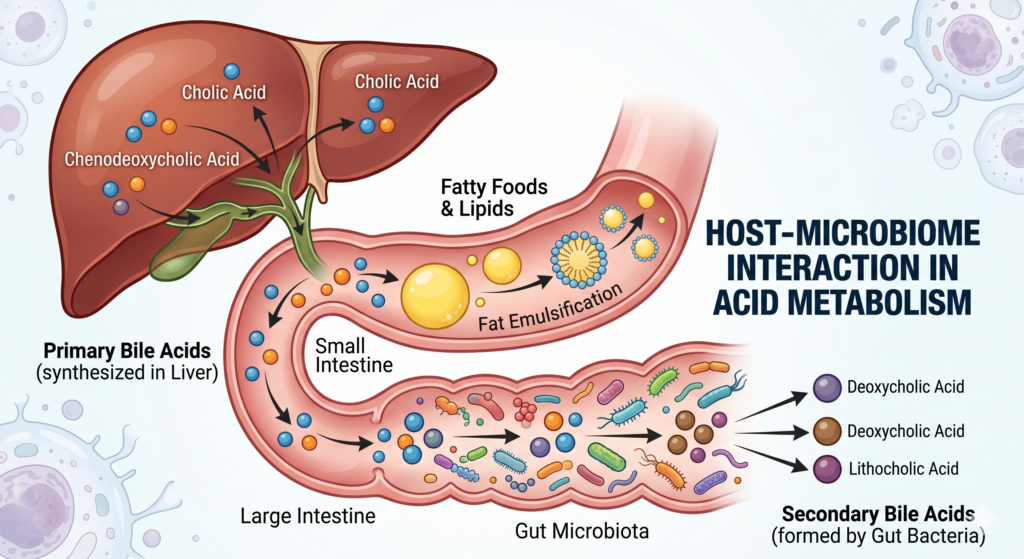
Structural and Functional Insights into Bile Acid Compounds

Structural and Functional Insights into Bile Acid Compounds

Bile acids are essential biological molecules that play a central role in digestion, metabolism, and cellular signaling. Although traditionally recognized for their function in fat absorption, modern research has revealed that they are far more than digestive agents.

Their structural complexity and diverse biological activity make them important targets in clinical research, metabolic studies, and biomarker discovery. Understanding their structure and function provides valuable insights into human health and disease mechanisms.

What Are Bile Acids? Bile acids are steroid-derived molecules synthesized in the liver from cholesterol. After synthesis, they are stored in the gallbladder and released into the small intestine during digestion.

Their primary function is to emulsify dietary fats, making them easier for digestive enzymes to break down and absorb. These molecules are produced in two main forms: primary...

How Bile Acid Analysis Helps Detect Liver and Gut Disorders

How Bile Acid Analysis Helps Detect Liver and Gut Disorders

 Modern healthcare is increasingly focused on early detection and precise diagnosis. Many digestive and metabolic conditions develop silently, showing symptoms only when they have progressed significantly.

This is where advanced diagnostic tools play a vital role. One such powerful diagnostic approach is Bile Acid Analysis, a specialized test that helps clinicians evaluate liver function, intestinal health, and metabolic balance.

At IROA Technologies, cutting-edge analytical solutions enable healthcare professionals and researchers to gain deeper insights into metabolic pathways and disease markers.

Understanding how bile acids function—and how their imbalance signals disease—can help improve diagnosis, treatment, and long-term patient outcomes. Understanding Bile Acids and Their Role in the Body Bile acids are essential compounds produced in the liver from cholesterol.

They are stored in the gallbladder and released into the small intestine...

Laboratory glass bottle with bile acids and test tubes for scientific research

Why Bile Acids for Research Are Essential in Modern Life Sciences

In modern biomedical science, few compounds have sparked as much interest as bile acids. Once thought to be merely digestive detergents produced in the liver to aid in fat absorption, bile acids are now recognized as powerful signaling molecules with diverse physiological roles.

For researchers, bile acids for research have become a critical tool for exploring metabolism, gut health, liver disease, microbiome interactions, and even drug development.

In this blog, we'll dive deep into why bile acids are so valuable for scientific investigation, how they are used across life sciences, and what their growing importance means for the future of precision medicine and clinical research.

What Are Bile Acids? Bile acids are amphipathic molecules derived from cholesterol in the liver. They are secreted into the bile, stored in the gallbladder,...