
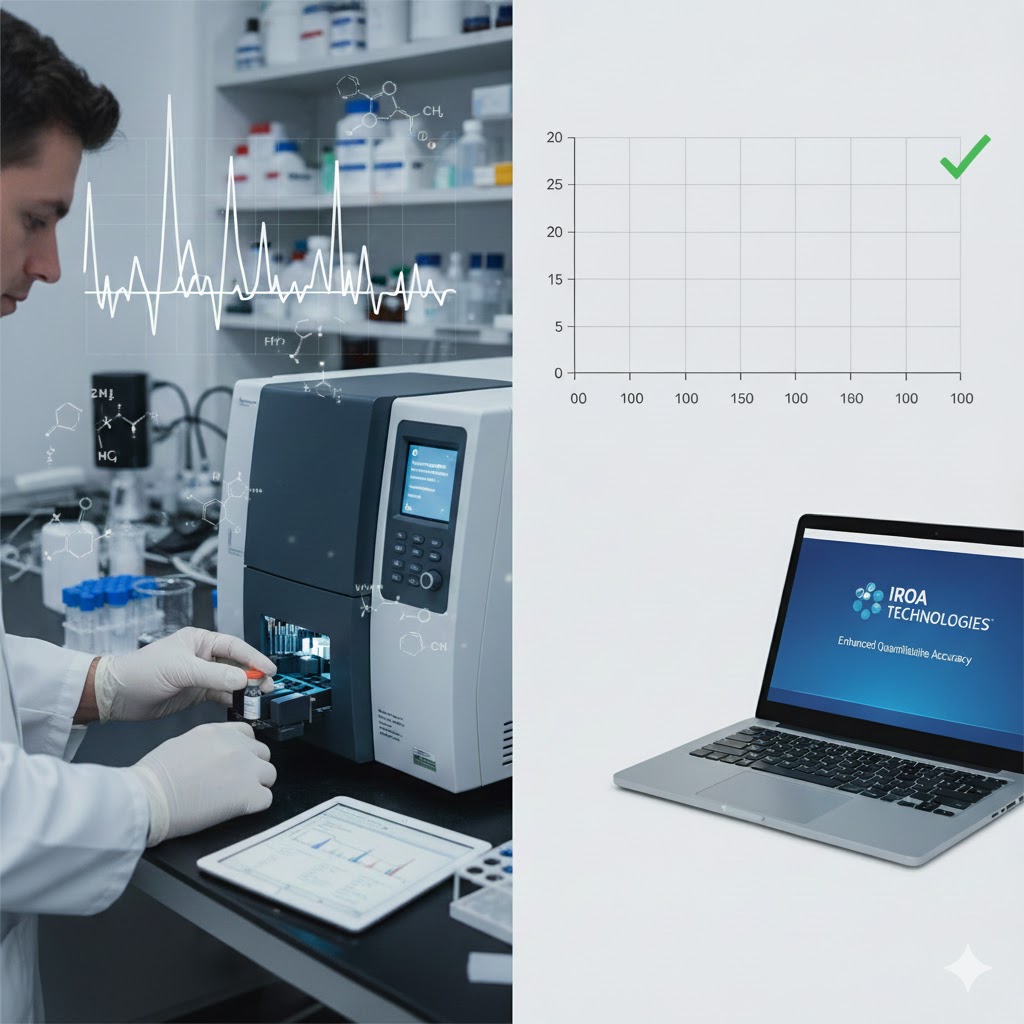
In modern analytical science, accuracy is everything. Whether you are working in metabolomics, proteomics, environmental testing, food safety, toxicology, or clinical research, the quality of your data determines the quality of your conclusions. One of the most essential tools for ensuring reliable data is high-quality Mass Spec Standards—and this is where IROA Technologies excels.
At IROA Technologies, the mission is simple: provide laboratories with advanced, reproducible, and scientifically robust solutions for mass spectrometry-based workflows. Their innovations have transformed how researchers approach normalization, quantification, and quality control.
In this article, we explore what Mass Spec Standards are, why they are essential, and what makes IROA Technologies a trusted choice for laboratories worldwide.
What Are Mass Spec Standards?
Mass Spec Standards, short for mass spectrometry standards, are reference materials used to verify, calibrate, and quantify compounds in mass spectrometry workflows.
They allow analysts to:
- Confirm instrument accuracy
- Normalize analytical data
- Compare results across experiments and laboratories
- Quantify metabolites and proteins
- Validate analytical workflows
- Detect instrument drift or performance issues
In many scientific workflows, particularly metabolomics and proteomics, Mass Spec Standards are not simply helpful—they are essential. Biological samples naturally vary, and instruments can change performance over time. Standards provide the stable foundation required for consistent and reliable results.
Why Mass Spec Standards Matter in Modern Science
Comparing results between laboratories or even between different days can be challenging. Biological samples degrade, instrument sensitivity changes, and preparation steps introduce variability. High-quality standards help overcome these challenges.
1. Eliminating Variability
Variability is one of the biggest challenges in analytical science. Mass Spec Standards create a stable reference point, allowing scientists to separate true biological signals from technical noise and instrument-related variation.
2. Improving Quantification
Quantitative mass spectrometry depends on reliable comparisons. Standards help convert analytical measurements into accurate and meaningful concentrations.
3. Ensuring Cross-Study Comparability
Standards enable normalization across experiments, laboratories, and instruments, making it easier to compare results and generate consistent scientific conclusions.
4. Enhancing Confidence in Data
Whether research supports healthcare, regulatory testing, or discovery science, reliable data is essential. Standards improve confidence by ensuring results are accurate, reproducible, and publication-ready.
IROA Technologies: Innovators in Mass Spec Standards
While many companies provide reference materials, IROA Technologies stands out through scientific rigor, precision engineering, and its innovative use of stable isotope labeling.
What Makes IROA Technologies Unique?
1. Stable Isotope-Labeled Standards
IROA Technologies specializes in standards created using stable isotopes, including non-radioactive forms such as carbon-13 (13C). These isotopes allow researchers to clearly distinguish biological sample signals from reference compounds.
The result is improved accuracy, reduced false positives, and more reliable quantification.
2. Precision Engineered for Metabolomics
IROA standards are designed to behave like real biological molecules during extraction, ionization, and chromatography, enabling accurate comparisons between samples and controls.
3. Controls Built Into the Workflow
IROA’s internal standardization approach introduces controls directly into sample preparation, helping researchers generate normalized data from the beginning of the workflow.
4. Proven Across Industries
IROA Technologies supports a wide range of scientific fields, including:
- Clinical diagnostics
- Pharmaceutical and biotechnology research
- Food safety testing
- Environmental science
- Academic metabolomics and proteomics
Wherever mass spectrometry is used, IROA standards help researchers achieve clearer, more reproducible data.
How Mass Spec Standards by IROA Technologies Improve Metabolomics Workflows
1. Enhanced Quantitative Accuracy
Metabolomics samples often contain hundreds of compounds. IROA’s isotope-labeled standards provide reliable reference signals that improve quantification across both high- and low-abundance metabolites.
2. Reduced Technical Variability
By introducing isotopically labeled controls early in the workflow, IROA minimizes variability caused by extraction procedures, sample handling, and instrument drift.
3. Cleaner and More Distinct Mass Spectra
Stable isotopes create predictable mass differences, making spectra easier to interpret and helping analytical software identify true signals with greater confidence.
4. Better Confidence for Clinical and Regulatory Applications
When analytical results influence patient care or regulatory decisions, reproducibility is essential. IROA standards support accurate and validated workflows.

Types of Mass Spec Standards Offered by IROA Technologies
IROA Technologies provides a range of solutions designed for different scientific applications.
1. Isotope-Labeled Internal Standards
Designed to accompany biological samples throughout the workflow, these standards provide accurate normalization and quantification.
2. Quality Control (QC) Kits
IROA QC products allow laboratories to monitor instrument performance and maintain consistency over time.
3. Calibration Standards
Calibration standards help ensure accurate mass measurements and consistent instrument sensitivity.
4. Reference Materials
Reference materials support cross-laboratory comparisons, proficiency testing, and method development.
Each product is developed to mimic real sample behavior, which is essential for achieving true analytical accuracy.
Applications of IROA Mass Spec Standards
Metabolomics
Standards support metabolite identification, quantification, and pathway analysis.
Proteomics
Mass Spec Standards improve peptide identification and support isotope-based quantification strategies.
Food and Environmental Testing
Standards help detect contaminants, residues, and environmental compounds with greater confidence.
Clinical Diagnostics
Reliable standards support biomarker discovery, therapeutic monitoring, and translational research.
Pharmaceutical Research and Development
From drug metabolism studies to formulation analysis, standards improve precision throughout pharmaceutical workflows.
How IROA Technologies Compares to Traditional Standards
Traditional standards often have limitations:
- They may not replicate real biological behavior.
- They may not normalize complete workflows.
- They can introduce variability instead of controlling it.
IROA Technologies addresses these challenges through stable isotope labeling, innovative chemistry, and extensive metabolomics expertise.
The result is Mass Spec Standards that provide cleaner, more consistent, and more meaningful analytical data.
Industry Recognition and Scientific Impact
IROA Technologies solutions are used in research laboratories, academic institutions, biotechnology companies, and analytical facilities worldwide.
For additional background on mass spectrometry, explore this external resource:
Frequently Asked Questions (FAQs)
1. What are Mass Spec Standards?
Mass Spec Standards are reference materials used to calibrate, validate, and quantify compounds in mass spectrometry workflows. They improve analytical accuracy, reproducibility, and confidence.
2. How do IROA Technologies standards differ from traditional standards?
IROA Technologies uses stable isotope labeling to create standards that closely mimic biological behavior, improving normalization and quantitative accuracy.
3. Which industries benefit from IROA Mass Spec Standards?
Industries including metabolomics, proteomics, clinical diagnostics, pharmaceuticals, food safety, and environmental testing rely on these standards.
4. Are stable isotope-labeled standards better for quantification?
Yes. Stable isotope-labeled standards provide predictable mass differences, improved quantification, and reduced interference from complex sample matrices.
5. Can Mass Spec Standards improve cross-lab reproducibility?
Yes. High-quality standards provide consistent reference points that allow researchers to compare results across laboratories, instruments, and time periods.
Final Thoughts
Mass spectrometry is one of the most powerful analytical technologies available today. However, without reliable standards, even advanced instruments can produce inconsistent results.
High-quality Mass Spec Standards from IROA Technologies provide laboratories with the accuracy, reproducibility, and scientific confidence required for modern research.
From isotope-labeled internal standards to comprehensive quality control solutions, IROA Technologies continues to advance analytical science and improve the future of metabolomics.