microbiome metabolite

Browse all articles filed under the "microbiome metabolite" tag.

Learn what a microbiome metabolite is, how it affects digestion, immunity, and disease, and why accurate analysis helps health.

Showing 1–5 of 5 articles

Learn what a microbiome metabolite is, how it affects digestion, immunity, and disease, and why accurate analysis helps health.

What Is a Microbiome Metabolite and Why Is It Important?

In recent years, the word microbiome has moved from scientific journals into everyday conversations about health, nutrition, and wellness. We now understand that trillions of microbes—bacteria, fungi, viruses, and other microorganisms—live in and on the human body, especially in the gut.

These tiny organisms don’t just exist quietly; they actively interact with our bodies by producing thousands of chemical compounds that influence how we feel, function, and even how we age.

Among these compounds, one term stands out in modern life sciences: microbiome metabolite. These molecules act as messengers between microbes and human cells, shaping everything from digestion and immunity to mood and disease risk.

But what exactly are they, and why do scientists and healthcare innovators care so much about them? In this article, we’ll explore what microbiome metabolites...

Scientific infographic showing bile acid analysis with molecular structure, liver function, gut microbiome, and liquid chromatography-mass spectrometry in a clean modern design.

How Bile Acid Analysis Enhances Understanding of Metabolic Health

When it comes to metabolic health, most people think about glucose levels, cholesterol, or hormones. However, there’s an equally important yet often underestimated group of molecules that plays a crucial role in how our metabolism functions bile acids.

By using bile acid analysis, scientists can gain a deeper understanding of metabolic pathways, uncovering connections between liver function, gut microbiota, and chronic diseases such as obesity, diabetes, and fatty liver disease.

Let’s explore how bile acid analysis works, why it matters for metabolic health, and how advanced technologies from IROA Technologies are improving precision and accuracy in metabolomic research.

What Are Bile Acids? Bile acids are naturally occurring molecules derived from cholesterol in the liver. Once produced, they are stored in the gallbladder and released into the small intestine during digestion.

How High Purity Fatty Acid Enhances Precision in Analytical Chemistry

In analytical chemistry, precision is everything. Whether scientists are quantifying metabolites, developing pharmaceuticals, or assessing food quality, the accuracy of their results depends heavily on the quality of their reference materials.

Among these, high purity fatty acid standards play an indispensable role. Fatty acids — the fundamental building blocks of lipids — serve as critical biomarkers and analytical targets in metabolomics, lipidomics, and clinical diagnostics.

However, to achieve reliable and reproducible data, scientists need pure, stable, and well-characterized reference compounds. This is where high purity fatty acid standards come in, ensuring that every measurement reflects true biological or chemical reality rather than experimental noise.

Understanding Fatty Acids and Their Analytical Significance Fatty acids are long-chain hydrocarbons that contain a carboxylic acid group at one end.

They are vital components of...

Phytochemical Analytical Standards in Laboratory Setup

Why Phytochemical Analytical Standards Are Vital for Accurate Data Analysis

In the world of metabolomics and natural product research, accuracy is everything. Whether scientists are identifying plant metabolites, validating bioactive compounds, or quantifying phytochemicals, the reliability of their data depends on one key factor — the use of phytochemical analytical standards.

These reference materials ensure that every compound detected in a sample is correctly identified and quantified, eliminating uncertainty and improving reproducibility across laboratories and instruments.

At IROA Technologies, we recognize the growing need for standardized phytochemical reference libraries that meet the highest analytical requirements. Our Phytochemical Metabolite Library of Standards is designed to empower researchers with the precision and reproducibility that advanced metabolomic studies demand.

Understanding Phytochemical Analytical Standards Phytochemicals are naturally occurring compounds found in plants — such as flavonoids, alkaloids, terpenes, and phenolic acids — that play...

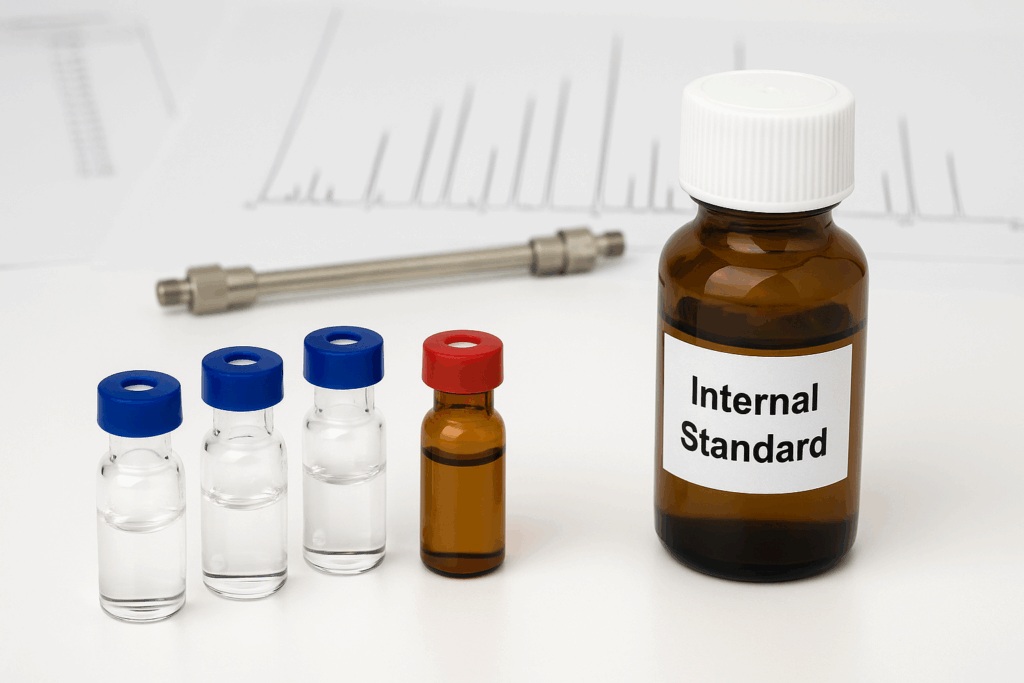
Laboratory glass vials and an amber bottle labeled “Internal Standard” representing internal standard sets used for accurate metabolomic analysis in a research lab.

Why Internal Standard Sets Are Essential for Reliable Metabolomic Analysis

Metabolomics is a powerful tool for understanding the complex biochemical processes that define life. It enables researchers to study small molecules and their interactions within biological systems, offering insights into disease mechanisms, drug efficacy, and metabolic health.

However, the accuracy of metabolomics data depends heavily on one critical factor Internal Standard Sets. Without proper standardization, even the most advanced mass spectrometry or chromatography instruments can produce data that’s inconsistent, incomparable, or misleading.

This is where Internal Standard Sets become indispensable, ensuring that every dataset reflects true biological changes rather than technical variability.

What Are Internal Standard Sets? Internal Standard Sets are reference compounds added to biological samples before extraction or analysis. These standards, often isotopically labeled (like ¹³C or ¹⁵N compounds), serve as benchmarks to normalize and calibrate results throughout...