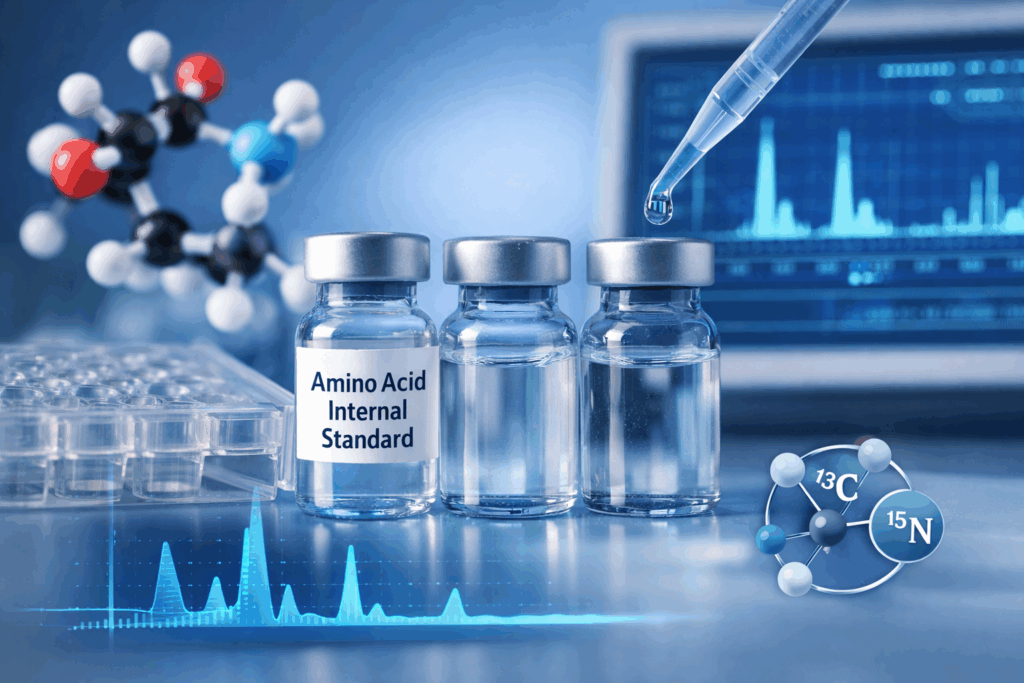

Choosing the Right Amino Acid Internal Standard Sets for Reliable Data Analysis
In modern metabolomics and analytical chemistry, accuracy and reproducibility are critical for generating meaningful research outcomes. Whether scientists are working in biomarker discovery, clinical diagnostics, pharmaceutical development, or food testing, even small variations in sample preparation or instrument performance can affect data quality.
This is where Amino Acid Internal Standard Sets play a vital role. Internal standards help researchers achieve consistent quantification, improve calibration accuracy, and minimize analytical errors in LC-MS and GC-MS workflows.
Selecting the right standard set is not simply about adding reference compounds to a sample—it is about ensuring reliability throughout the entire analytical process.
What Are Amino Acid Internal Standard Sets? Amino acid internal standards are carefully selected reference compounds added to samples before analysis.
These standards are often isotopically labeled amino acids that behave similarly...